


The fastest way to wreck a sofa or chair is the same way most people try to clean it. Wrong cleaner, no spot test, too much water, vigorous scrubbing — and what was a salvageable piece becomes a permanent reminder of a mistake. The good news is that the most damaging upholstery mistakes are also the most predictable ones, which means they’re easy to avoid once you know what they are. Here are the eight that cause the most expensive damage and how to do it right instead.
Using Incorrect Cleaning Products

Different fabrics react in completely different ways to the same cleaning agent. A solution that works fine on synthetic microfiber can bleach silk, dissolve a finish on natural fiber, or weaken cotton until it tears the next time someone sits down hard. The all-purpose household cleaner you use everywhere else is almost never the right choice for upholstery.
Read the care label and match the cleaner to the fabric type. Synthetic fabrics generally tolerate water-based cleaners; natural fibers need pH-balanced solutions formulated for that material; some fabrics need solvent-only treatment. Avoid harsh chemicals, bleach-containing products, and anything labeled for hard surfaces. Non-toxic, environmentally friendly cleaners specifically formulated for upholstery are gentler on the fabric and safer for everyone in the household. Cleaning furniture and upholstery without damaging fabrics covers product selection in more depth if you want to dig further.
Skipping Spot Testing
Spot testing takes five minutes. Skipping it can cost you a piece of furniture. Even cleaners that worked perfectly on something else might react badly with your specific fabric, dye, or finish. Always test before you commit:
- Identify Potential Damage: A spot test reveals whether the cleaner causes discoloration, bleaching, or texture change before it shows up on the visible part of your sofa.
- Confirm Product Compatibility: Two fabrics that look similar can react completely differently to the same product. The test confirms which one you have.
- Prevent Costly Mistakes: Replacing or reupholstering a damaged piece costs hundreds to thousands of dollars. The spot test prevents that.
- Maintain Professional Standards: If you’re cleaning for someone else, skipping the test is a liability waiting to happen.
Apply a small amount of cleaner to a hidden area — the back of a cushion, under a skirt, somewhere nobody looks. Let it dry fully (often 24 hours) before evaluating. If anything changed, find a different product.
Over-Wetting the Fabric
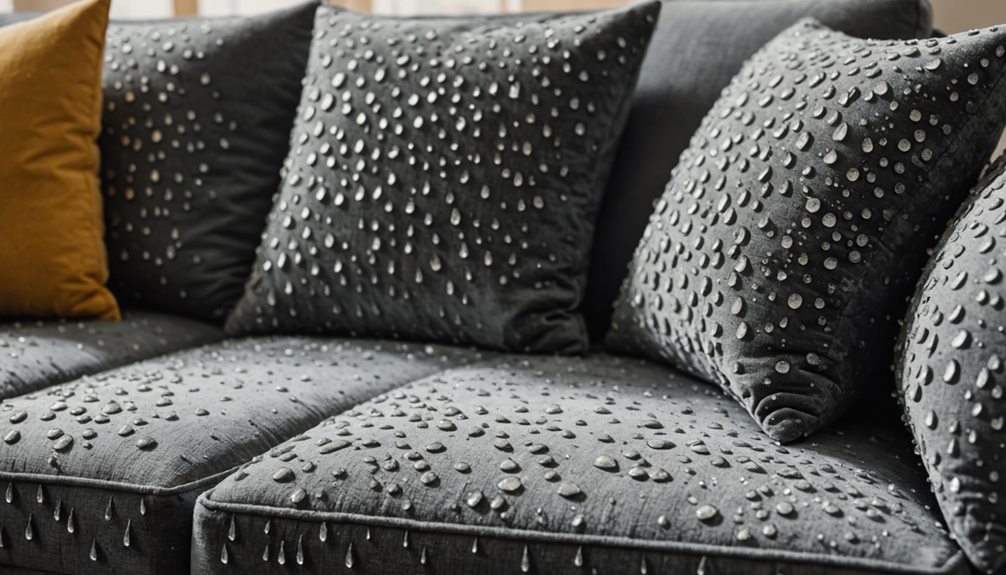
Over-wetting is the most common single mistake in upholstery cleaning. Soaking fabric beyond its absorption limit causes water rings, dye bleeding, fabric shrinkage, mildew growth in the cushion underneath, and delamination of latex backings. The damage often doesn’t show up until the upholstery dries — at which point it’s already done.
The technique is to use as little moisture as possible. Apply cleaner sparingly with a sprayer or damp cloth, never poured directly on the fabric. Blot, don’t soak. The fabric should feel slightly damp during cleaning, never wet. Let each section dry between passes. Quick drying isn’t just about avoiding mildew — it preserves color, texture, and the integrity of the fabric’s construction. If you’re ever in doubt about whether you’re using too much water, you probably are.
Ignoring Manufacturer Instructions
The care label isn’t a suggestion. Manufacturers tested the fabric and know which methods damage it; ignoring their guidance often voids the furniture warranty too, which means an expensive repair becomes your problem instead of theirs.
- Read the Label: Look for the cleaning code (W, S, WS, or X) before any cleaning attempt.
- Follow Recommended Cleaning Schedules: Many manufacturers specify cleaning intervals. Skipping or over-doing them can both cause damage.
- Use Approved Products: Some manufacturers explicitly list what to use and what voids the warranty.
- Test in a Hidden Area: Even when following the label exactly, a spot test catches the rare incompatibility.
If your furniture is still under warranty, keep your cleaning records — product names, dates, and what you did — in case a claim ever comes up.
Rubbing Stains Vigorously
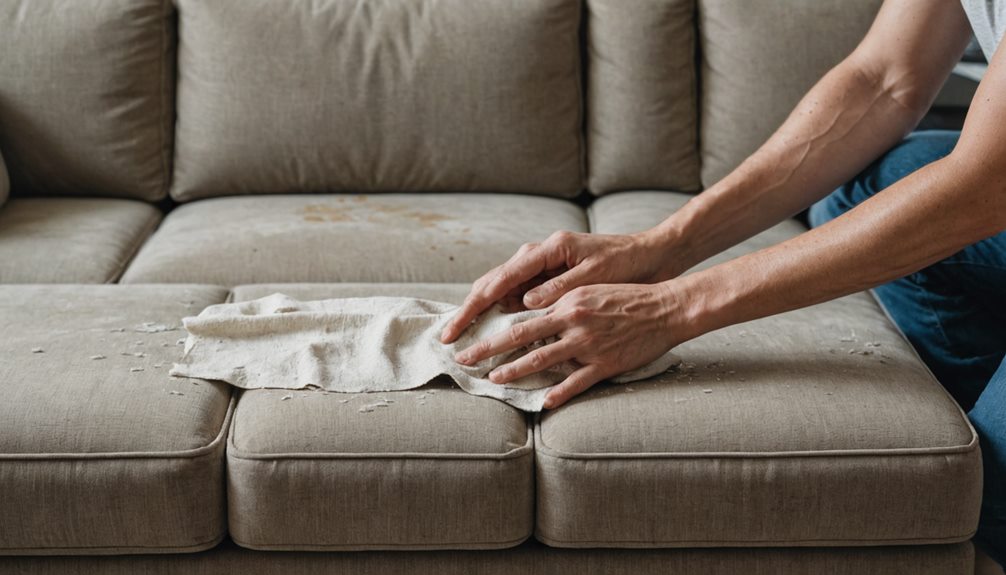
The instinct when something spills is to scrub it out. Don’t. Scrubbing pushes the stain deeper into the fibers, spreads it across a larger area, and frays the surface of the fabric. The damage is often worse than the original stain.
Blot instead. Use a clean white absorbent cloth (white only — colored cloths transfer dye onto your upholstery) and press straight down to lift the liquid up out of the fibers. Use a fresh part of the cloth each pass so you’re not just moving the stain around. If the stain persists after blotting up the excess, apply a small amount of fabric-appropriate cleaner, let it dwell for the time the label specifies (usually a few minutes), then blot again. Multiple gentle passes will lift more stain than one aggressive scrub.
Neglecting Regular Vacuuming
Most upholstery wear isn’t from spills — it’s from grit. Dust and dirt that accumulate on the surface get pressed into the fabric every time someone sits down, and over time those particles cut the fibers from the inside. Regular vacuuming pulls out the abrasion before it can do damage.
- Set a Schedule: Once a week minimum. More if you have pets or kids.
- Choose the Right Attachment: A soft brush attachment lifts dirt without snagging or damaging the surface.
- Employ Proper Techniques: Move in overlapping strokes, slow enough to actually lift particles. Quick passes don’t generate enough suction.
- Don’t Forget the Crevices: Most debris collects in seams, folds, and the gaps between cushions. The crevice tool is essential.
Applying Excessive Heat
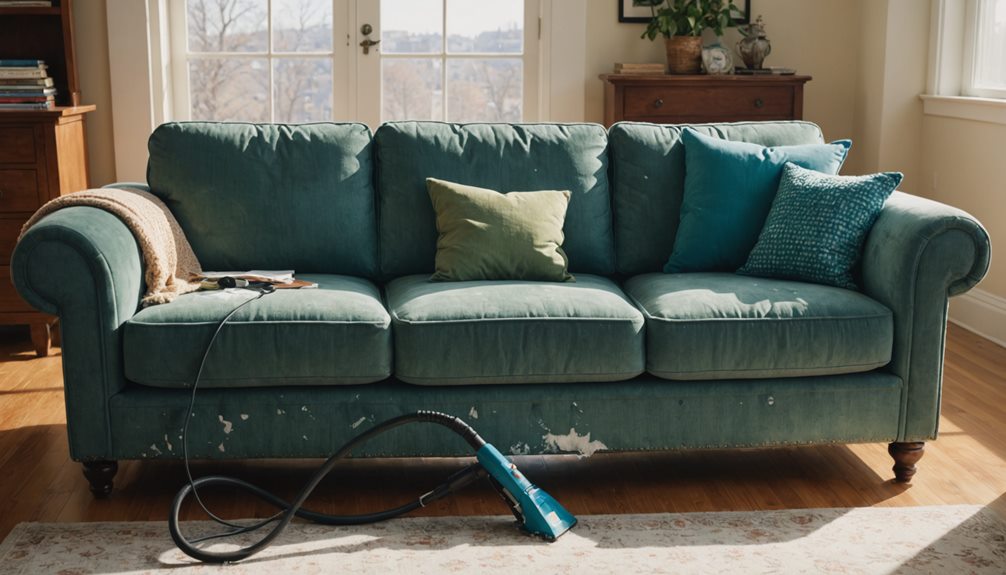
Heat damages upholstery faster than almost anything else. Each fabric has a temperature limit; exceed it and the fabric shrinks, warps, fades, or melts. Silk and wool are especially vulnerable, but even synthetics can lose texture or distort under high heat.
Check the manufacturer’s temperature guidance before using a steam cleaner or any heated method. When in doubt, lukewarm or cold cleaning is almost always safer than hot — you might give up some cleaning power, but you protect the fabric. If you’re going to use a steamer, test on a hidden area first and watch for any color or texture change before treating the visible part. Tips for cleaning different types of upholstery fabric covers heat tolerance for the most common materials.
Forgetting to Rinse Residue
The cleaning step gets the dirt out. The rinse step gets the cleaner out. Skip the rinse and you leave behind a sticky residue that attracts dirt right back — the upholstery will look dirty within weeks of being cleaned, and the buildup accelerates wear and tear over time.
- Assess Fabric Type: Delicate fabrics like silk need a gentler rinse than tough fabrics like microfiber.
- Set a Cleaning Schedule: Regular gentle cleanings prevent residue accumulation better than infrequent aggressive ones.
- Use the Right Tools: A handheld extractor or careful blotting with a damp cloth removes residue without re-saturating the fabric.
- Check for Residue: Run your hand over the fabric after cleaning. If it feels stiff, sticky, or tacky, rinse again until it doesn’t.
Conclusion
The pattern across all eight mistakes is the same: rushing or skipping a step. Read the care label. Match the cleaner to the fabric. Spot test. Use minimal moisture. Blot, don’t rub. Vacuum regularly. Watch the heat. Rinse out residue. Done in that order, upholstery cleaning is honest work that produces real results.
For pieces you really care about, or for damage that’s already happened from one of these mistakes, professional service is often the better path. At Hydra Clean of Hattiesburg, MS, we work across every fabric type and have the equipment to undo most home-cleaning errors. Visit our furniture and upholstery cleaning service page to see what we offer, or call (601) 336-2411 for a free quote.