
When caring for your furniture, avoiding common upholstery cleaning mistakes is crucial to maintaining its longevity. You might think using any cleaning product is fine, but choosing incorrectly can damage fabric fibers. Skipping spot testing is another misstep that can lead to unexpected discoloration or damage. Over-wetting the material not only risks water stains but also mold growth. Have you considered the impact of vigorously rubbing stains or ignoring manufacturer instructions? These actions often worsen the problem. So, what’s the best approach to keep your furniture looking new for years?
Using Incorrect Cleaning Products

When it comes to upholstery cleaning, using the right products is vital; otherwise, you risk damaging your furniture. By choosing cleaning products that guarantee safety and are compatible with your fabric, you not only preserve the integrity of your furniture but also extend its lifespan.
It’s important to understand that different fabrics react uniquely to various cleaning agents. For instance, what works for synthetic fibers might not be suitable for natural materials like cotton or linen.
To serve others effectively, make sure you’re familiar with the material composition of the upholstery. This knowledge allows you to select cleaning products that align with fabric compatibility, preventing discoloration or weakening of fibers.
Prioritize cleaning product safety by opting for non-toxic, environmentally friendly solutions that are gentle on both the upholstery and people using them.
Additionally, read product labels carefully to verify they’re appropriate for the specific type of fabric you’re dealing with. This attention to detail demonstrates a commitment to quality care and service.
Skipping Spot Testing
While selecting the right cleaning products is important, testing them is equally significant. Skipping spot testing can lead to irreversible damage to your furniture. Understanding the significance of spot testing can’t be overstated, as it helps guarantee that the cleaning product is safe for the fabric.
Here’s why you should never skip this vital step:
- Identify Potential Damage: By conducting common spot testing, you can easily identify if the cleaning solution will cause discoloration or fabric damage. Test in an inconspicuous area.
- Confirm Product Compatibility: Not all fabrics react the same way to cleaning agents. The significance of spot testing lies in confirming that the product is compatible with the specific upholstery material.
- Prevent Costly Mistakes: Repairing or replacing damaged furniture can be expensive. Spot testing saves you time and money by preventing potential mishaps.
- Maintain Professional Standards: If you’re cleaning for someone else, skipping spot testing could compromise the quality of your service. Demonstrating care through thorough spot testing builds trust and shows clients that you prioritize their belongings.
Over-Wetting the Fabric
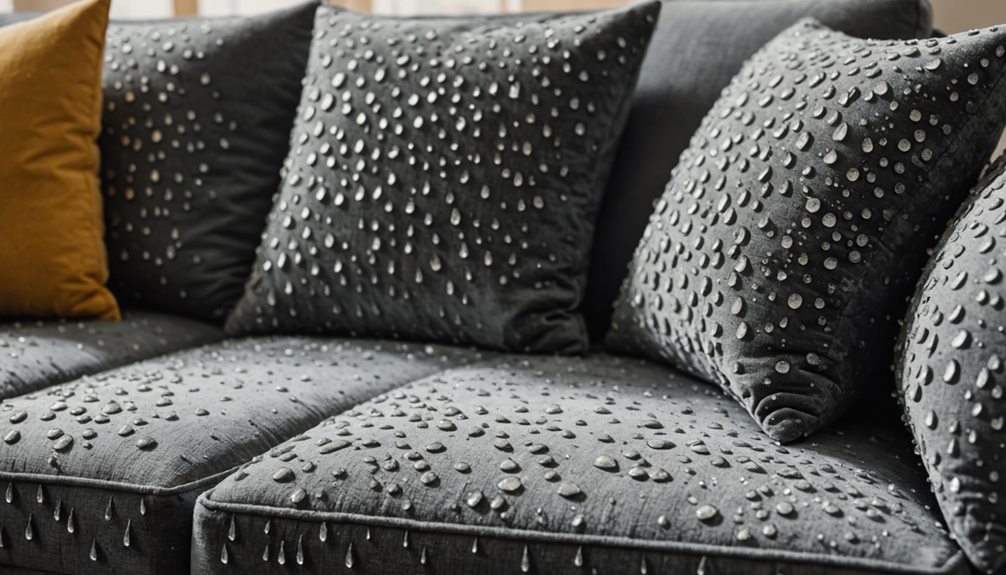
Excessive moisture can be one of the biggest pitfalls in upholstery cleaning, leading to a host of problems that are both avoidable and costly. When cleaning your furniture, it’s essential to understand its absorption capacity. Each type of fabric has a different absorption rate, influencing how much moisture it can handle without damage.
Over-wetting occurs when too much water is applied, surpassing the fabric’s natural absorption limits. This can result in water stains, shrinkage, or discoloration, all of which can compromise the integrity and appearance of your furniture.
To prevent over-wetting, use a minimal amount of water and cleaning solution. Always blot rather than soak, allowing the fabric to maintain ideal moisture retention without becoming saturated.
You should aim for a balance where the cleaning solution is effective, yet the fabric doesn’t become waterlogged. This not only preserves the fabric’s color and texture but also guarantees quicker drying times, reducing the risk of mold or mildew.
Ignoring Manufacturer Instructions
Many homeowners make the critical mistake of ignoring manufacturer instructions when it comes to upholstery cleaning.
These guidelines are essential for maintaining your furniture’s appearance and longevity. Not adhering to them can void furniture warranties, leading to costly repairs or replacements.
To guarantee you’re serving others by preserving shared spaces or personal pieces, here’s how to correctly follow these instructions:
- Read the Label: Before using any cleaning product, check the label on your furniture. Manufacturers provide specific cleaning codes (e.g., W, S, SW, X) that indicate which cleaning methods are safe.
- Follow Recommended Cleaning Schedules: Regular maintenance is key. Manufacturers often suggest cleaning schedules tailored to the fabric type. Sticking to these schedules prevents dirt buildup and prolongs life of your upholstery.
- Use Approved Products: Only use cleaning solutions recommended by the manufacturer. Using unsuitable products can damage the fabric and nullify your furniture warranties.
- Test in a Hidden Area: Before applying any cleaner to a visible area, test it on a hidden spot. This guarantees the solution won’t cause discoloration or fabric damage.
Rubbing Stains Vigorously
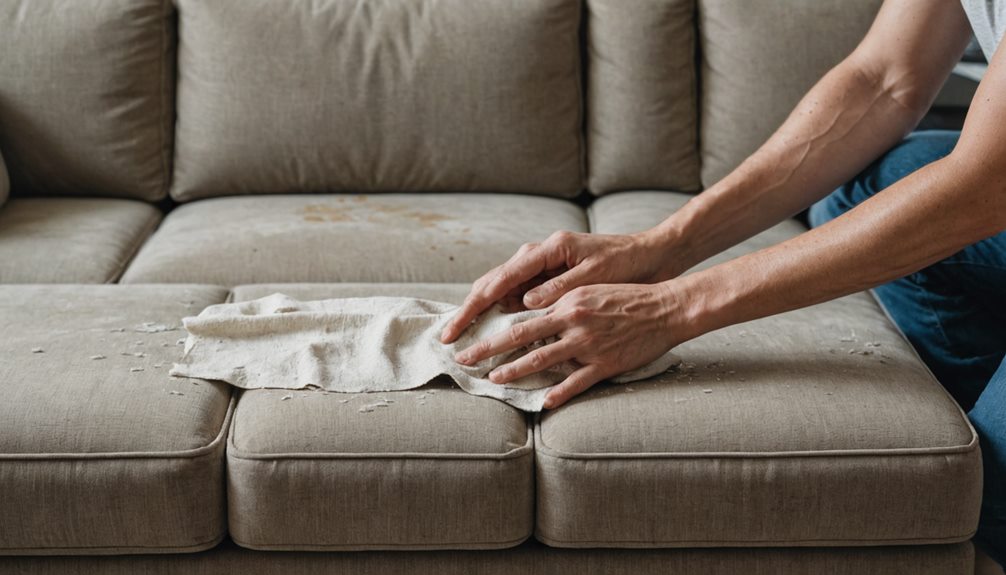
After verifying you follow manufacturer instructions, it’s important to address the common mistake of rubbing stains vigorously during upholstery cleaning. This approach can damage the fabric fibers, causing the stain to spread and become embedded deeper into the upholstery.
Instead, consider adopting effective stain removal techniques that prioritize fabric care and the longevity of your furniture.
Begin by blotting the stain gently with a clean, absorbent cloth. This helps absorb excess liquid without pushing the stain further into the fabric. Use a dabbing motion rather than a scrubbing one.
If the stain persists, apply a suitable cleaning solution specified for your upholstery type. Remember, less is more; excessive use of cleaning agents can be just as damaging as vigorous rubbing.
Allow the cleaning solution to sit for the recommended time, then blot again to lift the stain. Always test any cleaning product on a hidden area first to verify it won’t discolor or damage the fabric.
Neglecting Regular Vacuuming
Consistent vacuuming is an essential part of effective upholstery maintenance. When you neglect regular vacuuming, dust, dirt and allergens accumulate leading to premature wear and tear.
Here’s how you can incorporate proper vacuuming frequency and techniques into your routine to extend the life of your furniture:
- Set a Schedule: Aim to vacuum your upholstery at least once a week. This frequency helps in removing surface dirt before it settles deep into the fibers, making cleaning more challenging.
- Choose the Right Attachment: Use a vacuum with a soft brush attachment. This guarantees you don’t damage delicate fabrics while effectively cleaning the surface.
- Employ Proper Techniques: Move the vacuum in a systematic, overlapping pattern. This method guarantees you cover the entire surface area, avoiding missed spots where dirt can accumulate.
- Don’t Forget the Crevices: Pay special attention to folds, seams and under cushions. Dust and crumbs often hide in these areas, so a crevice tool is essential for thorough cleaning.
Applying Excessive Heat
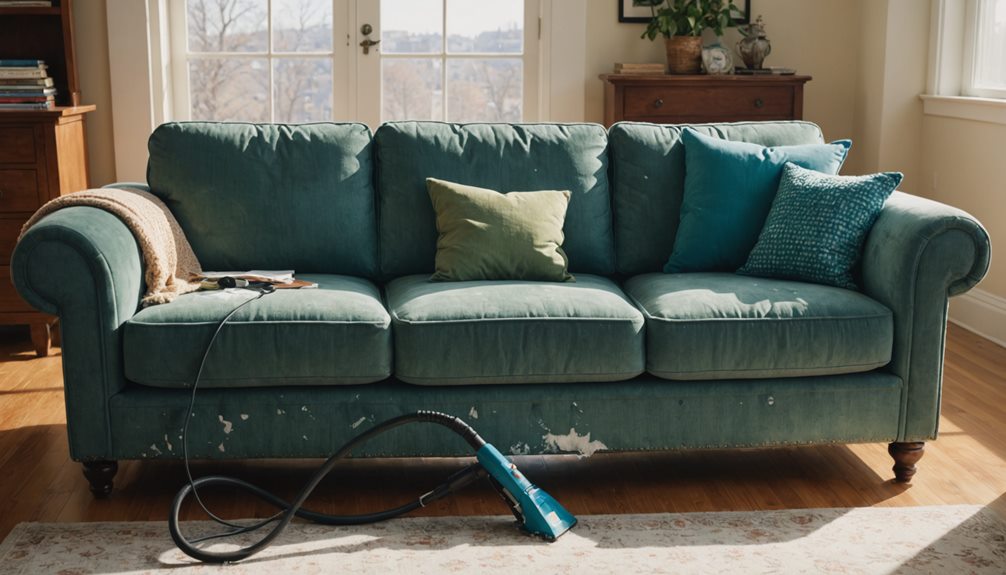
Applying excessive heat during upholstery cleaning can spell disaster for your furniture. When you use too much heat, you risk causing irreversible heat damage to various fabric types. Each fabric has its own tolerance level, and exceeding it can lead to shrinkage, warping or even discoloration.
For instance, delicate fabrics like silk and wool are particularly vulnerable and can easily suffer from heat exposure. Even synthetic fabrics which are generally more resilient can melt or lose their texture if they come into contact with high temperatures.
To guarantee the longevity of your furniture, it’s essential to understand the specific needs of each fabric type. Start by checking the manufacturer’s cleaning instructions, which often include guidance on temperature limits.
If you’re unsure, opting for a lukewarm or cold cleaning method is typically safer. Steam cleaners, while effective, should be used cautiously. Always test a small, inconspicuous area first.
Forgetting to Rinse Residue
While it’s important to manage heat levels during upholstery cleaning, it’s equally essential to ensure you don’t forget the rinsing step. Failing to rinse away cleaning solutions can lead to residue build-up which not only attracts dirt but also accelerates wear and tear on your furniture.
To maintain the longevity of your upholstery, you must adapt your approach based on cleaning frequency and fabric types.
Consider these steps to ensure a thorough rinse:
- Assess Fabric Type: Different fabrics require specific cleaning techniques. Delicate materials like silk need a gentle rinse while more robust fabrics such as microfiber may withstand more vigorous rinsing.
- Set a Cleaning Schedule: Establish a cleaning frequency that’s appropriate for your household’s activity level. Regularly scheduled cleanings prevent residue accumulation ensuring your furniture stays fresh and inviting.
- Use the Right Tools: Invest in quality tools suited for your fabric types. A spray bottle or handheld steam cleaner can efficiently rinse away residues without drenching the material.
- Check for Residue: After cleaning, run your hand over the fabric. If it feels sticky, it’s a sign that more rinsing is needed. Ensuring no residue remains will keep your furniture looking its best for years to come.
Conclusion
To keep your furniture as timeless as a classic novel, remember to sidestep these common upholstery cleaning blunders. Think of your care routine as a gentle dance—choose the right partners in cleaning products, and don’t skip spot testing. Embrace the art of subtlety; avoid over-wetting and excessive heat. Follow the manufacturer’s script and maintain a regular vacuuming rhythm. By doing so, you guarantee your furniture remains a masterpiece, free of stains and damage.
If you’re eager to learn more or have any questions, I warmly invite you to visit Hydra Clean of Hattiesburg MS at myhydraclean.com. Or, if you prefer a more personal touch, feel free to give us a call at (601) 336-2411. We’re here to help you keep your furniture looking its best!