
Imagine your roof as the frontline defender against the relentless onslaught of moss and algae. You might believe these invaders are unstoppable, but with the right strategies, you can maintain a pristine roof. Start by regularly inspecting your roof and trimming those pesky overhanging branches that block sunlight. Installing zinc or copper strips can be a game-changer, while simple household items like baking soda and vinegar offer surprising solutions. But it doesn’t stop there; proper drainage and gutter maintenance play pivotal roles. Curious about how else you can fortify your roof’s defenses? There’s more to explore.
Regular Roof Inspections
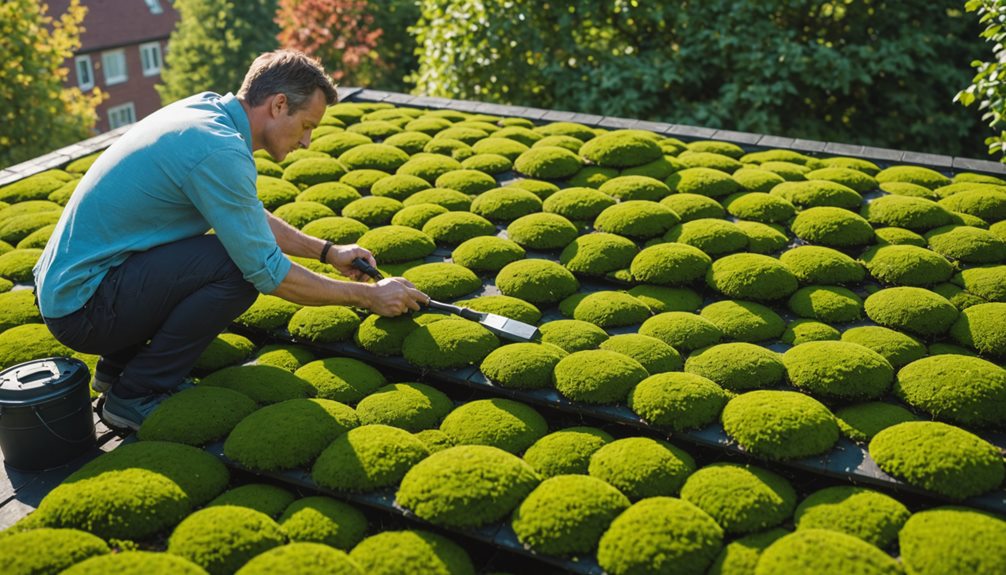
Conducting regular roof inspections is crucial for maintaining the integrity and longevity of your roofing system. By carrying out seasonal checkups, you address potential issues before they escalate into costly repairs.
As someone committed to serving others, understanding the importance of roof inspection becomes essential. It guarantees that your home provides a safe and secure environment for those you care about.
Start by examining your roof’s surface for signs of wear and tear, such as missing or damaged shingles, which could lead to leaks. Check for any areas where water might pool, as these are prime spots for moss and algae growth.
Also, inspect flashings around vents and chimneys for gaps or corrosion. Don’t forget to examine the gutters for clogs; blocked gutters can cause water to back up and damage your roof’s structure.
Seasonal checkups should align with significant weather changes—spring and fall are ideal times. This proactive approach allows you to prepare for the coming months and prevent weather-related damage.
Trim Overhanging Branches
While regular roof inspections help identify potential issues, addressing overhanging branches is another vital aspect of roof maintenance.
Pruning trees near your roof not only prevents physical damage but also reduces the risk of moss and algae growth. Overhanging branches can cast shadows on your roof, limiting sunlight exposure. This lack of sunlight creates a damp environment, ideal for the proliferation of moss and algae.
When you engage in tree pruning, focus on branches that stretch over the roof or are close enough to touch it during windy conditions.
Use appropriate tools, such as pole pruners or saws, to guarantee a clean cut and avoid damage to the tree or roof. It’s important to trim branches back to a natural branch collar to promote healthy regrowth and prevent diseases in the tree.
Install Zinc or Copper Strips
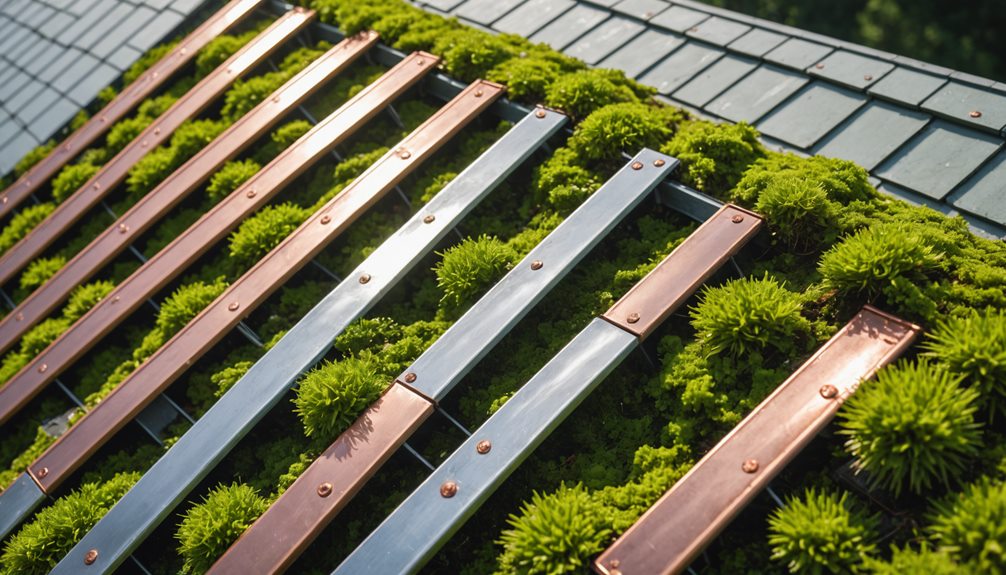
If you’re looking for an effective solution to prevent moss and algae growth on your roof, consider installing zinc or copper strips. These metals possess natural properties that inhibit the growth of unsightly moss and algae.
When it rains, zinc and copper ions are released, creating an environment that’s hostile to these organisms. By choosing zinc, you benefit from its proven effectiveness in controlling moss growth. Alternatively, copper offers significant longevity; providing a durable solution that can last for decades.
To guarantee peak performance, install these strips near the roof’s peak so rainwater washes the ions down across the surface evenly. This method requires minimal maintenance, allowing you to focus on serving others rather than constantly cleaning your roof.
Here are some tips for installation:
- Select the Right Material: Choose zinc for effectiveness or copper for longevity, based on your specific needs.
- Proper Placement: Install strips at intervals along the roof to maximize coverage and effectiveness.
- Secure Attachment: Use corrosion-resistant nails or screws to ensure the strips remain securely attached through varying weather conditions.
Use Baking Soda Solution
Simplicity meets effectiveness when you use a baking soda solution to clean your roof. As a natural cleaner, baking soda offers an environmentally friendly and cost-effective method to prevent moss and algae growth.
Begin by gathering your materials: a bucket, a hose with a spray attachment, and a box of baking soda.
Mix a generous amount of baking soda with water in the bucket until it is well-dissolved. Aim for a thick consistency that will adhere to the roof surface.
With the spray attachment, evenly apply the solution across your roof; focusing on areas prone to moss and algae. The alkaline nature of baking soda disrupts their pH balance; creating an inhospitable environment for these unwanted growths.
It’s essential to apply this solution during dry weather conditions; allowing maximum absorption and effectiveness. After application, let it sit for several days before rinsing it off with water. This gives ample time for baking soda to work its magic effectively.
Incorporating this method into your regular maintenance routine not only extends your roof’s lifespan but also contributes to a cleaner, healthier environment. This reflects your commitment to serving others through sustainable practices.
Apply Vinegar Spray
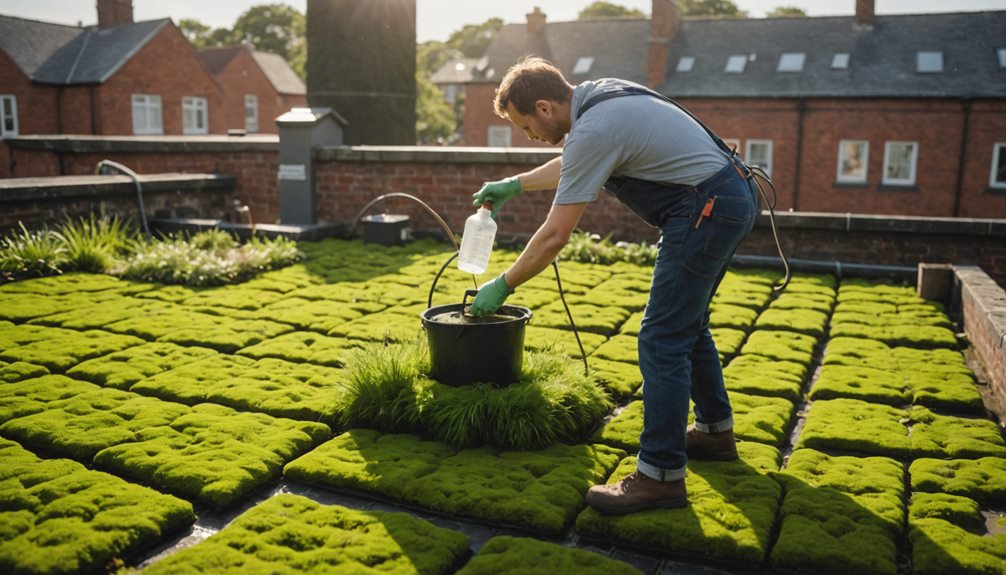
Enhancing your roof cleaning regimen, applying a vinegar spray offers a straightforward and efficient approach to tackle stubborn stains and biological growths.
Vinegar is an eco-friendly and cost-effective solution that possesses natural acidic properties that effectively eliminate moss and algae. To maximize the benefits of vinegar, understanding proper application techniques is essential.
Firstly, select a day when the weather is dry and mild. This ensures the vinegar has adequate time to penetrate and work on the growths without being diluted by rain.
Prepare a solution by mixing equal parts of white vinegar and water in a garden sprayer. This mixture is potent enough to address most roof issues.
When applying the solution, ensure the sprayer is set to a fine mist for even coverage across the roof. Begin spraying from top down; this prevents streaks and ensures consistent application.
Allow the solution to sit for at least 20 minutes; this enables vinegar to break down unwanted growth effectively.
- Effective on moss: Vinegar’s acidity disrupts moss cell structure.
- Deters Algae: Regular applications prevent regrowth.
- Eco-friendly cleaning: Safe for both environment and surrounding plants.
This method will help you maintain a clean, moss-free roof efficiently.
Pressure Wash Carefully
Precision is key when pressure washing your roof. Begin by evaluating the roof’s condition to determine the appropriate pressure setting. Too much pressure can damage shingles and underlying materials, while too little won’t effectively remove moss and algae. Opt for a pressure washer with adjustable settings to tailor the force according to your roof’s specific needs.
Position yourself safely on a stable ladder or harness system, ensuring you have secure footing and proper protective gear. Direct the spray at a downward angle; maintaining a consistent distance of about 12-18 inches from the surface. This technique prevents water from seeping under shingles, which could lead to leaks or structural damage over time.
When implementing your cleaning techniques, work methodically in small sections; moving the washer’s nozzle in a sweeping motion. This approach guarantees even coverage and avoids concentrated pressure that could erode the roof surface. Pay attention to areas where moss and algae accumulate, such as shaded sections or those with poor drainage.
As part of thorough roof maintenance, regularly inspect your gutters and downspouts; clearing any debris post-washing to facilitate proper water flow and prevent future growth of unwanted organisms.
Homemade Soap Mixture

While pressure washing is an effective method for cleaning your roof, employing a homemade soap mixture can enhance this process by effectively breaking down stubborn moss and algae.
To create this solution, you’ll need biodegradable dish soap, water, and some baking soda. This combination not only boosts the soap’s effectiveness but also remains gentle on your roofing materials.
Here’s how to prepare your mixture:
- Mix one cup of biodegradable dish soap with two gallons of water.
- Add a half-cup of baking soda to enhance the cleaning power.
- Stir the solution until all ingredients are well combined.
Once your mixture is ready, apply it generously to the affected areas using a sprayer or soft brush. Allow it to sit for about 15-20 minutes; this guarantees thorough penetration.
Remember, when working on your roof, safety precautions are paramount. Wear non-slip shoes, use a stable ladder and have someone nearby to assist you if necessary.
This homemade soap mixture is an excellent alternative to harsh chemicals; protecting both your roof and the environment.
Ensure Proper Drainage
Proper drainage is essential for maintaining the longevity of your roof; even a small amount of standing water can lead to significant damage over time. To guarantee effective drainage, you must first assess the roof slope. The slope directs rainwater towards drainage systems; preventing accumulation that can foster moss and algae growth. Ensure that your roof’s pitch is sufficient for efficient water runoff.
Next, inspect your drainage systems including gutters, downspouts and drains. These components must be free from debris and blockages in order to function at peak performance. Regularly clean gutters and downspouts to prevent water from backing up causing leaks or rotting woodwork.
Check for any signs of wear or damage as these can compromise system effectiveness. Consider installing gutter guards as they reduce debris buildup; minimizing maintenance while enhancing water flow efficiency.
If drainage systems operate efficiently they channel water away from the roof and foundation; preserving structural integrity. Lastly, verify that drainage outlets are clear and positioned correctly. Misaligned or clogged outlets can disrupt water flow leading to standing water issues.
Properly maintained drainage systems and roof slope guarantee your roof remains moss-free and durable for years.
Use Moss-Resistant Shingles
Moss-resistant shingles offer a proactive solution for maintaining a clean and durable roof. By incorporating moss-resistant materials, you can significantly enhance your roofing longevity.
These specialized shingles are designed to inhibit moss and algae growth; ensuring your roof stays in top condition with minimal maintenance. When selecting shingles, look for those embedded with copper or zinc granules as these materials naturally deter moss.
To make your decision easier, consider the following benefits of choosing moss-resistant shingles:
- Reduced Maintenance: With less moss and algae growth, you’ll spend less time cleaning your roof; allowing you to focus on more pressing tasks.
- Improved Roof Appearance: These shingles help maintain the aesthetic appeal of your home; keeping it looking fresh and inviting to those you serve.
- Extended Roof Life: By minimizing moisture retention and organic growth, these shingles contribute to the longevity of your roofing system; protecting your investment.
Consider collaborating with a professional roofing contractor who understands the importance of using moss-resistant materials. They can guide you through the selection process; ensuring you choose the best shingles for your specific needs.
Embrace this proactive approach to extend your roof’s lifespan while serving others with a well-maintained home.
Clean Gutters Frequently
Regularly cleaning your gutters plays a critical role in maintaining your roof’s structural integrity and preventing potential water damage. By ensuring efficient gutter maintenance, you minimize the risk of moss and algae thriving due to water pooling on the roof. Clogged gutters can lead to overflow, which often results in moisture seeping into roofing materials and creating an ideal environment for these unwanted growths.
Implementing a strategic seasonal cleaning plan is essential. Aim to clear your gutters at least twice a year—preferably in spring and fall—when debris accumulation is most prevalent. During this process, remove leaves, twigs, and any organic matter obstructing water flow. Utilizing specialized tools like a gutter scoop or pressure washer can enhance cleaning efficiency and guarantee thorough removal of debris.
Consider installing gutter guards as a preventive measure. These guards reduce debris buildup making seasonal cleaning less labor-intensive. Additionally, inspect downspouts to confirm that they’re not clogged; guaranteeing water is directed away from the house foundation.
Conclusion
Imagine your roof as a fortress standing strong against the relentless advance of moss and algae. By regularly inspecting for weak spots, trimming back leafy intruders, installing zinc or copper guardians; you’re fortifying your defenses. Arm yourself with eco-friendly solutions like baking soda and vinegar; ensuring proper drainage guides the enemy away. With gutters clear and moss-resistant shingles in place; your roof will gleam under the sun—a symbol of meticulous care and strategic planning.
If you’re looking for more tips and tricks to keep your roof in tip-top shape, why not visit Hydra Clean of Hattiesburg MS at myhydraclean.com? We’re here to help you with all your roof cleaning needs. Feel free to give us a call at (601) 336-2411. We’d love to chat and offer our expertise to ensure your fortress stands strong!