
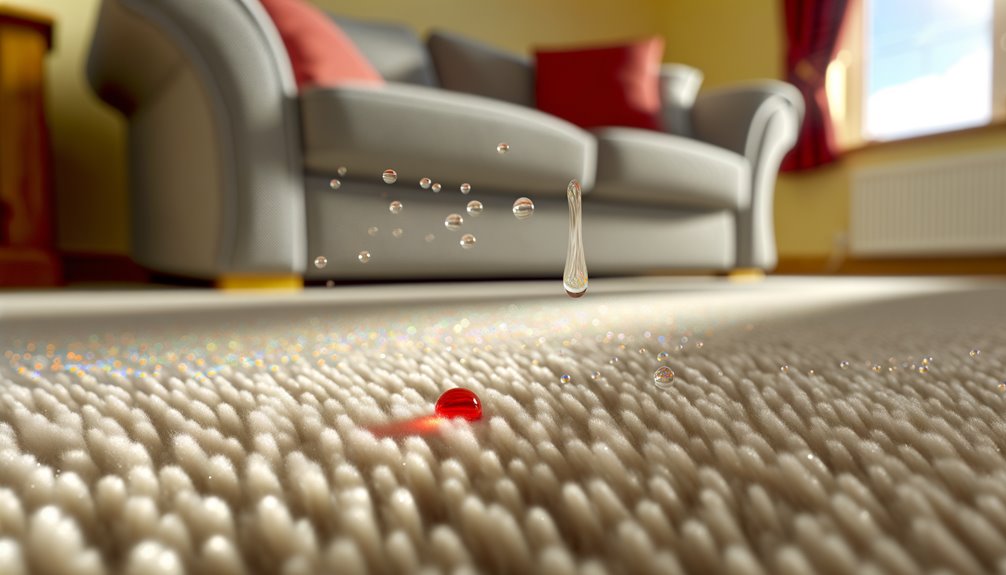
Like a raincoat for fibers, Scotchgard Protector gives your carpets and upholstery a low-surface-energy shield that resists water, oils, and gritty soils. You apply it after cleaning, it bonds microscopically, dries clear, and helps spills bead up for easier blotting while reducing abrasion. It’s best on synthetics and many blends, but coverage, cure times, and fabric compatibility matter. Miss those details, and performance drops—yet one simple step often makes the difference you’re not accounting for.
What Scotchgard Protector Is and Why It Matters

Start with the basics: Scotchgard Protector is a fluorochemical or silicone-based treatment that bonds to fibers to create a hydrophobic and oleophobic barrier, reducing the surface energy so liquids bead up and soils don’t adhere. You apply it after cleaning, ensuring uniform coverage and proper dwell time. It dries clear, won’t alter texture when correctly dosed, and supports fiber preservation by minimizing abrasion from gritty soils. You’ll improve stain prevention, extend maintenance intervals, and cut spot-removal labor. It’s suitable for most synthetics and many natural blends; always test inconspicuous areas. Reapply after deep cleans or heavy traffic to maintain consistent protection.
The Science: How It Bonds to Fibers and Repels Liquids
Although formulations vary, Scotchgard works by depositing fluorinated or silicone polymers that orient their low-surface-energy groups outward and anchor their backbones to the fiber surface. You’re leveraging fiber chemistry: polar segments interact with dye sites, hydrogen-bond donors, or finish residues, creating a thin, persistent film. That film lowers surface tension at the air–fiber interface, so watery and oily soils bead and release during blotting. You’ll see higher contact angles, less wicking, and slower penetration. Apply evenly, allow solvent to flash, then cure per label so chains align. You’ll protect hand, colorfastness, and cleanability while preserving breathability and texture.
Ideal Surfaces: Carpets, Rugs, Upholstery, and More
Knowing how the film forms on fibers helps you pick where it performs best: dense, absorbent textiles with exposed pile or weave. Prioritize nylon and wool carpets, solution-dyed or not, to boost stain resistance and high traffic durability. Apply to rugs with natural or synthetic pile; it shields tufts from pet accidents and food dyes. Upholstery fabrics like microfiber, chenille, twill, and linen blends benefit; tight but porous weaves accept uniform coverage. Treat automotive seats and fabric headboards; avoid slick vinyl or coated leather. Use window-facing pieces to mitigate sunlight fading. Skip open-mesh, heavily soiled, or deteriorated fibers—they won’t hold protection uniformly.
Application Guide: Steps, Dry Times, and Safety Tips
Before you spray, prep the surface and space to guarantee the coating bonds and cures correctly. Vacuum thoroughly, spot-clean, and make certain fibers are fully dry. Mask adjacent wood, metal, and electronics. Shake can 1 minute. Build two light coats; maintain 6–8 inches distance, overlapping passes by 50%. Follow application timing: second coat within 5–10 minutes while tacky. Use a ventilation checklist: open windows, run fans, and avoid ignition sources. Wear nitrile gloves and an R95/P95 mask if sensitive. Dry to touch in 1–2 hours; allow 12–24 hours cure before use. Test water-bead performance on an inconspicuous area.
Maintenance: Cleaning Spills and Reapplication Schedules
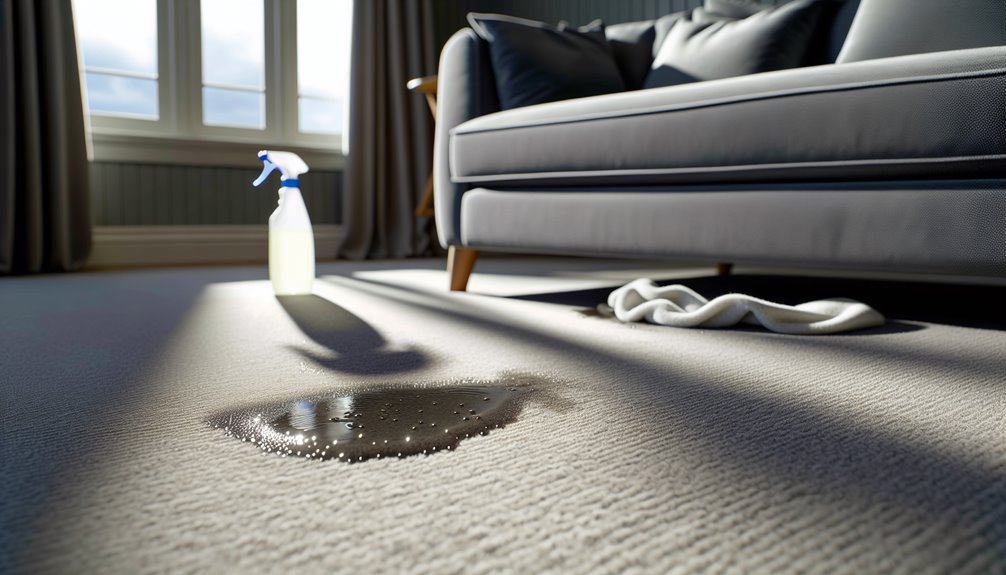
Routinely treat Scotchgard-protected surfaces like a system: act fast on spills, verify repellency, and track reapplication intervals. Blot liquids immediately with white towels; don’t rub. For semi-solids, lift with a spoon, then blot. Use a neutral pH cleaner or plain water; rinse lightly; blot dry; accelerate drying with airflow. Confirm stain prevention by placing a water droplet—beading indicates coverage. If wetting spreads or darkens fibers, plan reapplication. Typical schedules: high-traffic carpets every 6–12 months, upholstery every 12–18 months, sooner after hot-water extraction. Document dates, traffic levels, and incidents. Post-service, groom pile for even protection and fiber rejuvenation.
Pros and Cons Compared to Alternative Protectants
While Scotchgard Protector sets a high bar for oil- and water-based stain resistance on textiles, you should weigh its chemistry, durability, and maintenance implications against alternatives like fluorine-free protectants, silicone-based treatments, and nano-ceramic or polymer sealers. Fluorinated Scotchgard delivers strong oil repellency and long wear, but raises environmental impact considerations and may require careful ventilation. Fluorine-free options lower environmental impact, yet struggle with oily stains. Silicone-based treatments boost water beading, can feel slick, and need more frequent reapplication. Nano-ceramic/polymer sealers enhance abrasion resistance and longevity, but may alter hand and breathability. Compare coverage rates, cure times, and cleanability before choosing.
Compatibility and Cautions for Different Fabrics and Dyes
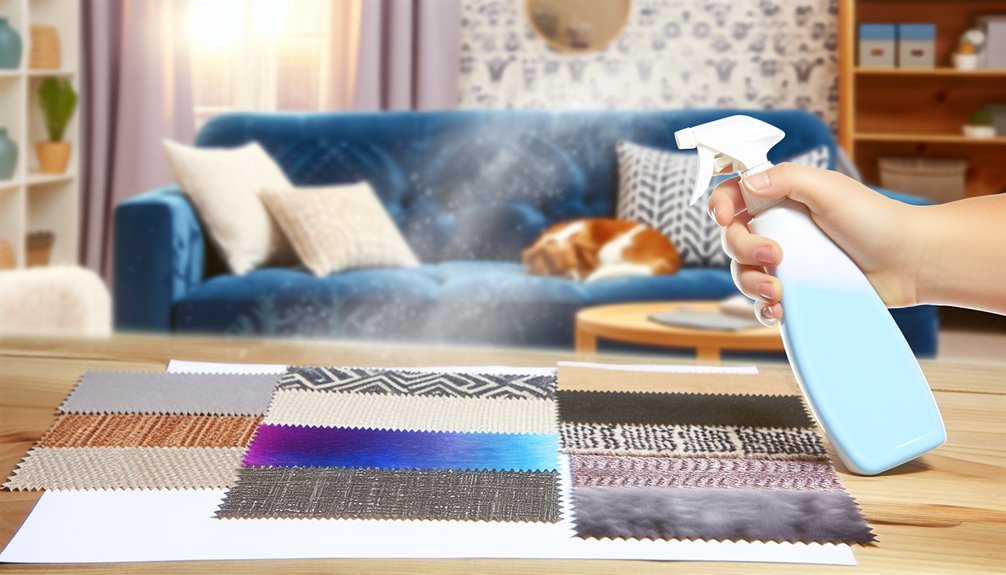
Although Scotchgard Protector works on many textiles, you need to match the formulation and application method to the fabric’s fiber type, weave, and dye system to prevent discoloration, hand changes, or reduced breathability. Confirm fiber content: wool, silk, rayon, and delicate blends demand solvent-based or low-moisture variants. Perform colorfast testing on hidden areas; blot with white cloth after a light mist. Avoid oversaturation on open weaves and chenille; apply light, even passes. For solution-dyed synthetics, use standard formulas; for vintage dyes and prints, proceed cautiously or avoid. Maintain airflow, moderate temperature, and 8–12 hours cure. Don’t treat leather, suede, or waxed fabrics.
Cost, Coverage, and How to Choose the Right Product
Now that you know which fabrics and dyes tolerate Scotchgard, match your choice to budget and square-foot needs. Compare pricing tiers: consumer aerosol, contractor concentrate, and eco-forward formulas. Check solids content and fluoropolymer type; higher actives boost repellency but raise cost. Use coverage estimates on labels—typical aerosols treat 40–60 sq ft per can; concentrates vary by dilution from 500–1,500 sq ft per gallon. Calculate total cost per treated square foot, not per container. Prioritize GreenGuard or low-VOC where clients are sensitive. Choose fabric-specific versions for wool, microfiber, or outdoor acrylics. Plan for two light coats, with reapplication intervals documented.
Conclusion
As the proud owner of Hydra Clean here in Hattiesburg, MS, I truly believe in the power of Scotchgard to protect your carpets and upholstery. It’s like giving your fabrics a shield against everyday spills and stains, allowing you to enjoy your home without worry. I invite you to visit myhydraclean.com or give us a call at (601) 336-2411 to learn more about how we can help keep your home looking its best. Let’s work together to create a clean and inviting space you’ll love!