

Up to 90% of floor wear occurs along predictable traffic lanes, which you can map in a single walk-through. Start by documenting scuffs, finish loss, and substrate movement, then match issues to root causes like grit load or maintenance gaps. Choose prep by material—neutralize terrazzo, deep-scrub VCT, HEPA sand wood—and specify compatible sealers or high-solids finishes. Coordinate curing with business hours and slip-resistance targets. Next, you’ll pinpoint cost-smart fixes that won’t stall operations.
Assessing Wear Patterns and Root Causes

Before you plan repairs, map where and how the floor is degrading to pinpoint the mechanisms at work. Perform systematic wear analysis: grid the space, log traffic vectors, document abrasion, staining, spalling, and gloss loss. Correlate hot spots with entry points, turning radii, moisture sources, UV exposure, and maintenance routes. Use slip meters, gloss meters, moisture meters, and surface hardness tests. For cause identification, separate mechanical wear from chemical attack and substrate movement. Inspect junctions, drainage, and matting efficacy. Review cleaning agents, dwell times, and pad aggressiveness. Interview staff about peak loads and carts. Prioritize root causes, then stage targeted mitigations.
Matching Restoration Methods to Flooring Types
Although traffic loads may look similar across sites, you’ll only get durable results by aligning restoration tactics to the floor’s material, finish system, and substrate. Match restoration techniques to specific flooring materials: For concrete, profile with diamond-grit sequence, densify, then guard or urethane; repair joints with semi-rigid polyurea. For terrazzo, hone progressively, grout-fill pinholes, polish, and apply penetrating sealer. For VCT, strip, neutralize, apply thin, high-solids finish; heat-weld seam repairs. For rubber, deep clean with non-petroleum agents, revitalize with manufacturer-approved conditioner. For wood, moisture-check, abrade within system, spot-fill, and recoat; for severe wear, sand to spec and apply catalyzed finish.
Cost-Smart Repairs That Minimize Downtime

With materials and finishes defined, you can plan cost‑smart repairs that keep doors open and crews efficient. Segment work zones to maintain safe circulation and revenue. Prioritize triage: address trip hazards and moisture intrusions first. Specify rapid‑set binders, UV‑cured coatings, and low‑odor systems to enable same‑day turnover. Use modular replacements for tiles and planks to avoid full‑area shutdowns. Standardize SKUs to streamline inventory and reduce waste. Schedule evening cures and staggered shifts—time efficient strategies that protect service hours. Document unit costs and cycle times to select cost effective solutions. Verify slip resistance and recoat windows to align with maintenance budgets.
Surface Prep Techniques That Make Restorations Last
Because durability starts at the substrate, surface prep must be systematic, measurable, and matched to the floor’s material and traffic load. First, verify moisture with ASTM F2170/F1869 and map cracks, hollow spots, and differential wear. Remove surface contamination—oils, adhesives, and silicates—using alkaline cleaners, emulsifiers, and mechanical scarification as needed. Select sanding techniques by substrate: screen wood with progressive grits, shot-blast concrete to CSP 2–4, and diamond-grind terrazzo to open pores without glazing. Vacuum with HEPA equipment; confirm cleanliness via white-rag and tape tests. Repair divots and joints with compatible fillers. Finish by profiling edges and changes for uniform adhesion.
Protective Coatings, Sealers, and Finishes That Work
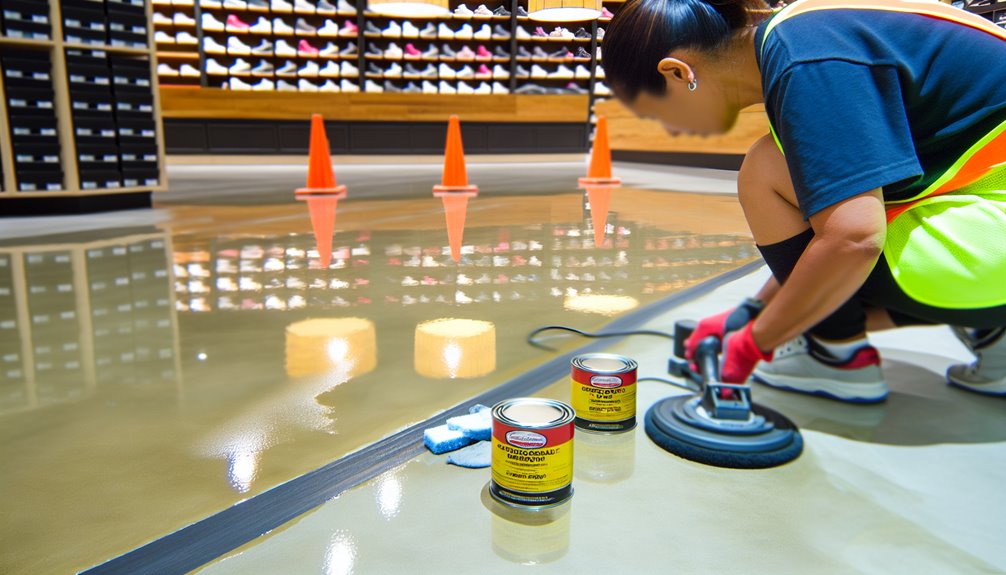
Two factors drive successful protection on high-traffic floors: matching chemistry to substrate and calibrating film build to service conditions. You’ll pair urethane for abrasion, epoxy for chemical resistance, and penetrating silane/siloxane for porous mineral floors. Verify moisture vapor emission; specify vapor-tolerant primers when needed. Target DFT by zone: 2–3 mils for light retail, 5–8 mils for food service, higher where carts or forklifts operate. Control slip with micronized traction additives. For finish application, respect recoat windows, maintain 50–70°F and 40–60% RH, and use cross-hatch rolling. Test adhesion, gloss, and coefficient of friction. These steps safeguard coating longevity.
Scheduling Maintenance Around Business Operations
Although every facility runs differently, you should build a maintenance plan that aligns work windows to revenue cycles, traffic patterns, and cure times. Map footfall by hour and zone; tag areas with service levels and allowable downtime. Prioritize tasks by operational priorities: entryways during post-close, back-of-house during shift overlaps, and loading zones between deliveries. Use fast-cure systems when turnover is tight; sequence zones to maintain access paths. Create scheduling flexibility with contingency blocks, portable barriers, and reroutes. Communicate start/finish times, noise, and odors to stakeholders. Lock timelines with vendors, but require on-call crews for overruns. Track KPIs and adjust.
Safety, Compliance, and Slip-Resistance Upgrades

Even under tight operating windows, you must treat floor safety and compliance as a system: surface profile, chemistry, drainage, markings, and documentation. Begin with a risk map of traffic lanes, slopes, and change zones. Specify target COF values by area, then confirm with slip resistance testing (tribometers, wet/dry). Upgrade surfaces via diamond profiling, silica-free broadcast aggregates, or textured urethane topcoats. Pair chemistries with contaminants—oil, sugars, or surfactants—to maintain micro-roughness. Verify drainage with laser levels; correct ponding using feathered self-levelers. Install high-contrast, photoluminescent markings. Close gaps with documented inspections aligned to safety regulations, incident logs, and calibrated test records.
Building a Preventive Care Plan and Cleaning Routine
Because high-traffic floors degrade predictably under load, build a preventive care plan that assigns tasks, tools, and frequencies by zone, contaminant, and finish. Map entrances, transit paths, and service areas; define soil types (grit, grease, bio-load). Set cleaning frequency: entrances hourly, corridors 2–4x daily, service zones per shift. Specify preventive strategies: walk-off matting (15 feet), daily dry dust control, auto-scrubbing with neutral pH, spot-degreasing, periodic burnishing, scheduled recoats. Standardize pads, dilution ratios, and water temps. Log inspections, measure gloss, and track slip coefficients. Train staff, post checklists, and audit results. Adjust cycles with seasonality and occupancy.
Conclusion
At Hydra Clean in Hattiesburg, MS, we understand how vital it is to maintain your commercial floors while keeping your business running smoothly. If you’re ready to revitalize your space and protect your brand, I invite you to reach out to us! Visit myhydraclean.com or give us a call at (601) 336-2411. I’d love to chat with you about how we can help keep your floors looking their best and ensure your business stays on track. Let’s work together to create a welcoming environment for your customers!