
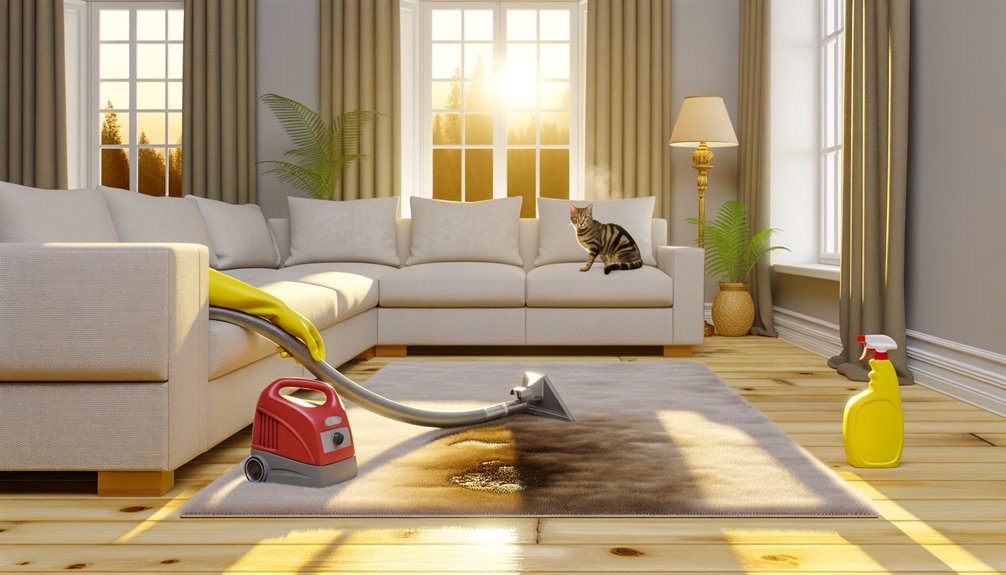
In Hattiesburg’s humidity, pet odors don’t just linger—they reactivate. You’re not fighting a smell, you’re managing rehydrating salts, proteins, and urine crystals that feed bacteria. Quick containment, precise blotting, and true enzymatic action beat masking sprays every time. Carpets and upholstery need pre-testing, thorough pre-vacuuming, controlled flushing, and fast drying with airflow and dehumidification. When contamination reaches padding or subfloors, targeted remediation prevents bounce-back. Here’s how to choose methods that actually work—and when to escalate.
Why Pet Odors Linger in Hattiesburg’s Climate
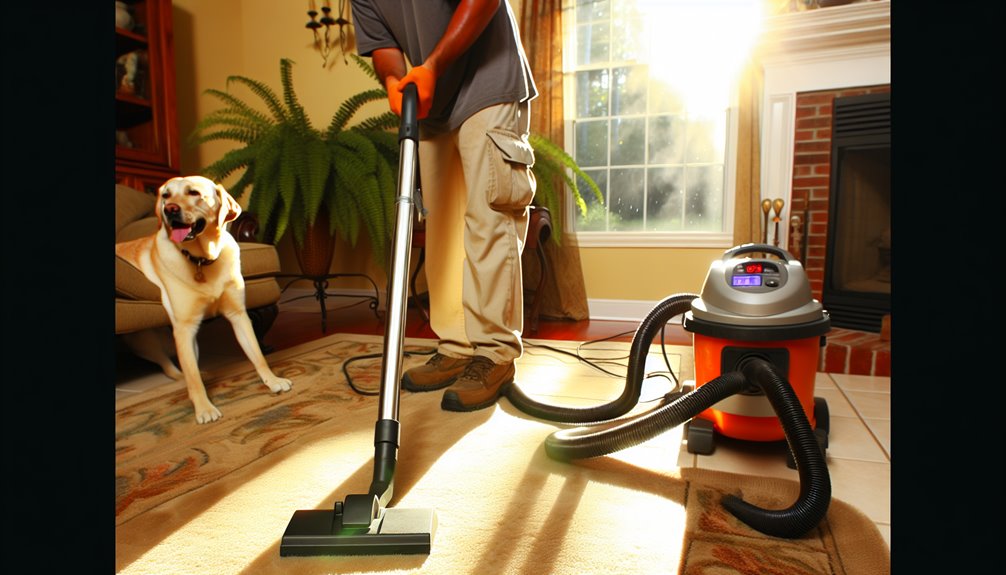
Because Hattiesburg sits in a warm, humid zone, pet odors persist due to moisture-driven chemistry and microbiology. You’re battling high humidity that slows evaporation, keeps carpets damp, and lets urine salts rehydrate, releasing ammonia and amines. Porous fibers trap organics, while elevated dew points reduce ventilation efficiency, so volatiles linger. Heat accelerates bacterial metabolism and mold growth, producing aldehydes, ketones, and sulfur compounds. Even sealed surfaces wick moisture through microfissures, reactivating residues.
To serve households well, control moisture and vapor pressure, improve air exchanges, and target residues at the molecular level. Use enzymatic oxidation, sub-surface extraction, HEPA filtration, and dehumidification.
Immediate Steps After an Accident
Knowing Hattiesburg’s humidity reactivates residues, act fast the moment a pet accident happens. Protect flooring, prevent wicking, and keep pets safe while you serve your household well. Use disposable gloves and ventilate.
- Establish a containment area with towels to stop tracking; relocate pets and kids.
- Apply the Blotting technique: press clean, white cloths from the outer edge inward. Replace cloths until transfer stops; never rub.
- Lightly mist cool water, then blot again to dilute salts and urea without spreading moisture into padding.
- Neutralize surface pH using a mild, non-sudsing rinse. Extract with a wet/dry vac; dry with airflow and desiccant.
Enzyme Cleaners vs. Traditional Deodorizers
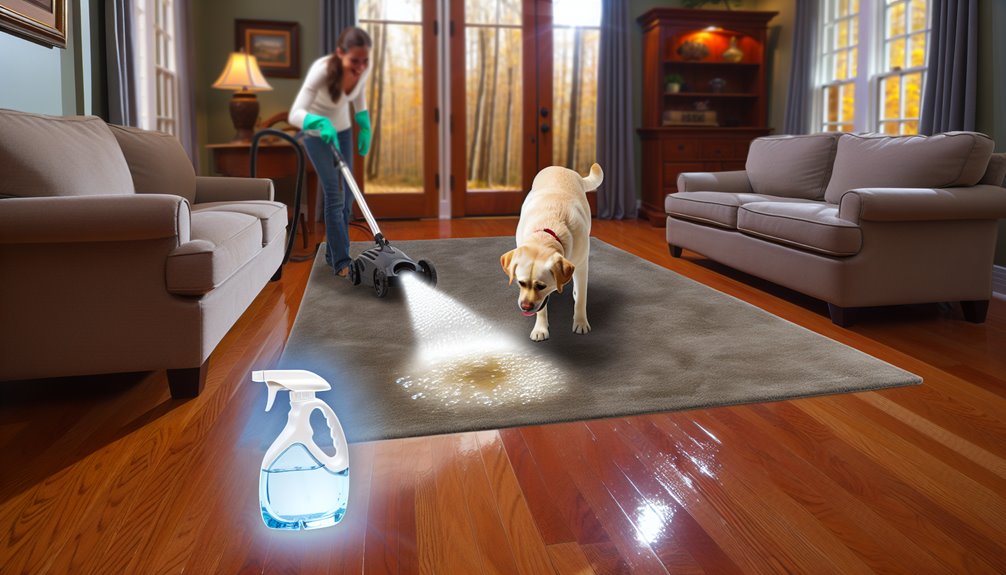
While traditional deodorizers mask smells or bind volatile compounds temporarily, enzyme cleaners biologically break down the odor sources—urea, uric acid crystals, proteins, and lipids—into inert byproducts. You’ll get durable odor neutralization because enzymatic action targets the molecular roots, not the airspace. Deodorizers rely on fragrances and cyclodextrins; they fade, leaving residues that can reactivate with humidity. Enzyme formulas deploy proteases, lipases, and urease to hydrolyze soils, then benign microbes finish the conversion. Choose products verified for pet bio-waste, proper pH, and dwell time. Blot first, saturate thoroughly, and allow complete dry-down. You’ll serve households better with verifiable, repeatable results.
Deep-Clean Strategies for Carpets, Rugs, and Upholstery
Start by mapping contamination zones and fiber types so you can match chemistry, moisture, and agitation to the substrate. Pre-vacuum thoroughly to remove dry soil that shields odor sources. Test dyes, then precondition with a urine-neutralizing pretreat. Use controlled steam cleaning for synthetics; choose low-moisture encapsulation for moisture-sensitive rugs and upholstery. Extract deeply, then speed-dry with airflow and dehumidification to prevent wicking.
- Spot-treat yellowing with reducing agents; rinse acidic.
- Flush pad-level contamination using weighted extraction.
- Groom pile to reset texture and improve dry times.
- Apply fabric protectors to repel future accidents and simplify maintenance.
When to Call the Pros and What to Expect
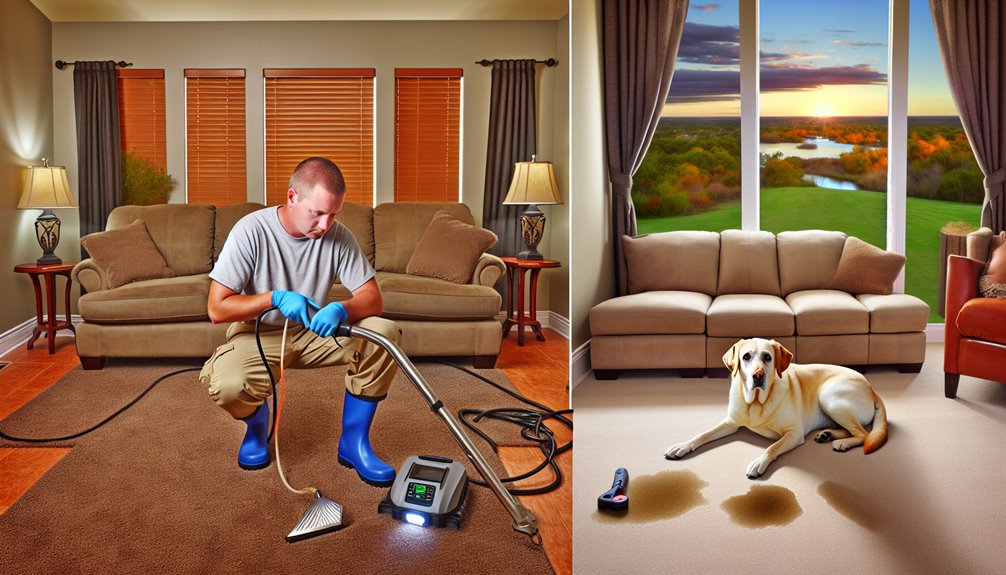
If odors persist after thorough DIY cleaning or you’re dealing with old, widespread, or pad-level contamination, it’s time to bring in a professional. When you hire professionals, you get systematic odor testing, moisture mapping, and UV detection to locate urine salts beneath carpets, baseboards, and subfloors. Expect targeted enzyme/oxidizer treatments, hot-water extraction, and, if needed, pad removal, subfloor sealing, and replacement of tack strips. Technicians document findings, explain options, and set clear timelines. They’ll balance restoration with cost, prioritize health and cleanliness, and verify results with post-treatment odor testing. You’ll receive prevention guidance, including barrier sealers, cleaning intervals, and pet behavior recommendations.
Conclusion
As the proud owner of Hydra Clean here in Hattiesburg, I understand how challenging it can be to tackle tough pet odors and stains. But don’t worry; you don’t have to face it alone! I invite you to reach out to us for expert help. Visit myhydraclean.com or give us a call at (601) 336-2411, and let’s work together to restore your home to its fresh, inviting state. Your satisfaction is our top priority, and I can’t wait to help you breathe easier in your space!