
Over 60% of premature leather wear comes from improper cleaning and sun exposure. If you know whether your sofa is aniline, semi‑aniline, pigmented, or nubuck, you’ll choose pH‑neutral products that won’t lift dyes or soften topcoats. You’ll start dry—microfiber dusting and gentle vacuuming—then spot‑test discreetly. You’ll avoid ammonia, abrasives, and over‑wetting that causes tide marks. You’ll condition thinly with micro‑emulsions and manage humidity. But the real difference comes when you handle spills like…
Know Your Leather: Aniline, Semi-Aniline, Pigmented, and Nubuck
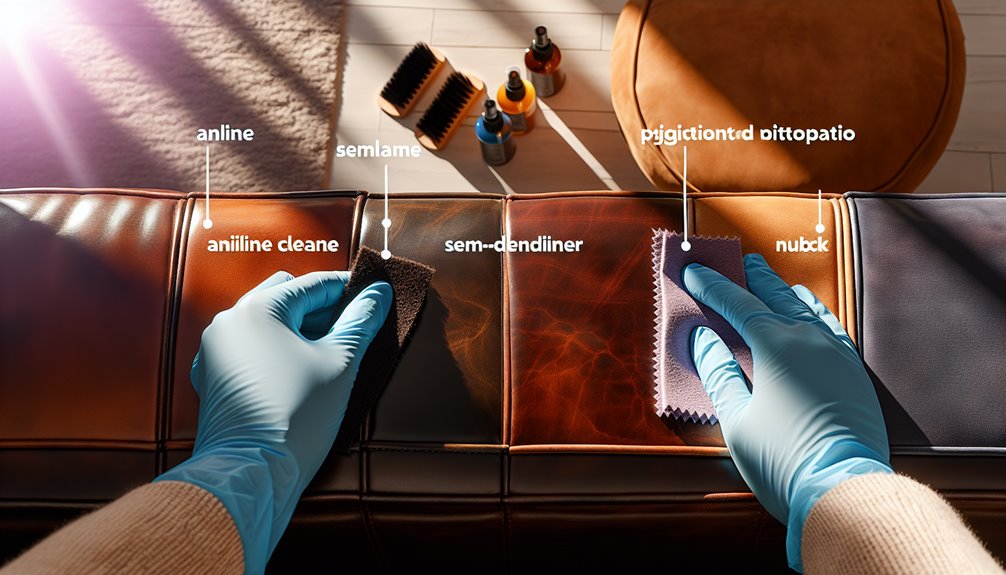
Start by identifying the leather type, because cleaning chemistry and protection strategies depend on its finish and porosity. Confirm aniline sourcing: pure aniline is dye-only, open-pored, and rapidly absorbs moisture; spot-test in a hidden area and expect fast darkening. A semi aniline finish adds a thin pigment or polymer layer, slightly sealing pores and improving stain resistance while preserving grain. Pigmented (corrected) leather carries a heavier color coat and clear topcoat, offering uniformity and higher durability. Nubuck is sanded aniline with a velvety nap, extremely absorbent and soil-prone. Match pH-neutral products, gentle agitation, and breathable protectants to each substrate.
What to Avoid: Cleaners and Tools That Harm Leather
With the leather type identified, narrow your choices by ruling out products and tools that degrade hides and finishes. You’re protecting collagen fibers, dye layers, and topcoats, so avoid chemistry and friction that strip lubricants or score grain. Prioritize pH-safe, finish-compatible products; never improvise.
- Avoid abrasive tools: scouring pads, erasers, and metal brushes scratch pigments, open pores, and accelerate dye loss, especially on aniline and nubuck.
- Skip harsh solvents: acetone, alcohol, citrus terpenes dissolve finishes and pull plasticizers, causing brittleness.
- Reject ammonia cleaners: high pH swells fibers, clouds urethane topcoats, and fixes stains. Use soft microfiber only for safe contact.
Safe Cleaning Routine: From Dusting to Spot Treatment
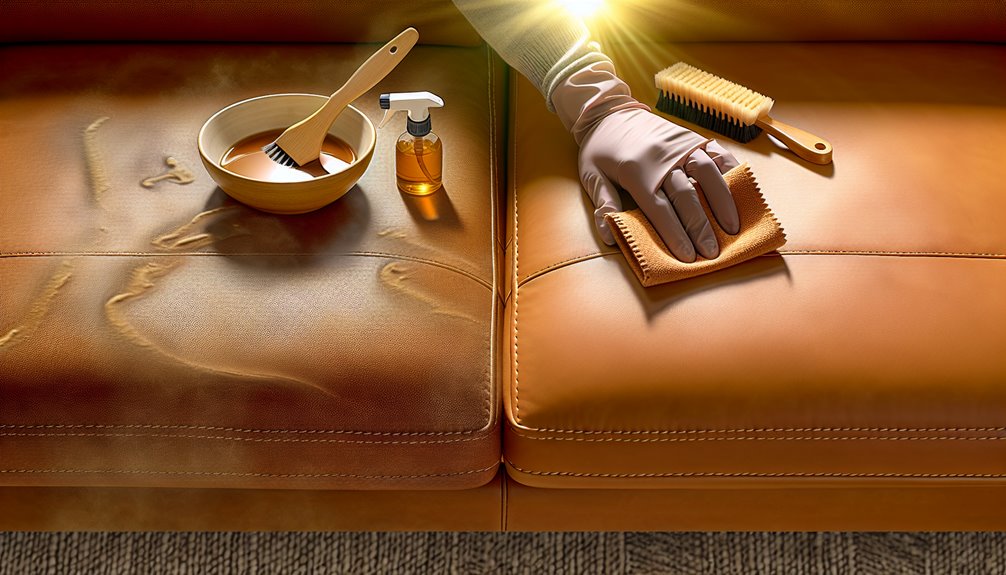
Before tackling spots, establish a gentle, finish-safe routine that guarantees grit from abrading the grain. Begin with dry microfiber brushing, lifting dust from seams and tufting without scuffing topcoat. Vacuum with a soft brush attachment, keeping the nozzle slightly off-surface. For routine soil, wipe with a barely damp, pH-neutral solution on a lint-free cloth; avoid overwetting edges and perforations. Blot, don’t rub. For fresh spills, isolate the area, test, then apply a mild soap solution; follow with light vinegar rinsing (1:20) to neutralize residues, immediately drying with airflow. Document reactions by leather type—aniline, semi-aniline, or pigmented—to guarantee repeatable, safe care.
Conditioning Done Right: Oils, Balms, and Ph Balance
Although leather seems to “dry out,” true conditioning targets the finish and the collagen fiber network without swelling, softening, or darkening the grain. You’ll choose natural conditioners that match the leather’s chemistry and maintain ph neutrality, preventing hydrolysis and finish disruption. Test inconspicuously; apply sparingly; let it level, then buff to restore slip and gloss without residue transfer.
- Select: Favor micro-emulsified natural conditioners, silicone-free, pH-neutral, dye-safe; avoid heavy oils that migrate and plasticizers that embrittle.
- Prepare: Clean to remove soils that block penetration; verify finish type (aniline, semi-aniline, pigmented).
- Apply: Thin coats, cross-hatch motion, dwell briefly, then buff; monitor absorbency and stop at saturation.
Everyday Protection: Sunlight, Humidity, and Wear Prevention
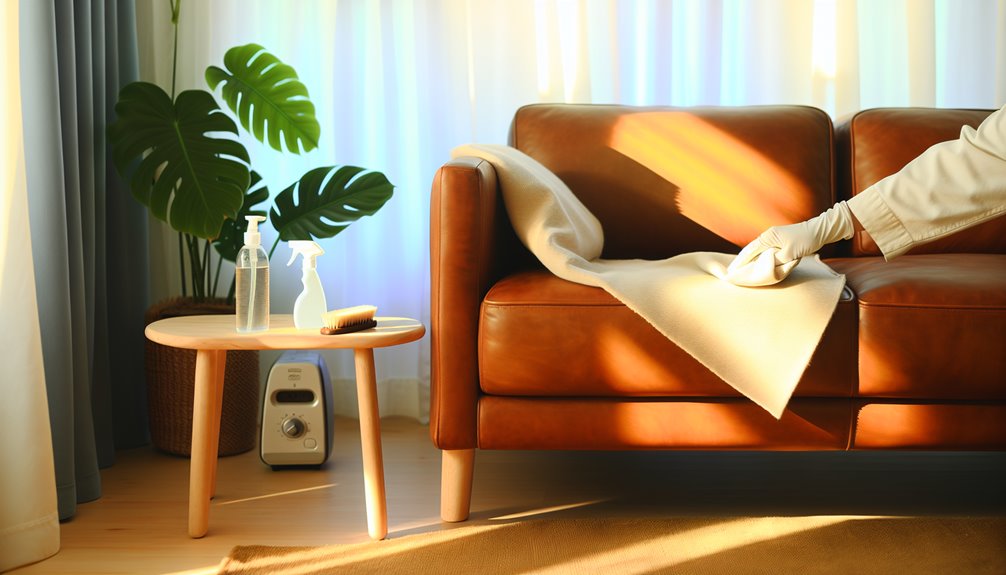
Conditioned leather only performs as intended when you control its environment—light, moisture, and abrasion dictate service life. Position seating out of direct sun; apply window films with UV filters to block photo-oxidation and pigment fade. Use Climate control: maintain 40–55% relative humidity and 65–75°F to prevent desiccation, swelling, and seam stress. Circulate air; never place vents blowing directly on hides. Rotate cushions and redistribute traffic to limit compression sheen and stretch. Add arm caps and breathable throws where hands and belts contact. Specify furniture glides and soft casters to prevent micro-tears. Clean dust with a dry, lint-free cloth to reduce abrasive wear.
Stain and Spill Playbook: Wine, Ink, Grease, and Pet Messes
Act fast, but choose the right protocol for the leather you have—protected (pigmented), aniline, or nubuck—because the chemistry of stains and finishes dictates safe removal. Blot, don’t rub. Test every product in a hidden spot. Keep pH‑balanced cleaners and white cloths ready.
- Red wine: On protected leather, blot, then apply a mild, water‑based cleaner; rinse lightly and dry. On aniline, use distilled water mist and blot; for nubuck, use a dry solvent and nubuck block.
- Ink transfers: Use a leather‑safe ink remover on protected finishes only; stop if color lifts.
- Grease and pet messes: Absorb oils with corn starch; enzymatic pet cleaner only on protected leather.
Conclusion
As the owner of Hydra Clean here in Hattiesburg, MS, I truly believe that taking care of your leather furniture should be a rewarding experience, not a daunting task. I’m here to help you every step of the way in ensuring your pieces look their best for years to come. If you have any questions or want to learn more about our safe cleaning and protection methods, I invite you to visit myhydraclean.com or give us a call at (601) 336-2411. Let’s work together to keep your leather furniture looking fantastic!