
You’re likely aware that water damage can wreak havoc on your home. But, do you know how to identify it before it evolves into a costly nightmare? Recognizing early signs, such as water stains and musty odors, is crucial. It’s important to inspect areas frequently exposed to moisture, like under sinks and near appliances. But what about those hidden leaks that aren’t so easy to spot? Understanding how to evaluate the severity of a leak and knowing when a quick fix is enough or when it’s time to call in the professionals can save you time, money, and stress.
Recognizing the Signs
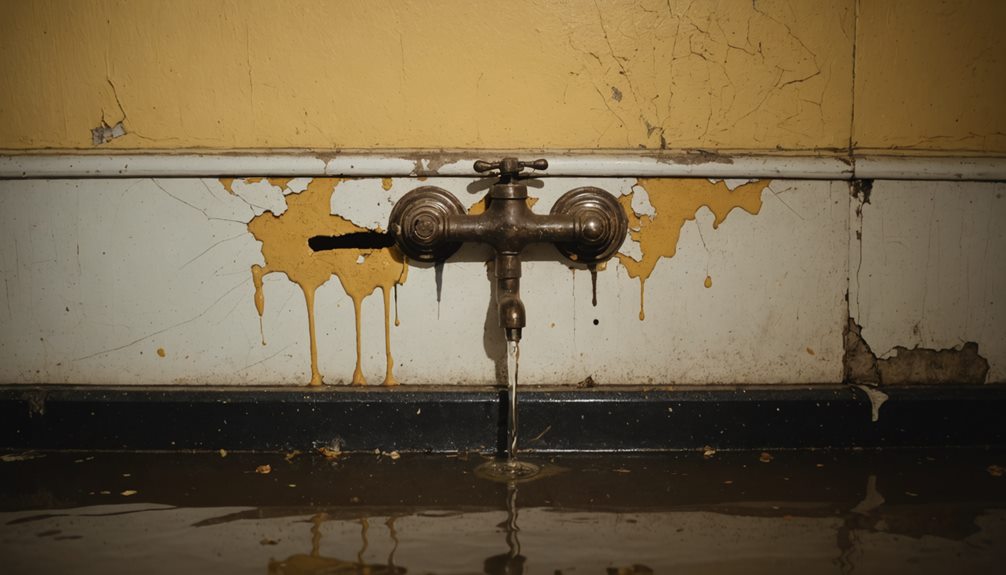
Water damage can lead to expensive repairs if not detected early; hence recognizing the signs is vital. Start with leak detection by examining areas prone to water exposure like under sinks, around toilets, and near appliances such as dishwashers and washing machines.
Look for visible signs like water stains, bubbling paint or warped flooring which indicate water intrusion. Use your sense of smell to detect musty odors – a common indicator of hidden leaks.
Conduct an extensive moisture assessment using a moisture meter – a reliable tool that measures moisture levels in various materials. Focus on areas with visible damage or where leaks are suspected.
Pay attention to walls, ceilings and floors. High moisture readings suggest the presence of water damage allowing you take action before problems escalate.
Incorporate regular inspections into your proactive maintenance routine. Educate those you serve about the importance of early detection and encourage them report any concerns immediately.
By mastering these techniques, you can prevent extensive damage, safeguard property and provide peace of mind to those relying on your expertise.
Common Sources of Water Damage
Several common sources lead to water damage and understanding them is vital for effective prevention.
Leaky roofs often result from missing or damaged shingles, allowing rainwater to seep into your home. Regularly inspect your roof to catch potential issues early.
Plumbing issues such as burst pipes or leaking faucets can cause significant damage if left unaddressed. Conduct routine checks on your plumbing system to ensure everything’s functioning properly.
Foundation cracks can also be a culprit, allowing groundwater to enter your basement or crawl spaces. Sealing these cracks promptly can prevent further damage.
Weather extremes like heavy rain or snow can exacerbate these problems making it essential to prepare your home for such events.
Appliance failures particularly from washing machines and dishwashers often lead to unexpected leaks. Regular maintenance and timely replacement of hoses can mitigate this risk.
Gutter blockages disrupt proper water flow causing overflow and potential water damage to your home’s exterior and foundation. Clear gutters regularly to ensure they function correctly.
Poor drainage around your home can lead to water pooling near the foundation while condensation buildup typically in poorly ventilated areas can foster mold growth.
Address these issues with proper ventilation and grading for maximum protection.
Evaluating the Severity
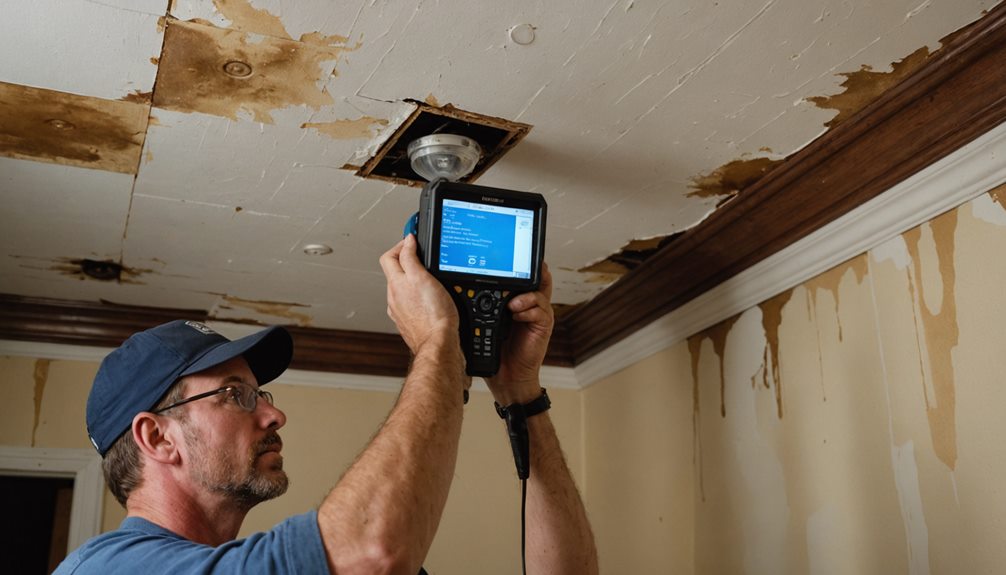
Understanding the common sources of water damage is your first step, but knowing how to assess the severity of the damage is equally important. You need to conduct a thorough damage assessment to determine the extent and depth of the issue.
Start by employing moisture detection tools like moisture meters and infrared cameras. These tools help you identify hidden moisture pockets that might not be visible to the naked eye. They’re vital for pinpointing areas where water has penetrated walls, floors or ceilings.
Once you’ve identified moisture presence, assess the affected materials. Different materials react differently to water exposure. For instance, drywall may show visible sagging or discoloration while wood can warp or crack. Understanding a material’s reaction plays a significant role in evaluating the severity of damage and planning effective interventions.
Next, consider the duration of exposure. Water that’s been stagnant for an extended period often results in more extensive damage and potential mold growth.
Evaluate if the area is structurally compromised and prioritize these concerns. By conducting a meticulous damage assessment, you’re not just addressing immediate concerns but also preventing future problems ultimately serving those impacted by ensuring their safety and property preservation.
Quick Fixes for Minor Damage
Addressing minor water damage swiftly can prevent larger problems down the line. A few quick fixes can make all difference when it comes maintaining integrity of your home.
Firstly gather an emergency kit with essential tools such as wet/dry vacuum fans dehumidifiers absorbent materials these items are essential for any immediate response to water issues
Begin with DIY solutions by promptly removing any standing water with your wet/dry vacuum this device effectively extracts water from carpets floors minimizing potential damage
Next use fans dehumidifiers enhance airflow reduce moisture levels affected area position fans strategically maximize drying efficiency let dehumidifiers run continuously absorb excess humidity
For small leaks apply waterproof sealant stop water ingress temporarily this sealant acts barrier protecting surfaces until more permanent fix possible
Always have absorbent materials like towels or sponges handy to soak up minor spills immediately.
Professional Repair Options
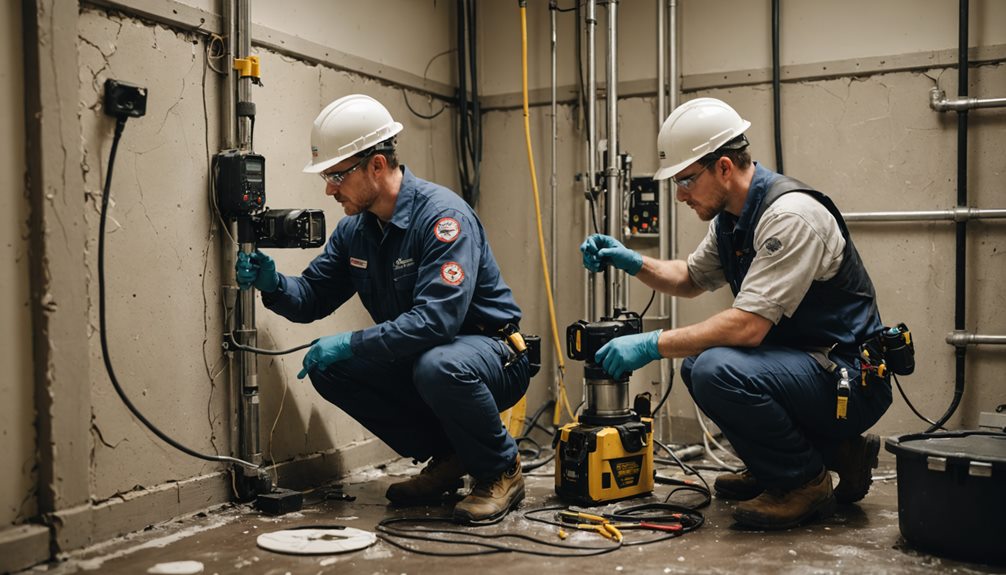
When dealing with extensive water damage, it’s vital to evaluate professional repair options for thorough solutions. Engaging licensed restoration services guarantees that you address underlying issues effectively and prevent further deterioration.
Professionals possess the technical expertise and equipment needed to handle complex restoration tasks, from water extraction to structural drying. By selecting a reputable service, you guarantee that your property is restored to its pre-damage condition with precision and care.
Before initiating any repair work, contact your insurance provider to understand the coverage specifics related to water damage. Filing insurance claims promptly can alleviate financial burdens and facilitate a smoother restoration process.
Professionals in restoration services often assist in documenting damages providing detailed assessments that support your claims their experience can guide you through intricate process of dealing with insurance companies making sure you receive compensation you’re entitled to
When choosing a restoration service consider their response time customer reviews certification rapid response is imperative mitigate damage
Certified technicians not only bring technical skills but also commitment ethical standards making certain your home is in capable hands prioritize service providers display dedication helping restore protect home
Preventative Measures
Preventative strategies are essential in safeguarding your property from water damage. By adopting water damage prevention techniques, you not only protect your investment but also guarantee the safety and well-being of those who rely on you.
Start by inspecting your home regularly for leaks or signs of moisture. Pay close attention to areas around windows, roofs, and plumbing fixtures. Early detection allows you to address potential problems before they escalate into costly repairs.
Implement moisture control strategies to maintain ideal humidity levels indoors. Use dehumidifiers in damp areas like basements and bathrooms to reduce moisture build-up. Verify your home’s ventilation systems function properly facilitating airflow preventing condensation
Regularly clean gutters downspouts direct water away foundation reducing risk seepage
Another critical measure is seal any cracks walls foundations these can become entry points for water consider installing sump pump areas prone flooding providing additional layer protection
Educate those in your household about the importance of promptly reporting leaks or spills by taking these proactive steps serve others creating safe dry environment
Conclusion
In the battle against water damage, you’re the vigilant guardian of your home. By recognizing telltale drips whispers moisture nip problems bud use toolkit quick fixes when needed call cavalry professionals with these strategies not just patching leaks fortifying fortress educate family make them allies this watery war ensuring home stands strong against tides damage
If you’re looking for more guidance or need expert help I warmly invite check out Hydra Clean Hattiesburg MS visit myhydraclean.com learn more about their services give them call at (601) 336-2411 they’re always ready help keep home safe dry!