
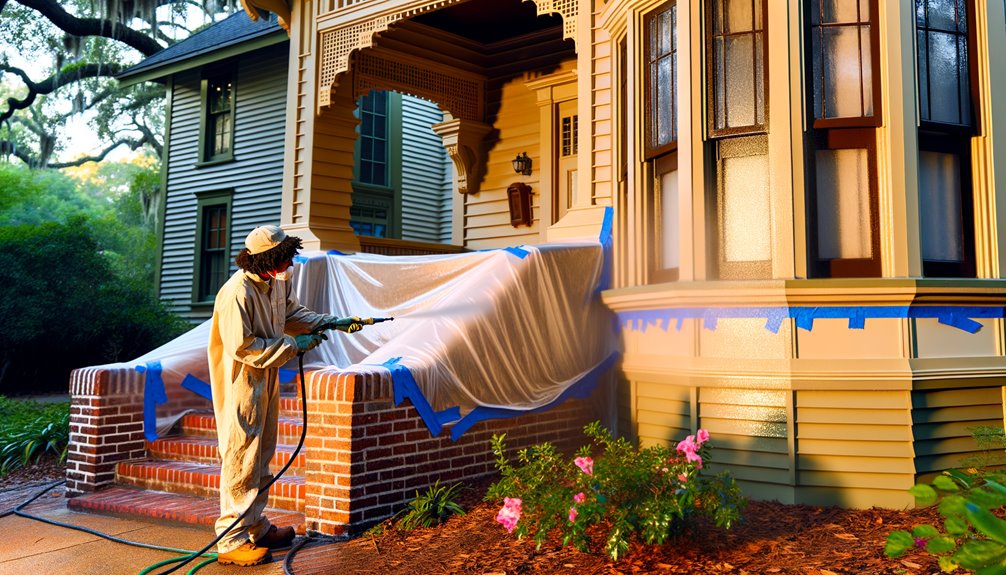
You don’t restore a 1910 porch the way you hose down vinyl siding—and that’s where HydraClean’s soft-wash approach earns its keep. You get ultra‑low pressure, pH‑balanced solutions, and on‑site adjustments that respect old brick, lime mortar, and fragile paint. They test, document, and manage moisture so stains lift without forcing water into the envelope. Even efflorescence and tannins get targeted care. Here’s how the process protects history while actually getting the job done.
Why Historic Materials Need a Different Cleaning Approach
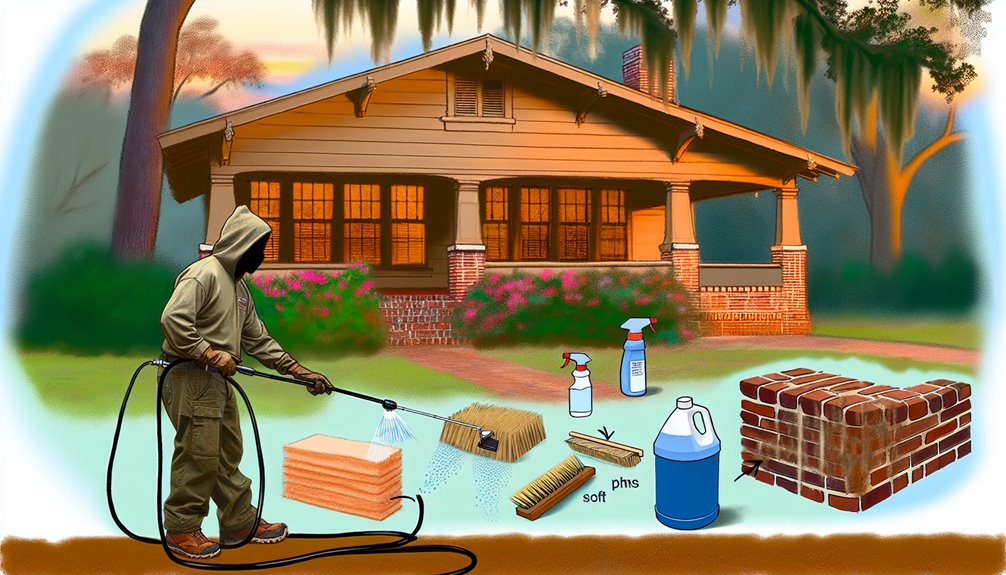
Because age changes how materials behave, you can’t treat historic surfaces like modern ones. You respect weathered brick, lime-based mortar, heart pine, and old-growth cypress because they’re softer, more porous, and quick to scar. You assess exposure, salts, and biological growth before selecting cleaning techniques that honor historic conservation. You test discreetly, watch absorption, and protect joints, glazing, and patina that tell the home’s story.
You avoid abrasive pressure, harsh chemistry, and heat that drives moisture deeper. You stage rinse cycles, control dwell time, and manage runoff to safeguard landscaping and soils. You document conditions, adjust methods, and prioritize reversibility and minimal intervention.
Hydraclean’s Soft-Wash System and Ph-Balanced Solutions
That conservation mindset guides Hydraclean’s soft-wash system, which pairs ultra-low pressure with pH-balanced solutions tailored to historic substrates. You get a precise clean that respects age, patina, and craftsmanship while removing organic films that trap moisture. We calibrate dwell times, rinse volumes, and temperatures so you don’t risk etching or fiber lift. With hydraclean innovations and ph safe formulations, every step centers your home’s long-term health.
- Assess material porosity and salts before mixing.
- Match solution pH to substrate tolerance; verify with spot tests.
- Meter ultra-low pressure to protect profiles and joints.
- Rinse to neutral, confirm with pH strips, and document results.
Protecting Old Brick, Lime Mortar, and Delicate Paint Layers
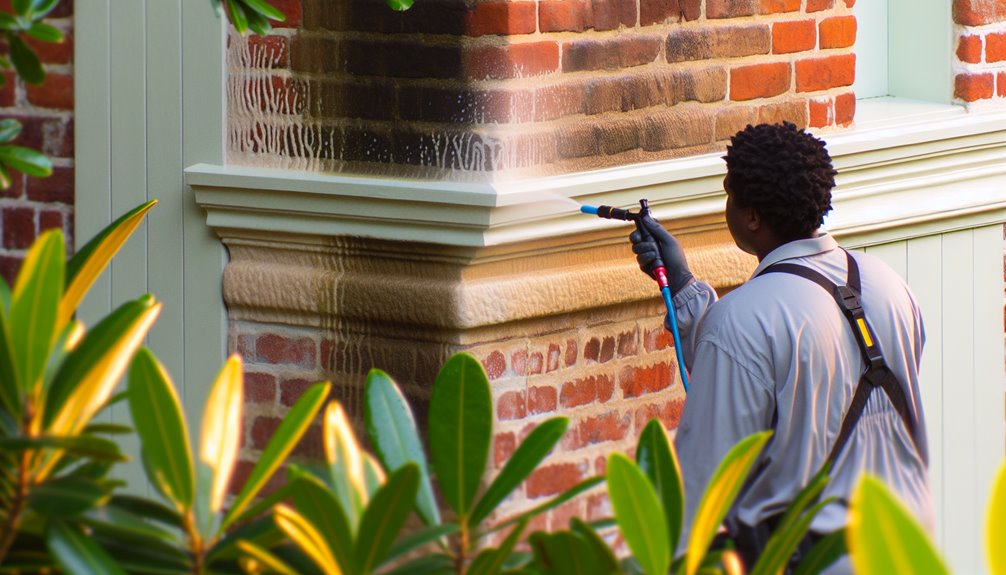
Even when masonry looks sturdy, old brick, lime-rich mortar, and fragile paint films demand a gentler playbook. You start with low-pressure rinses, testing discreet areas to confirm bond strength and porosity. You shield edges, saturate substrates to prevent chemical overdraw, and work from joints outward so lime mortar isn’t scoured. You favor neutral cleaners, soft bristle agitation, and extended dwell—never grinding abrasion. You document conditions, then adjust nozzles, flow, and distance in real time. When hairline cracks surface, you pause, dry, and re-stage. By pairing preservation techniques with traditional methods—like lime-friendly washes and breathable curing—you protect authenticity while serving homeowners’ stewardship.
Targeted Treatments for Mold, Efflorescence, Rust, and Tannin Stains
While stains can look similar at a glance, you’ll get the best results by matching chemistry and technique to the source. You respect each surface—old brick, lime mortar, and paint—by testing discreetly, selecting gentlest-first options, and adjusting dwell times.
- For mold removal, use buffered oxidizers that won’t burn lime; brush softly, then neutralize to protect pigments.
- For efflorescence treatment, apply mild acidic cleaners calibrated for historic mortar; lift salts without etching.
- For rust, choose chelators over harsh acids; isolate drips and shield adjacent finishes.
- For tannin stains, use low-pH peroxide blends; blot carefully to prevent halos and tracking.
Moisture Management: Rinsing, Dry Times, and Preventing Intrusion
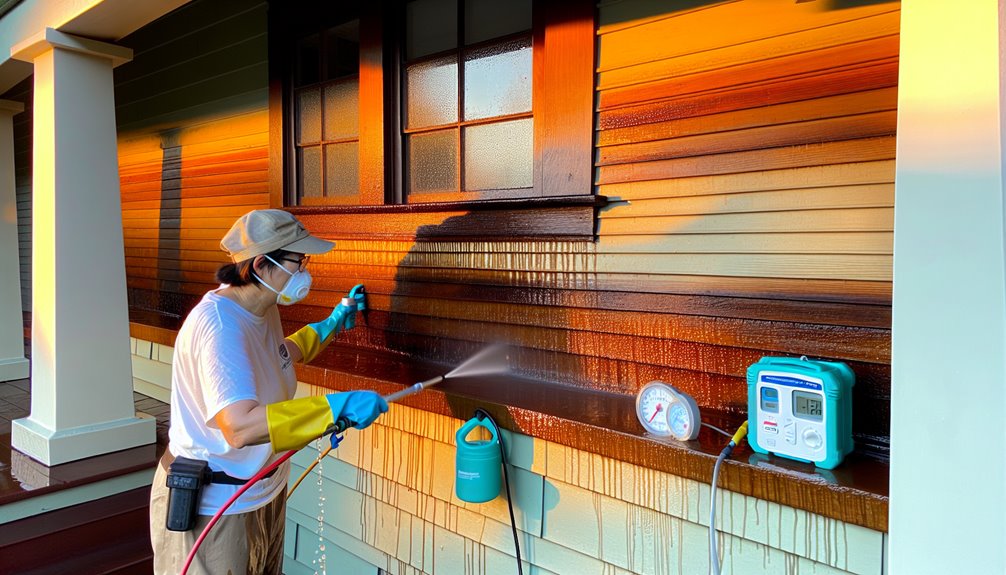
Before you ever pull a hose, plan how water will move, pause, and leave the building. You’ll safeguard soft mortar, old-growth siding, and plaster by staging rinse zones, protecting joints, and setting low-flow nozzles. Use controlled, fan-pattern rinsing; chase water downward; squeegee thresholds. Practice moisture control with timed passes and dwell checks, then meter drying: cross-ventilate, elevate air, and avoid heat that shocks brittle finishes. Monitor hidden cavities; pulse inspection at sill plates, window weights, and chimney shoulders. Seal temporarily at penetrations. Stop water intrusion with drip edges, weighted barriers, and catch basins. Verify dry times before reassembly or coatings.
Preservation-First Process: Testing, Documentation, and Ongoing Care
Blueprint for stewardship: start with small, reversible tests that respect age, materials, and prior repairs. You confirm compatibility with gentle solvents and low-pressure rinses, following testing protocols on hidden spots. You document conditions, products, pressures, and dwell times so future hands can serve the house, not guess.
- Photograph assemblies before, during, after; label locations and materials
- Log moisture, pH, and temperature alongside tool settings and outcomes
- Tag repaired areas; note historic finishes and prior interventions
- Schedule inspections; adjust care as seasons and use change
You treat maintenance as an ongoing investment—calibrated cleanings, fast drying, and periodic checks—so historic fabric breathes, endures, and welcomes.
Conclusion
At HydraClean, we take immense pride in preserving the beauty and history of Hattiesburg’s homes. I invite you to experience our gentle yet effective cleaning methods firsthand. If you’re curious to learn more about how we can help restore your home while honoring its unique story, please visit myhydraclean.com or give us a call at (601) 336-2411. I would love to chat with you about your restoration needs and how we can work together to bring your home back to life, safely and beautifully!