
You’ve likely invested time and money in maintaining your upholstery’s fresh appearance, only to discover that store-bought cleaners often fall short of their promises. What if you could combat stubborn stains and odors using simple pantry ingredients? Imagine a world where vinegar and cornstarch become your go-to solutions for unsightly spots and lingering smells. However, before you dive in, it’s crucial to understand different fabric types and learn the correct techniques. Are you ready to explore these effective, eco-friendly methods that could revolutionize your cleaning routine?
Understanding Upholstery Fabrics
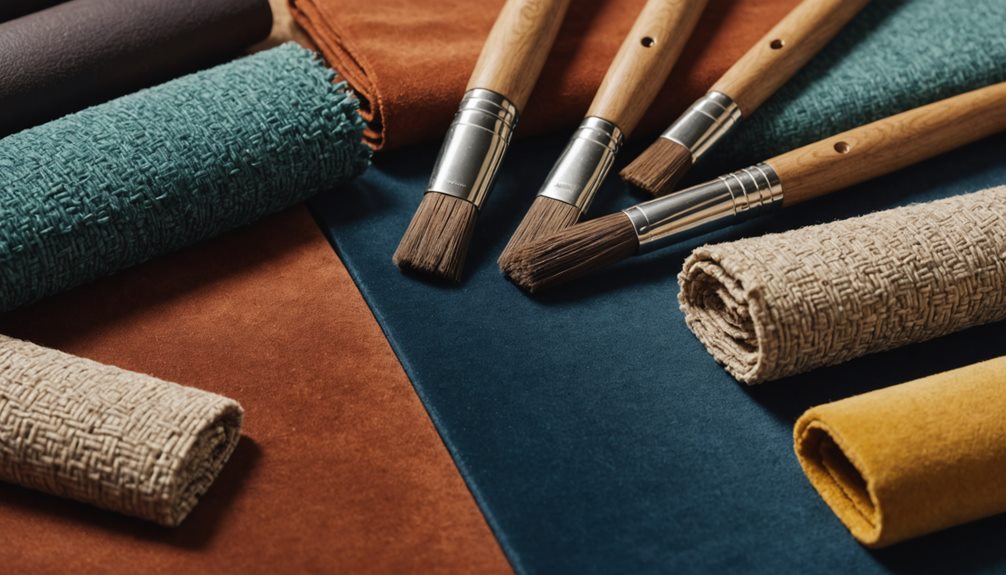
Navigating the various types of upholstery fabrics is key to effective cleaning. You’re likely to encounter a range of fabric types, each with its unique properties. Understanding these can significantly enhance how you maintain and care for them.
For example, natural fabrics like cotton and linen provide comfort but lack substantial stain resistance. They absorb spills quickly, requiring immediate attention to prevent permanent marks.
In contrast, synthetic fabrics such as polyester or microfiber display higher levels of stain resistance due to their non-porous surfaces. These materials often come with protective coatings that repel liquids, making them ideal for high-traffic areas.
Recognizing the specific fabric type you’re dealing with enables you to customize your cleaning approach without compromising the material’s integrity.
When dealing with blends, it’s essential to identify the dominant fabric type since it dictates the cleaning method. Pay attention to manufacturer tags; they often contain vital information about the fabric composition and recommended care procedures.
Your goal should be to respect the fabric’s characteristics while enhancing its longevity, ensuring the upholstery continues to serve its purpose beautifully and efficiently.
Essential Cleaning Supplies
Having familiarized yourself with the characteristics of various upholstery fabrics, you’re now prepared to select the right cleaning supplies. This step is crucial in preserving your furniture’s longevity and appearance. Your arsenal should include a range of cleaning tools and fabric protectors to tackle the toughest stains while preserving delicate fibers.
Start by considering these essentials:
- Vacuum cleaner with upholstery attachment: Crucial for extracting dust and debris without damaging the fabric.
- Soft-bristled brush: Ideal for agitating stubborn dirt embedded in the weave, ensuring a thorough clean.
- Fabric-specific cleaner: A necessity for treating stains effectively without compromising texture or color.
- Fabric protectors: Apply these to form an invisible shield, repelling future spills and stains, making maintenance easier.
Each item in your toolkit plays a pivotal role in maintaining your upholstery’s integrity. The vacuum attachment helps remove surface dirt, while the brush targets deeper grime.
Fabric-specific cleaners are formulated to work with particular fibers, ensuring you don’t inadvertently cause damage. Finally, fabric protectors act as a preventive measure, reducing future cleaning frequency and extending your upholstery’s life span.
Equip yourself with these tools, and you’ll be ready to serve others by keeping their spaces immaculate.
Pre-Cleaning Preparation

Before starting the cleaning process, thorough pre-cleaning preparation is crucial to achieve optimal results and protect your upholstery. Begin by evaluating your furniture arrangement to ensure accessibility to all surfaces needing attention. Strategically relocate items, allowing you to maneuver cleaning tools with ease and prevent accidental damage to adjacent decor.
Examine the upholstery material to determine specific care requirements, consulting manufacturer guidelines if available. Establish a comprehensive cleaning schedule tailored to each piece’s usage patterns. High-traffic areas require more frequent attention, whereas less-used items may need a less rigorous regimen. Implementing a schedule aids in maintaining your upholstery’s longevity and appearance.
Next, inspect the furniture for any loose threads, tears, or structural issues and address them before proceeding. This proactive approach prevents worsening existing damage during cleaning. Remove cushions, if applicable, to expose hidden surfaces and enable thorough cleaning.
Use a vacuum with an upholstery attachment to meticulously remove loose debris and dust. This step is essential as it prevents dirt from embedding deeper into fabric fibers during subsequent cleaning stages.
With these preparations complete, you’re now ready to proceed with confidence, ensuring both efficiency and care throughout the cleaning process.
Spot Cleaning Techniques
With your pre-cleaning preparations complete, it’s time to focus on spot cleaning techniques—a key aspect of maintaining upholstery. Mastering these techniques ensures efficient stain removal and enhances fabric protection—preserving the aesthetic appeal and longevity of your furniture.
Firstly identify the type of stain—whether it’s oil-based or water-based or protein-based determines your approach. Act quickly as immediate action prevents stains from setting in.
Consider these essential steps for effectively tackling stains:
- Blot, don’t rub: Gently blot stains with a clean, white cloth to absorb excess liquid without spreading.
- Test in an inconspicuous area: Before applying any cleaning agent, verify it won’t damage your fabric by testing on a hidden spot.
- Work from the outside in: Prevent stain expansion by cleaning from the outer edges toward the center.
- Follow manufacturer guidelines: Always adhere to care instructions to avoid voiding warranties or causing damage.
Homemade Cleaning Solutions
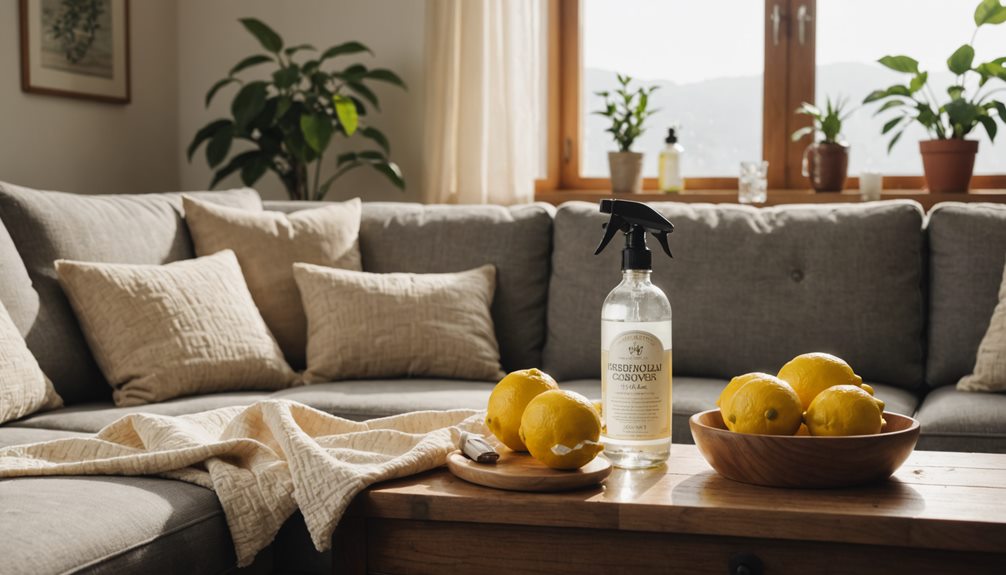
A variety of homemade cleaning solutions offer cost-effective and environmentally friendly alternatives to commercial products. These are tailored to tackle specific types of upholstery stains. By harnessing the power of natural stain removers, you can efficiently address spills and blemishes without compromising your fabric’s integrity.
Consider creating a vinegar and baking soda solution. Mix one part white vinegar with two parts water, then sprinkle baking soda on the stain before applying the solution. This combination acts as an effective, fabric-safe ingredient blend that gently lifts stains while deodorizing.
For oil-based stains, a cornstarch paste can be your ally. Simply combine cornstarch with water to form a thick paste, apply it to the stain, and let it sit for 15 minutes. This method effectively absorbs excess oils.
If you’re dealing with ink stains, rubbing alcohol is an excellent choice. Dab the area with a cloth soaked in alcohol, and blot until the ink transfers to the cloth.
Always test these solutions on an inconspicuous area first to verify they don’t alter your upholstery’s color. By employing these homemade solutions, you’re not just saving money but also making a choice that benefits the environment and serves others.
Removing Pet Hair Effectively
Pet hair can quickly accumulate on upholstery, creating a persistent challenge for pet owners. To tackle this issue efficiently, you need a strategic approach that combines regular pet grooming and targeted cleaning techniques.
Start by investing in high-quality grooming tools as reducing shedding at the source will minimize hair transfer to your furniture. A slicker brush or grooming glove works wonders in removing loose fur before it becomes a problem.
Implement shedding prevention methods to keep your upholstery clean:
- Regular grooming sessions: Consistently brush your pets to remove excess fur, reducing the amount of hair that ends up on your upholstery.
- Furniture-safe vacuum attachments: Use a vacuum with upholstery-specific attachments to lift embedded pet hair from fabric surfaces.
- Rubber gloves technique: Dampen a pair of rubber gloves and run your hands over the upholstery. The hair clings to the gloves, making it easy to remove.
- Lint rollers: Keep a lint roller handy for quick touch-ups, effectively capturing stray hairs without damaging the fabric.
Odor Elimination Tips

Upholstery odors can be persistent and challenging, but a systematic approach guarantees effective odor elimination. Start by sprinkling baking soda liberally over the affected area. Allow it to sit for at least 15 minutes to effectively absorb odors. For deeper penetration, gently work it into the fabric with a soft brush.
Next, vacuum thoroughly to remove the baking soda and trapped odors.
Prepare a vinegar solution by mixing equal parts of water and white vinegar. Mist this onto the upholstery, ensuring not to oversaturate the fabric. The vinegar’s natural acidity neutralizes many odors. To add a pleasant aroma, incorporate a few drops of your preferred essential oil into the solution.
Enhance air circulation by opening windows or using fans to dry the upholstery quickly, preventing mold growth. For stubborn odors, apply an enzyme cleaner specifically designed for organic smells. These cleaners break down odor-causing molecules, providing long-lasting results.
Consider steam cleaning to penetrate deep into the fibers, removing embedded odors. Finish with a light spray of a fabric refresher or upholstery deodorizer for a clean and inviting scent.
Your proactive efforts will greatly benefit others by maintaining a fresh and pleasant environment.
Deep Cleaning Methods
Once you’ve effectively managed odors, it’s time to focus on deep cleaning techniques that maintain your upholstery’s pristine condition.
Utilizing steam cleaning offers a powerful yet gentle solution for removing embedded dirt and allergens—often invisible to the naked eye. This method uses high-temperature vapor to penetrate fabric fibers—dissolving grime without harsh chemicals. Remember always test on small area first to prevent damage.
If you’re dealing with microfiber, use a specific technique tailored to this delicate material. Use a gentle brush to lift dirt and a microfiber cloth to blot away excess moisture without leaving streaks. It’s essential to avoid saturating the fabric as microfiber tends to trap moisture.
Consider these benefits of deep cleaning:
- Enhanced air quality: Removing allergens contributes to a healthier living environment.
- Revitalized appearance: Restores the original luster and color of your upholstery.
- Extended lifespan: Regular deep cleaning prevents wear and tear, prolonging furniture life.
- Satisfaction of service: Knowing you’re providing a clean, welcoming space for others.
Maintenance and Care Tips
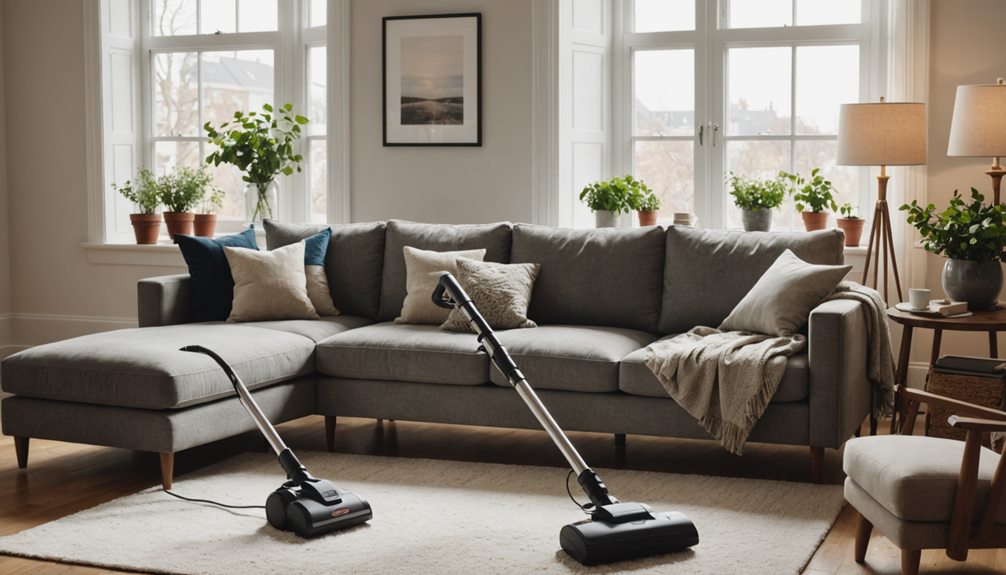
Regular maintenance of your upholstery is vital in preserving its longevity and impeccable appearance. Start by incorporating fabric protection solutions that create a barrier against spills and dirt—effectively aiding in stain prevention. Opt for high-quality fabric protectors, applying them every six months or after each deep cleaning session. This step is crucial in safeguarding against potential accidents and extending the life of your furnishings.
Vacuum your upholstery weekly using appropriate attachments to remove dust, hair, and debris that may accumulate over time. This routine prevents abrasive particles from embedding into the fabric—which can cause premature wear. Pay special attention to seams and crevices as these areas often harbor hidden debris.
Rotate and fluff cushions regularly to ensure even wear and maintain their structural integrity. This simple practice helps preserve the shape and comfort of your seating.
In the event of a spill, act swiftly. Blot—don’t rub—the affected area with a clean, absorbent cloth. For stubborn stains, consult the manufacturer’s guidelines or test a gentle cleaning solution on an inconspicuous area first.
Adhering to these maintenance tips will keep your upholstery looking pristine while serving others with a welcoming home environment.
Conclusion
You now have the know-how to tackle upholstery cleaning like a pro. Some might worry about homemade solutions damaging fabrics, but testing on a hidden area ensures safety. With the right techniques—like using vinegar for odors and cornstarch for stains—you’ll find these methods are not only effective but also eco-friendly. Regular maintenance such as removing pet hair and spot cleaning keeps your upholstery looking fresh without needing costly commercial cleaners.
If you’re seeking more tips and expert advice on upholstery cleaning, I warmly invite you to visit Hydra Clean of Hattiesburg MS at myhydraclean.com. They offer a wealth of information and services that might be just what you need. Feel free to call them at (601) 336-2411—they’re always happy to help provide you with the best solutions for your cleaning needs!