


If you live with pets, you know the cycle. Everything smells fine for a week or two after a deep clean, then somewhere around day 21 you walk in the front door and the dog smell hits you again. Or the cat box. Or that one corner where someone had an accident months ago that you’re pretty sure you cleaned but can’t quite swear to. The frustrating part is that pet odor isn’t usually a cleaning issue — it’s a chemistry issue. Pet urine in particular contains compounds that ordinary cleaners don’t break down. They mask the smell, and humidity reactivates it weeks later. Permanent odor removal requires the right products, the right technique, and consistency. Here’s what actually works.
Identify Problem Areas
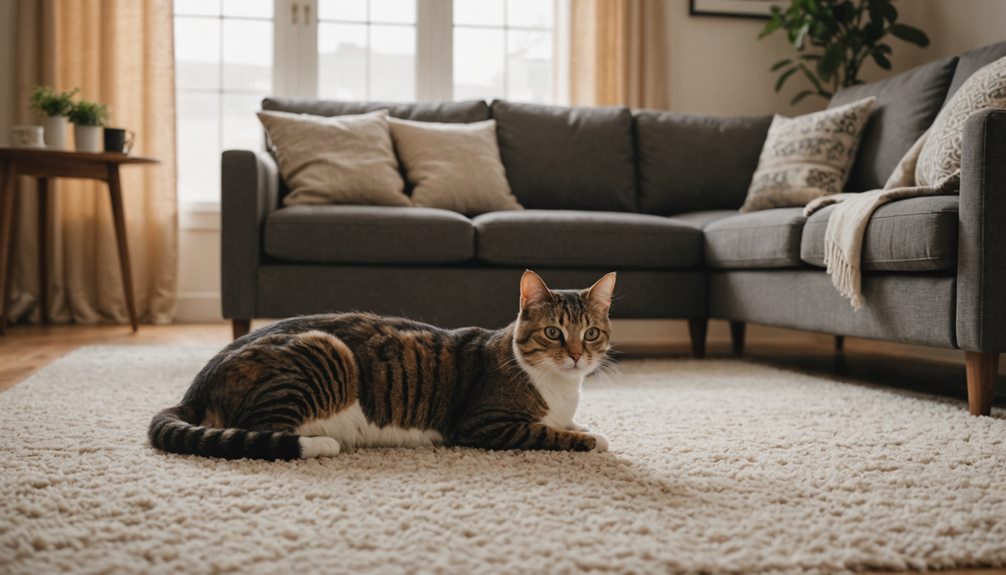
Before you reach for any cleaner, find the actual sources. Most homes have two or three concentrated odor zones rather than uniform smell — pet beds, favorite resting spots, the corner near the back door, the hallway carpet that took a few accidents nobody mentioned. Walk the room slowly and pay attention to where the smell intensifies. Then get low — odors are stronger near the floor where your nose usually doesn’t go.
Look for visible signs too. Stains on carpet, discoloration on furniture, hair accumulation in the same spots. If you have a UV blacklight, run it across the carpet at night with the lights off — old urine fluoresces under UV, and you’ll often find spots you didn’t know existed. Watching your pet’s habits helps too: cats and dogs are creatures of routine, and once you understand the pattern you can target the cleaning rather than chasing odors after the fact. Treating the source rather than the surface is the foundation of permanent removal — for more on that approach, see our guide on how to treat pet odor problems at the source.
Choose Effective Cleaning Products
Standard household cleaners don’t permanently remove pet odors because they don’t break down the actual chemistry. Pet urine contains uric acid crystals that bind to fibers and fabric. Soap, water, and most multi-purpose cleaners can dissolve the surface but leave the crystals behind. When humidity rises (or you steam-clean later), the crystals release the odor again — that’s why a spot you “cleaned” in March smells again in July.
Enzymatic cleaners are the answer. They contain specialized enzymes that actually break down the uric acid into compounds that can be rinsed away — odor source eliminated, not masked. When choosing one, look for products specifically labeled “enzymatic” and “pet urine” rather than generic “pet stain remover.” Apply per the label directions, let the product dwell long enough for the enzymes to work (often 15+ minutes), and blot rather than rub. Avoid cleaners with strong fragrances that try to overpower the smell — those are masking, not removing. For more on how enzyme cleaners work and which products are worth your money, see our guide on the benefits of using enzyme cleaners for pet odors.
Use Natural Odor Removers
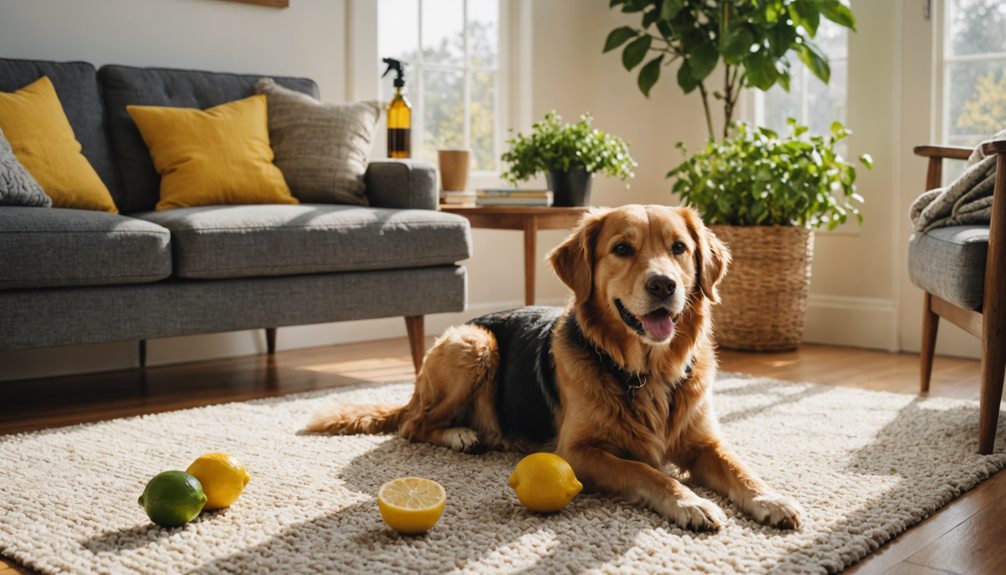
For light surface odors and routine maintenance, natural odor removers do real work. Baking soda is the most reliable: sprinkle it generously on the affected area, let it sit at least 15 minutes (longer for stubborn smells), then vacuum thoroughly. Baking soda absorbs odor molecules — it doesn’t mask them — and it’s safe around pets and kids.
White vinegar is the second tool. Mix equal parts vinegar and water in a spray bottle and lightly mist the affected area. The acetic acid neutralizes odor-causing bacteria. Don’t saturate the fabric — too much moisture creates its own problems. Let it air-dry with windows open or a fan running. The vinegar smell dissipates as it dries; what remains is genuinely cleaner.
These natural approaches are great for ongoing maintenance, but they have limits. They don’t break down uric acid crystals the way enzymatic cleaners do, so for deep accidents or set-in odors save them for the maintenance phase after a thorough enzymatic treatment.
Deep Clean Carpets Regularly
Routine vacuuming controls a lot, but it has to be done right. Use a vacuum with a HEPA filter — standard vacuums can stir pet dander and dust back into the air rather than capturing it. Make multiple slow passes, especially in high-traffic spots and pet rest areas. Vacuum often: weekly minimum, two or three times weekly if you have multiple pets or shedding breeds.
For deep cleaning, steam (hot water extraction) is the gold standard. The high heat kills bacteria and mites, and the deep extraction pulls out particles that vacuums miss. For pet odor removal specifically, professional steam cleaning every six months — sooner if you have multiple pets or active accidents — is more cost-effective than fighting odors continuously with sprays. Between deep cleans, address spills the moment they happen. Most pet stains are easy to remove when wet and nearly impossible once they’ve set.
Treat Furniture With Care
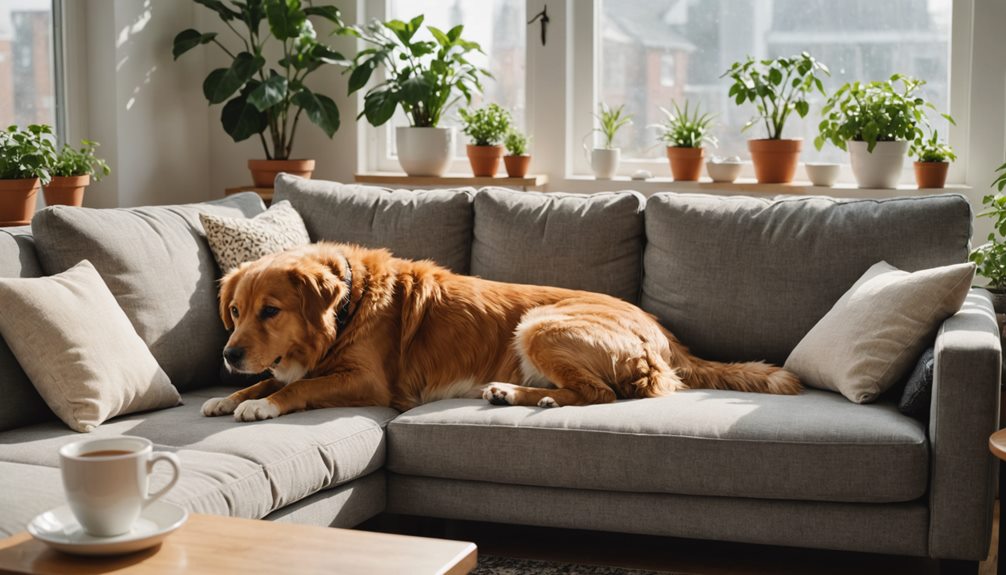
Furniture is harder to clean than carpet because the variety of fabrics matters. Microfiber and synthetic blends tolerate most cleaners. Leather needs a leather-specific approach. Velvet and natural fibers like silk or wool are sensitive to moisture. Always check the care tag before you start — the codes matter. “W” means water-safe, “S” means dry-cleaning solvents only, and “WS” means either is fine.
Vacuum first with a brush attachment to lift hair and dander. For spot cleaning, the one-to-two vinegar-and-water mix works on most water-safe fabrics — mist lightly, blot with a microfiber cloth, repeat if needed. Sprinkle baking soda on top of the spot after blotting, let it sit 15 to 30 minutes, then vacuum thoroughly. Don’t over-wet upholstery; excess moisture leads to mildew, watermarks, and worse odors. Address spills the moment they happen, before they soak into the cushion underneath.
Implement Preventive Measures
Permanent odor removal isn’t a one-time treatment — it’s a sustainable routine. Bathe your pets regularly with appropriate shampoo (frequency depends on breed and activity, but most dogs do well with a monthly to every-six-weeks schedule). Brush them frequently to remove loose hair and dander before it spreads through the house. Wash pet beds weekly in hot water, and wipe down hard surfaces near pet zones as part of routine cleaning.
Place pet beds, litter boxes, and food/water bowls in well-ventilated areas, and clean those zones more frequently than the rest of the house. Use washable slipcovers or throw blankets on furniture that pets favor — a slipcover that goes through the wash weekly captures most of what would otherwise build up in upholstery. Keep pet hygiene products on hand for fast spot cleaning, so an accident takes 90 seconds rather than getting forgotten until it’s a permanent stain.
Consider Professional Services
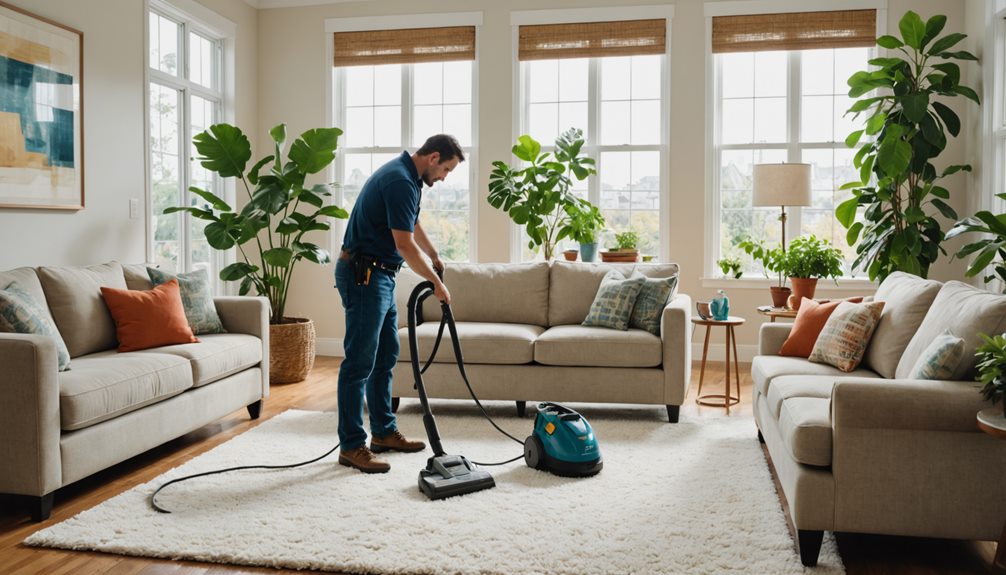
For deep, set-in, or persistent odors, professional treatment is the fastest path to permanent removal. Pro equipment delivers higher water temperatures, much stronger extraction, and access to commercial-grade enzymatic and oxidizing treatments that aren’t sold to consumers. Pros also know how to address contamination that’s reached the carpet pad or sub-floor — DIY cleaning rarely gets deep enough to fix those situations.
Look for a service that specializes in pet odor specifically (not just general carpet cleaning), with positive reviews and transparent pricing. Communicate exactly what you’re dealing with — frequency of accidents, problem zones, anything you’ve already tried — so the technician can plan the right treatment. Many pet odor situations need a sub-surface flood or padding treatment, not just a surface clean, and a generalist may miss this entirely.
Maintain a Fresh Environment
After a thorough clean, maintenance keeps the smell from creeping back. Run a quality air purifier with a HEPA filter in the rooms your pets use most — it captures dander, hair, and airborne odor compounds. Open windows daily, even briefly, to flush stale air. Wash pet bedding weekly. Use natural deodorizers (baking soda, activated charcoal pouches) in problem zones rather than synthetic air fresheners that just mask smells.
Vacuum on a regular schedule with HEPA-filter equipment. Spot-clean the moment you see or smell a fresh accident. Deep clean every six months — sooner if odors return faster than that. With these habits in place, the cycle of “clean, normal, then suddenly the dog smell is back” turns into a steady baseline of fresh air that lasts.
Conclusion
Permanent pet odor removal is achievable. It just requires understanding what you’re fighting (uric acid crystals, dander, bacterial growth) and using methods that actually break those down rather than mask them. Enzymatic cleaners for the deep work, baking soda and vinegar for maintenance, regular vacuuming with HEPA filtration, and a few preventive habits get most pet households 90% of the way there.
For the situations where DIY isn’t enough — old set-in odors, multi-pet homes, or contamination that’s reached the padding — professional service makes the difference. At Hydra Clean of Hattiesburg, MS, we specialize in pet odor removal that goes after the source, not just the surface. Visit our pet odor removal service page to learn more, or call us at (601) 336-2411 to schedule a free assessment. Your home should smell like home, not like the pets that live there.