


Maintaining tile in commercial spaces is a different problem than residential maintenance. The traffic loads are higher, the contamination is more varied, and the consequences of neglected floors include lost customers and slip-and-fall liability. The good news is that the right approach — understanding the tile, choosing appropriate products, using effective techniques, sticking to a schedule, and addressing tough stains correctly — keeps commercial tile floors looking professional with manageable effort. Here are the practical secrets that actually work.
Understanding the Tile Surface

Effective cleaning starts with knowing what you’re cleaning. Different tile types need different care. Ceramic is durable and forgiving — most cleaning methods work without damage. Porcelain is similar but slightly less porous, which means stains usually sit on the surface rather than absorb. Natural stone (marble, limestone, travertine) is far more delicate — acidic cleaners etch the surface permanently, and aggressive scrubbing damages the polish.
Surface texture matters too. Smooth, polished tile cleans easily but shows every scuff. Textured tile hides dirt visually but traps grime in the texture, requiring more thorough cleaning to actually remove it. Grout is the universal weak point — porous, prone to staining, and the source of most “dirty floor” complaints regardless of what tile sits next to it. Regular cleaning and sealing of grout lines is non-negotiable for commercial spaces.
Selecting the Right Cleaning Products
Once you understand the tile, the right cleaner becomes obvious. Stick with pH-neutral options for routine work — they clean effectively without damaging the surface or the grout binder. Avoid acidic cleaners on natural stone (they etch). Avoid strong alkaline cleaners on glazed surfaces (they can dull the finish over time).
For commercial settings, eco-friendly options have caught up to harsh chemicals on most performance metrics. Plant-based and low-VOC formulations work well, are safer for staff and customers, and reduce the air-quality concerns that come with frequent cleaning of high-traffic spaces. Look for products labeled as commercial-grade with cleaning efficiency that matches the volume of work you need to handle. The cost-per-clean for the right concentrated commercial cleaner usually beats consumer products at scale. How to choose a tile and grout cleaning service covers what to look for when you bring in pros for the deeper work.
Implementing Effective Cleaning Techniques
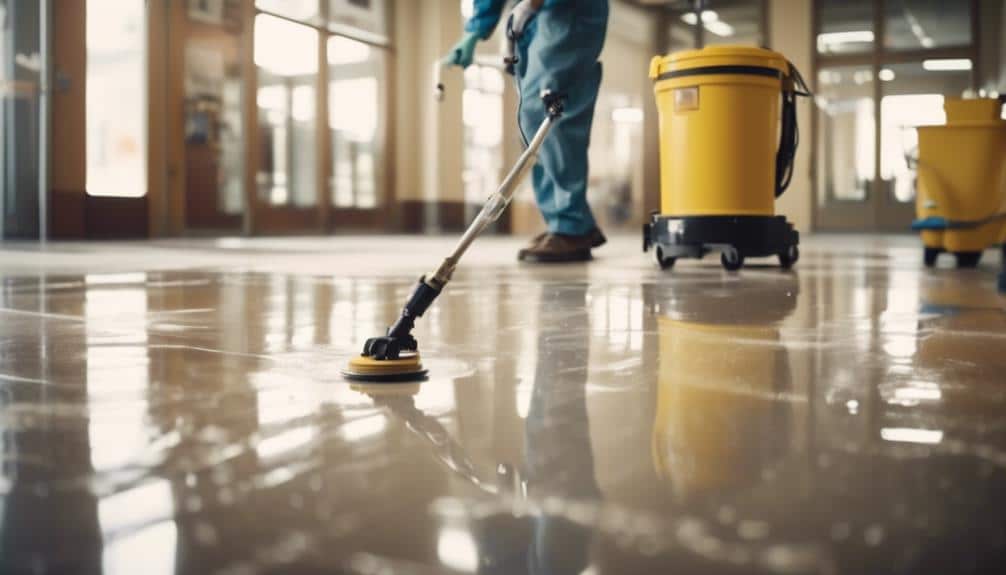
Technique matters as much as the products. Eco-friendly methods like vinegar or baking soda work for ceramic and porcelain (not natural stone). Regular maintenance plus proper sealing extends tile life dramatically.
For commercial spaces, specialized equipment makes a real difference. Quality auto-scrubbers handle large floor areas faster and more consistently than mop-and-bucket methods. Steam cleaners reach into grout pores where surface methods can’t. Grout-specific brushes attached to powered tools agitate joints without the manual labor. The cost of the right equipment usually pays back within a few months in reduced labor and better results.
For situations where in-house maintenance can’t keep up — major spills, deep restoration needs, or staff turnover — professional services bring expertise, specialized equipment, and faster results than scaling up internal effort.
Maintaining Regular Cleaning Schedules
A schedule is what separates floors that stay clean from floors that always look like they need attention. Match cleaning frequency to actual foot traffic. High-traffic commercial spaces (lobbies, restrooms, food service areas) often need daily cleaning at minimum, weekly deeper cleaning, and monthly grout-focused work. Lower-traffic areas can stretch to weekly cleaning with monthly grout attention.
Build a written checklist that anyone on the team can follow consistently. Assign specific responsibilities to specific staff — ambiguity about whose job something is means it doesn’t get done. Invest in efficient tools and standardized products so the result doesn’t depend on who’s working that shift. Use scheduling software or even basic phone reminders to ensure tasks happen on time, and track completion so problems show up before they become emergencies.
Addressing Stubborn Stains and Grime
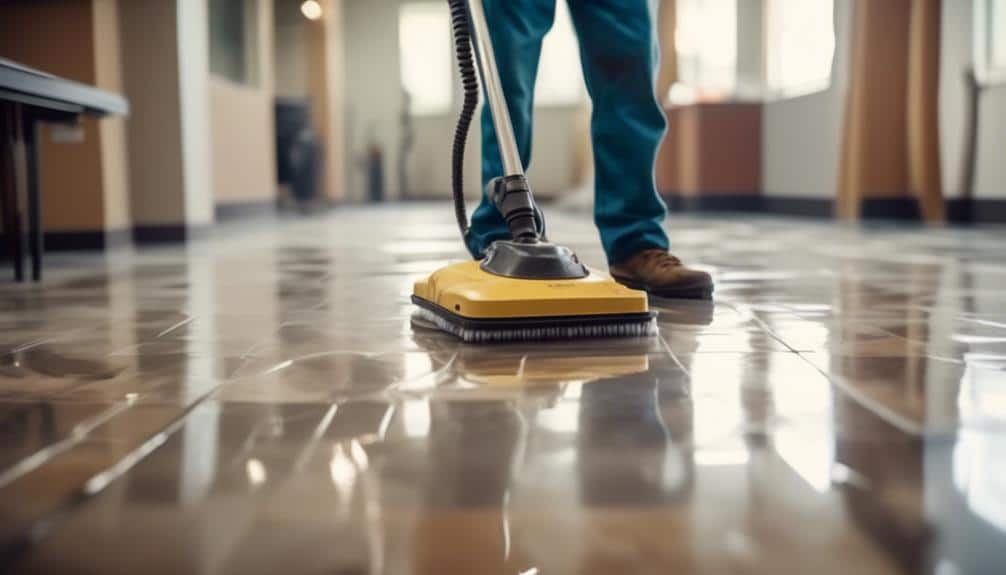
Even with consistent maintenance, commercial spaces will accumulate stubborn stains in high-use spots. Three steps handle most of them effectively:
- Pre-treatment: Apply a specialized cleaning solution to the affected areas and let it dwell for the time the label specifies. Pre-treatment loosens the contamination so the actual cleaning works.
- Agitation: Use a scrubbing brush or pad to work the pre-treated areas. The mechanical action breaks up the bond between the stain and the tile.
- Powerful Cleaning Agents: Use cleaners specifically formulated for the type of stain — not generic all-purpose products. Different stains respond to different chemistry.
For situations where these steps aren’t enough, professional restoration handles deep contamination DIY methods can’t reach. Regular tile and grout cleaning prevents costly repairs covers the broader case for making professional service part of the maintenance plan rather than waiting until repairs become necessary.
Conclusion
Spotless commercial tile cleaning isn’t about working harder — it’s about the right techniques, products, schedules, and equipment matched to your specific tile and traffic load. Done correctly, it keeps commercial spaces looking professional with reasonable effort and protects against the costs of premature tile replacement.
If maintaining commercial tile floors has become a struggle, professional service often produces better results at lower total cost than continued in-house effort. Visit our professional tile and grout cleaning to learn more, or call (601) 336-2411 for a free quote.