
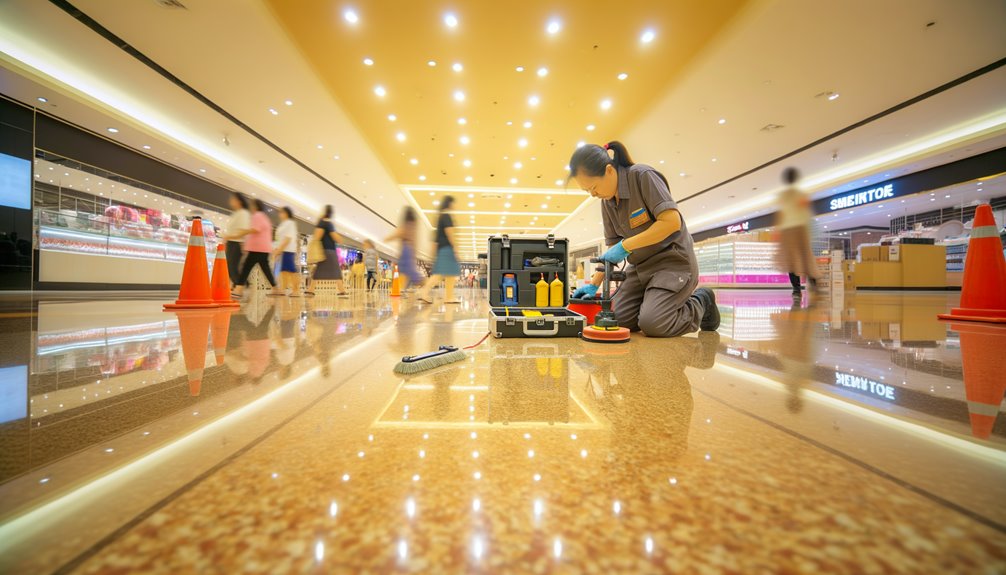
If you own a commercial space — a shop, restaurant, office, gym, or anywhere customers and staff move through all day — you’ve probably noticed your floors wear out faster than the ones at home. There’s a reason: roughly 90% of the wear on a commercial floor happens in the same predictable traffic lanes. The doorway, the walk to the counter, the spot in front of the register, the corridor everyone takes to the back. Once you know where the damage actually concentrates, fixing your floors stops feeling overwhelming and starts feeling like a project you can plan. This guide walks you through what’s happening on your floors, what restoration actually involves, and how to get them looking sharp again without shutting your business down.
Assessing Wear Patterns and Root Causes

Before you call anyone or start spending money, take 15 minutes and walk your floor with fresh eyes. Where are the scuffs concentrated? Which areas have lost their shine? Is there a spot where the finish looks foggy or the color seems off? Now match those spots to what’s actually happening in your space — the front door, the cash wrap, the path the carts take to the storeroom, the wet area near the drink station. That’s your traffic map.
While you’re looking, separate the kinds of damage. Plain foot-traffic wear (scratches, dulling) is different from chemical damage (wrong cleaner, repeated spills) which is different from movement in the floor itself (cracks, lifting tiles). Each one needs a different fix, and skipping that diagnosis is how a lot of DIY repairs end up redoing themselves six months later. While you’re at it, ask the people who use the floor every day — they’ll tell you which areas get hit hardest and which cleaning products actually get used. Sometimes that’s where the real problem is.
Matching Restoration Methods to Flooring Types
This is where things get specific. Even if two businesses see the same foot traffic, the right way to bring their floors back depends on what kind of floor they have. Concrete usually needs grinding to take down the worn surface, then a sealer and protective topcoat. Terrazzo (the speckled stone-aggregate floor you see in older buildings) needs careful polishing and pinhole grouting — you don’t want to grind it the way you’d grind concrete. VCT (vinyl tile, common in kitchens and back-of-house) needs old wax stripped off and a fresh finish applied. Rubber floors clean up well but only with the right cleaner — petroleum-based products will damage them. And hardwood needs a moisture check first, because a humid space will ruin a fresh refinish within months.
The DIY route works for some of this. Basic stripping and waxing of VCT, for example, is something a motivated owner with the right equipment can handle. But anything involving grinding, polishing, or chemical-strength sealers should go to a professional with the right tools and the right experience. Get it wrong and you’ll either redo it next year or make the damage worse. For a deeper look at how restoration differs across flooring types, see our guide on commercial floor restoration techniques for reviving old floors.
Cost-Smart Repairs That Minimize Downtime

The biggest fear most owners have isn’t the cost of the work itself — it’s the cost of being closed. The good news: most commercial floor restoration doesn’t require shutting your doors. With the right planning, you can stay open through the whole project. Section off the work zones so customers and staff can safely move around them. Tackle the urgent issues first — trip hazards, active leaks, anything that’s a lawsuit waiting to happen.
Then ask your contractor about fast-curing finishes. Many modern systems are ready for traffic in hours instead of days, which makes overnight or weekend work realistic. If you have damaged individual tiles or planks, a good crew can replace just those rather than redoing the whole floor. And when a section does need to close, schedule it for off-hours. Contractors who specialize in commercial work get this; residential ones often don’t.
Surface Prep Techniques That Make Restorations Last
Here’s the part that separates a finish that lasts five years from one that flakes off in six months: how well the surface was prepared before the new coating went down. Skipping or rushing prep is the most common reason commercial floor jobs fail early.
The pros check moisture levels in the substrate first — concrete in particular can hold a lot of water, and any new coating will lift if it’s applied over a damp slab. Then comes stripping: oils, old adhesives, and mineral deposits all have to come off before anything new will bond. Different floors take different prep methods. Wood gets gentle screening with progressive grits. Concrete gets shot-blasted to give the new coating something to grip. Terrazzo gets carefully ground to open the pores without polishing them back closed. After that, a thorough HEPA vacuum (so dust doesn’t end up in the rest of your space) and a clean test before any new product touches the floor. This careful prep work is one of the biggest things you’re paying for when you hire a professional — it’s also the easiest step to skip if you don’t know how much it matters.
Protective Coatings, Sealers, and Finishes That Work
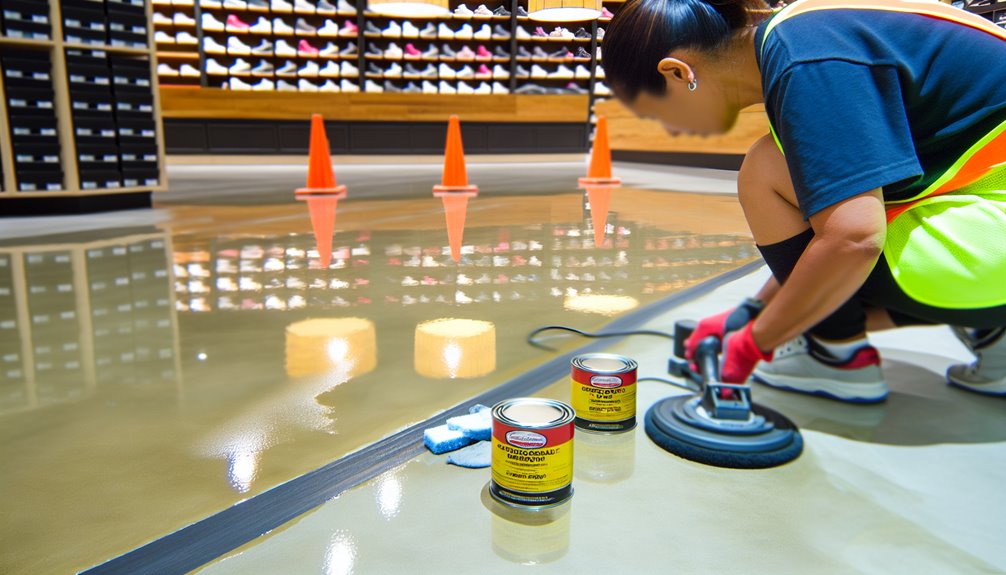
Once the floor is prepped, the next decision is what protective coating goes on top. Two variables matter: the chemistry has to match the floor type, and the thickness has to match how much abuse the floor takes day to day.
Urethane handles abrasion well — a solid choice for retail floors with heavy foot traffic. Epoxy resists chemicals — better for kitchens, garages, and industrial spaces where spills are routine. Penetrating sealers (silane or siloxane) work well on porous mineral surfaces like concrete and terrazzo. Thickness matters too: a light retail space needs a thinner coat, while a busy kitchen or a warehouse with forklifts needs something much heavier. Slip resistance can be added to almost any system — important everywhere, but critical wherever water, oil, or grease is part of daily operations. The mistake we see most often is owners running to a big-box store and grabbing a generic floor sealer that’s the wrong chemistry for their floor type. It looks fine at first, then peels in a few months.
Scheduling Maintenance Around Business Operations
Every business has its own rhythm. A coffee shop has different busy hours than a law office, which runs differently from a gym. A maintenance schedule that fights your rhythm will fail — staff will skip steps, customers will walk through wet finish, and someone will eventually get hurt. Build the schedule around when your space is empty.
Post-close handles entryways and high-visibility areas. Shift overlaps cover back-of-house. Loading zones get done between deliveries. Ask your contractor about fast-curing systems if your turnover is tight — modern coatings can be ready for traffic before your doors open the next morning. Always plan for a buffer day in case something runs long. And communicate clearly with your team so everyone knows what’s happening, when, and where to avoid.
Safety, Compliance, and Slip-Resistance Upgrades

Slip-and-fall claims are one of the most common forms of commercial liability — expensive both in payouts and in insurance premiums. Floor safety isn’t a single product; it’s a system that includes surface texture, cleaning chemistry, drainage, signage, and your inspection records.
Walk your space looking for slip risk. Where does water get tracked in? Are there transitions where one flooring material meets another? Are your cleaning products leaving a slick residue? A professional can measure slip resistance on both wet and dry surfaces with a specialized tool called a tribometer, which gives you real numbers you can compare to industry standards. Upgrades like textured topcoats, traction additives, or proper drainage corrections can dramatically reduce risk. And document every inspection — if an incident does happen, your records are what protect you. For more on this side of floor maintenance, see our guide on the role of floor maintenance in commercial workplace safety.
Building a Preventive Care Plan and Cleaning Routine
Once your floors look good again, the goal is keeping them that way. A simple preventive plan is far cheaper than another full restoration down the road.
The basics: heavy walk-off mats at every entrance (15 feet of mat length is the rule that keeps most dirt outside), daily dust control, and auto-scrubbing in corridors several times a day with a neutral pH cleaner. Schedule periodic burnishing to bring back the shine, and book a recoat before wear breaks through to the floor underneath. Most of this can be handled by your in-house staff if you give them the right products, equipment, and training. Standardize the routine — same pads, same dilution ratios, same water temperature — so the result doesn’t depend on who’s working that day. Track inspections and gloss readings quarterly so you have a record of what’s improving and what’s slipping.
Conclusion
At Hydra Clean, we’ve been helping Hattiesburg-area business owners keep their commercial floors looking sharp for years — without shutting down their operations. If you’re ready to revive your high-traffic floors, want a professional opinion on what your space actually needs, or just want a free walk-through and a quote, we’re here. Visit our commercial floor cleaning services to see what we offer, or call us at (601) 336-2411 to set up a consultation. Let’s get your floors back to a place your customers and staff feel good walking on.