
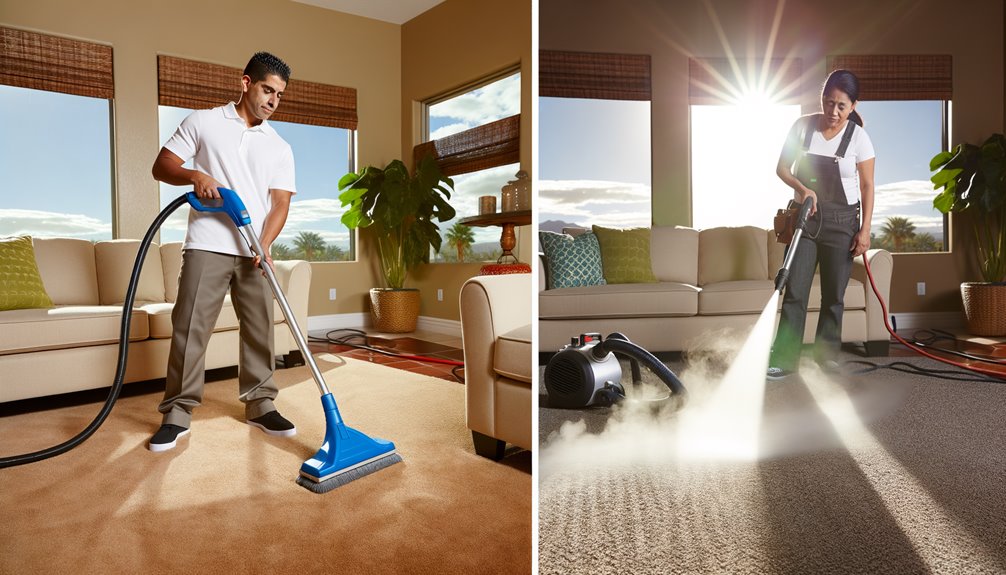
Choosing between very low moisture (VLM) and hot water extraction (steam) depends on carpet construction, soil load, and operational constraints. You’ll match VLM to commercial loop or low-pile fibers and routine particulate or traffic-lane soil, favoring fast dry times. You’ll reserve steam for greasy build-up, pet urine, heavy soiling, or pile restoration, with proper heat, rinse, and drying controls. Pretest fibers, factor occupant sensitivities, verify certification, and confirm post-clean results—then decide what’s next.
How Each Method Works
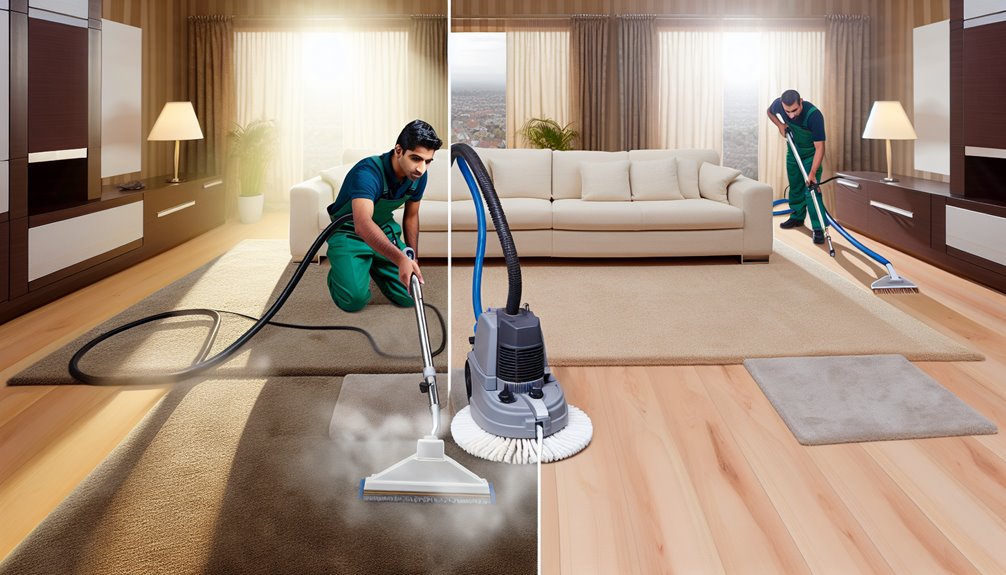
Although both approaches target soil suspension and removal, they operate through different mechanics. In very-low-moisture (VLM) cleaning, you apply a controlled detergent or encapsulant, perform mechanical fiber agitation via oscillating or cylindrical pads, then recover encapsulated soils through absorption and post-vacuuming. You manage dwell per manufacturer specifications and IICRC S100, minimizing over-wetting and potential chemical residue.
With traditional steam cleaning (hot-water extraction), you precondition, allow dwell, then inject heated solution under pressure. You extract with high-CFM vacuum, emphasizing thorough rinse and pH neutralization to limit wicking and residue. You verify outcomes using visual inspection, moisture readings, and soil-load testing.
Pros and Cons of VLM
When you evaluate very‑low‑moisture (VLM) carpet cleaning, you’ll see clear operational advantages alongside defined constraints. You minimize downtime with rapid dry times, reduce re-soiling via polymer crystallization, and support occupant health by limiting wicking. VLM aligns with IICRC S100 interim maintenance and is efficient for maintenance cycles and high-traffic lanes. You’ll leverage vapor encapsulation and microfiber restoration to lift particulate without overwetting. However, VLM’s agitation-dependent soil suspension can underperform on dense pile, impacted grease, or urine residues. It requires precise chemistry, calibrated CRB/oscillating equipment, and rigorous vacuuming. If you’re serving sensitive facilities, validate results with ATP or particulate load testing.
Pros and Cons of Steam Cleaning
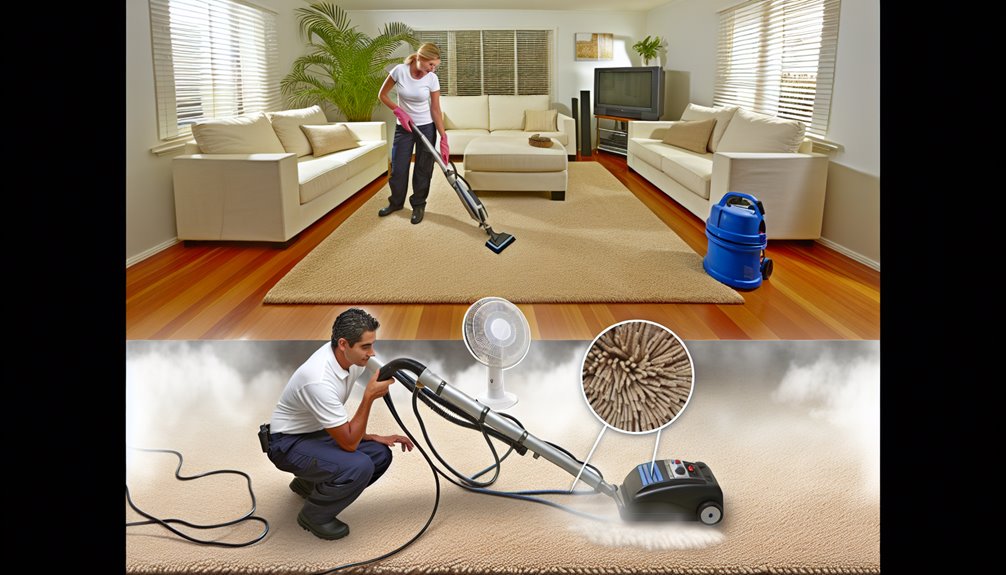
By contrast to VLM’s interim maintenance role, hot water extraction (HWE, “steam cleaning”) targets restorative outcomes per IICRC S100 for heavy soil loads and contaminants. You’ll leverage heated solution, dwell, and high-vacuum recovery to flush particulate, bio-loads, and detergent residues from the primary backing, improving IAQ and appearance retention.
Pros: superior soil suspension, allergen reduction, and pathogen risk mitigation when paired with proper chemistry and rinse. It also resets pile distortion and wicking.
Cons: longer dry times, risk of over-wetting, potential chemical residues if you under-rinse, higher water/energy use, and environmental impact from wastewater. Equipment costs and operator competency requirements are higher.
Choosing Based on Carpet Type and Soil Level
Because fiber chemistry and soil load dictate cleaning efficacy, select VLM or HWE by aligning method to carpet construction, traffic profile, and contaminant type per IICRC S100/S300. Assess pile type, backing, and fiber blends. For olefin loop or commercial tiles with impacted dry soil, choose VLM encapsulation or oscillating pad to suspend particulates and prevent wick-back. For cut-pile nylon or wool with colloidal contamination, greasy residues, or pet stains, deploy HWE with calibrated heat, rinse, and controlled pH. Pretest dye stability and apply fiber-specific presprays, agitation, and dwell times. Prioritize spot removal hierarchies, then select method ensuring residue control and texture retention.
Dry Time, Allergens, and Household Considerations
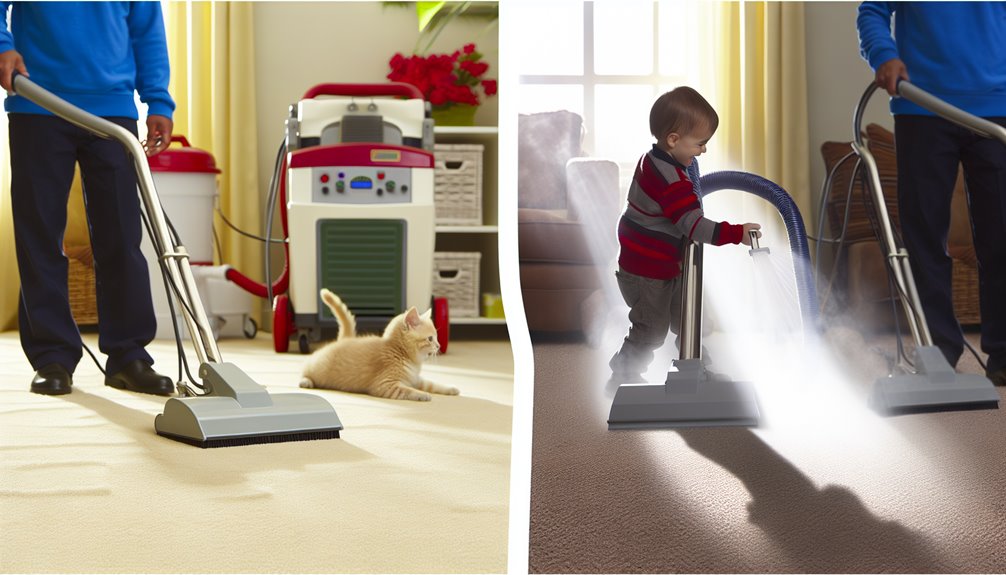
Balancing dry time with indoor health metrics requires aligning the method to moisture load, particulate capture, and occupant sensitivity. Choose VLM when rapid drying mitigates microbial amplification and re-soiling risk; its low-moisture chemistry supports moisture control and reduces indoor humidity spikes. For allergen mitigation, deploy HEPA-grade post-vacuuming and agitation to capture pet dander, dust mite fragments, and fine particulates. Select hot-water extraction when you need deeper rinse of residues, but monitor air exchanges and dehumidification to maintain ≤50% RH. Screen chemistries for asthma-safe profiles and fragrance-free formulations. Protect toddlers, elderly, and immunocompromised occupants by enforcing dry-time validation and re-entry thresholds.
Cost, Maintenance, and Scheduling Tips
While both methods can deliver clean carpets, their life-cycle costs, upkeep, and booking logistics differ in ways that affect total cost of ownership (TCO). You’ll weigh VLM’s lower water/energy consumption and minimal downtime against steam’s deeper periodic restorative cleaning. Align budget planning with frequency: VLM suits high-traffic, short dwell times; steam aligns with annual or semiannual resets. Validate vendor credentials (IICRC-compliant processes), chemical SDS, and equipment PM schedules. Negotiate service contracts with SLAs for response time, rework, and stain-warranty preservation. Stagger appointments to minimize service disruption and occupant impact.
- Model recurring cost per square foot
- Track mean time between cleanings
- Align schedules with occupancy peaks
Conclusion
As the proud owner of Hydra Clean here in Hattiesburg, MS, I understand that choosing the right cleaning method for your carpets can feel overwhelming. Whether you’re leaning towards VLM for its quick turnaround or steam cleaning for a deeper clean, I’m here to help you make the best decision for your needs. I invite you to reach out to me personally at myhydraclean.com or call (601) 336-2411. Let’s chat about how we can keep your carpets looking their best and create a healthier environment for you and your loved ones. I look forward to hearing from you!