

Floodwater moves fast; mold moves faster. You’ve got 24–48 hours to extract standing water, isolate power, and protect yourself with PPE. Use pumps and high-capacity extractors, then target hidden wet zones in padding and subfloors with moisture meters and thermal imaging. Deploy axial air movers and dehumidifiers to restore airflow and pull vapor out. Treat gray/black water as a biohazard, document conditions for insurance—and know when DIY becomes a liability…
Why Speed Matters: The First 24–48 Hours
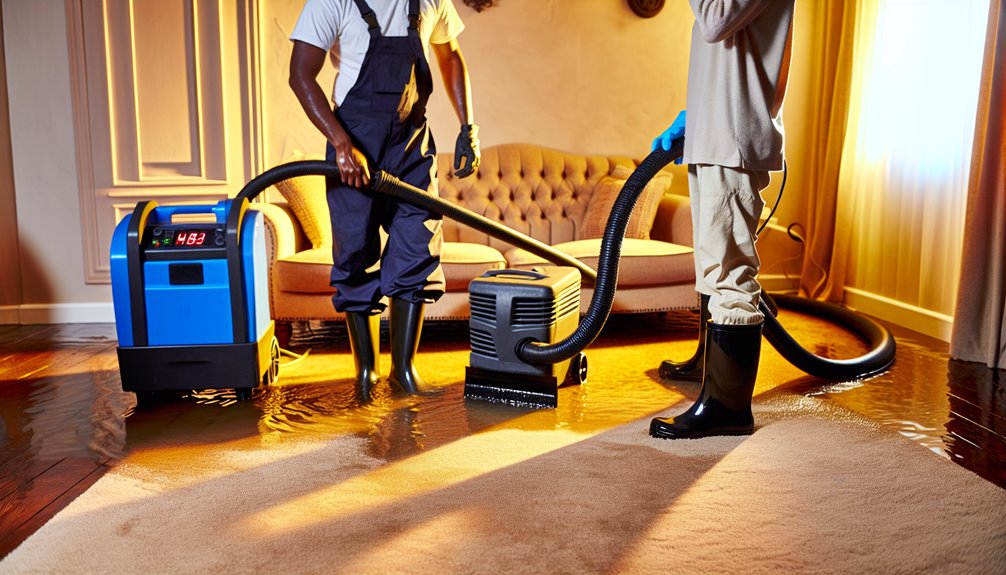
Because water damage escalates quickly, the first 24–48 hours are critical to halt structural deterioration and mold growth. Act fast to reduce immediate structural failure: isolate power, block entry to saturated zones, and document conditions. Extract standing water with high-capacity pumps, then deploy commercial dehumidifiers and directed airflow to achieve rapid evaporation without spreading contaminants. Prioritize safety: wear PPE, assume slip hazards, and treat gray or black water as biohazardous. Remove soaked baseboards and delaminated materials to prevent hidden decay. Verify subfloor stability before reopening areas. Speed protects occupants from health risks, limits secondary damage, and safeguards your team’s mission.
Finding Hidden Moisture in Carpets and Padding
Even after visible water is gone, assume carpets and pad still hold moisture that can fuel mold and subfloor rot. Verify, don’t guess. Pull back corners, inspect tack strips, and check seams and thresholds—these trap dampness. Use pin and pinless moisture detectors to map wet zones through the carpet into the pad and subfloor. Confirm with thermal imaging to spot cooler, evaporating areas hidden by furniture lines and baseboards. Prioritize safety: cut power to affected circuits, wear gloves and respirator, and bag contaminated debris. Document readings, mark boundaries with tape, and plan targeted drying to protect occupants and preserve materials.
Essential Equipment for Rapid Water Removal
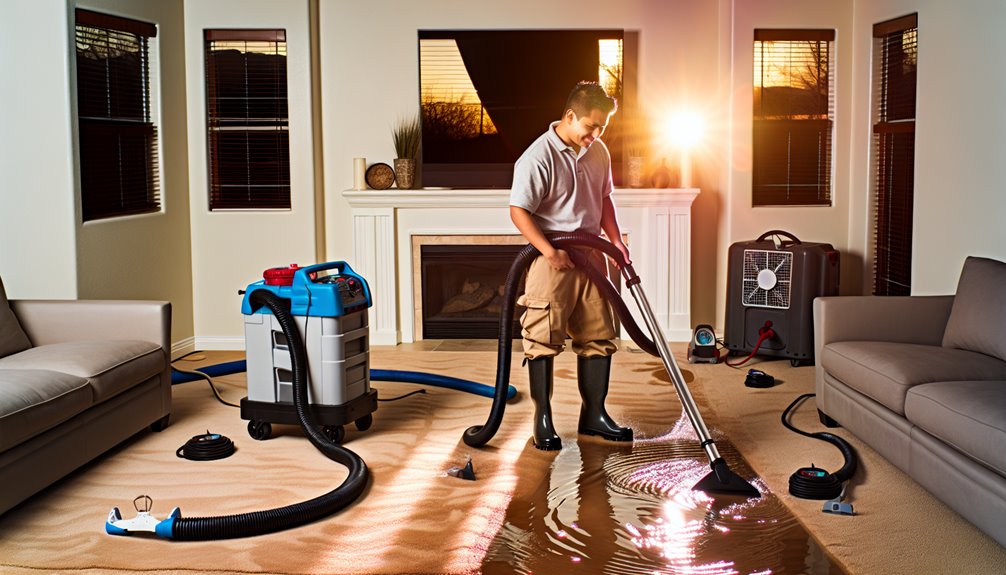
Start by assembling the core tools that move water fast and safely. You’ll protect occupants, preserve carpets, and speed recovery. Prioritize devices that deliver high lift, secure power, and verifiable results. Keep cords elevated, use GFCI protection, and wear PPE. Confirm progress with moisture meters before moving on.
- Portable extractors: Choose dual-stage or truck-mount–level suction, wand and squeegee tools, and continuous discharge hoses.
- Submersible pumps: Deploy auto-start units with screened intakes; route to sanitary drains, never storm lines.
- Wet/dry vacuums: Use HEPA-capable lids, tilt carts, and bonded hoses for spot removal.
- Power distribution: Use GFCI spider boxes, 12-gauge cords, and lockable connectors.
Step-by-Step Drying and Dehumidification Process
Once standing water is extracted, shift immediately to controlled drying to prevent secondary damage and mold. Isolate the zone, kill power to wet circuits, and document moisture baselines. Remove unsalvageables, then disengage carpet, elevate edges, and promote airflow across pad and subfloor. Deploy low-grain refrigerant dehumidifiers sized by cubic feet and grain depression. Position axial air movers in a clockwise pattern; reset every 12–24 hours. Use thermal mapping to locate cold, wet cavities and inject air through baseboards as needed. Swap prefilters for rapid filtration on equipment. Monitor with hygrometers and non-invasive meters. Target 40–50% RH until equilibrium moisture is reached.
When to DIY vs. Call a Professional Restoration Team
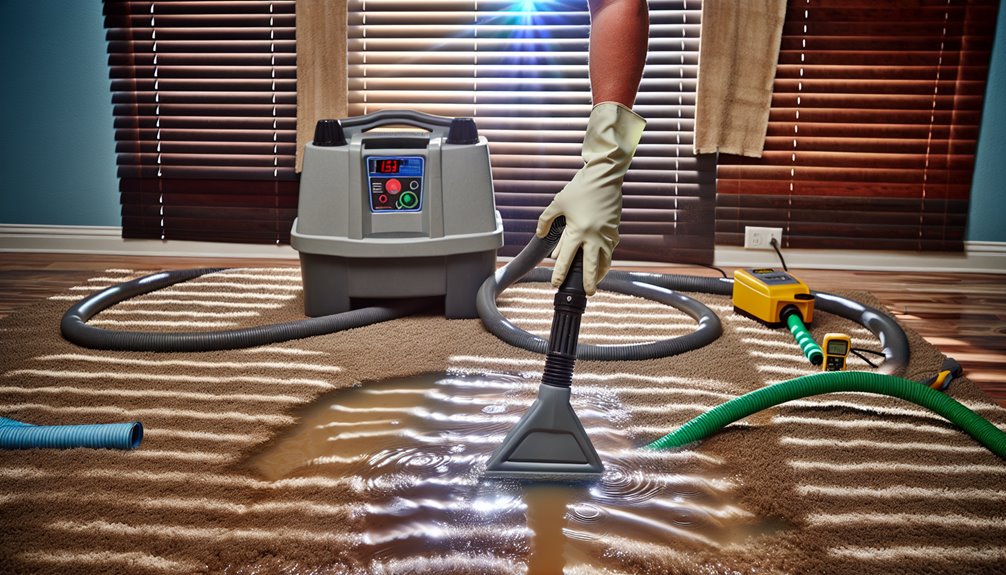
You’ve set up controlled drying and hit target RH—now decide whether to keep managing the job or bring in a certified team. Evaluate contamination class, saturation depth, and safety. If you’re serving a family or neighbor, prioritize health and structural integrity over speed.
- DIY when water’s Category 1, limited to surface-level, with minor structural impacts; document readings and maintain airflow.
- Call pros for Category 2–3, subfloor/insulation saturation, electrical risks, or suspected mold.
- Factor insurance considerations: policy requirements, documentation standards, preferred vendors, and liability.
- Engage certified technicians for thermal imaging, psychrometric adjustments, antimicrobial application, and clearance testing.
Conclusion
At Hydra Clean, we understand how overwhelming it can be to deal with water damage, and we’re here to help you every step of the way. With our fast and effective extraction techniques, we ensure your carpets are saved and mold is kept at bay. If you ever find yourself in a tough spot, don’t hesitate to reach out! I invite you to visit myhydraclean.com or give us a call at (601) 336-2411. Together, we can restore your space and give you peace of mind. We look forward to serving you!