

It's interesting how you might not realize that your carpet could be the source of your sneezing fits. Dirty carpets can trap a variety of pollutants, from dust mites to pet dander, which can seriously impact your indoor air quality. You may think vacuuming is enough, but there's more to maintaining a healthy environment in your home. What steps are you taking to guarantee your carpets aren't compromising your air quality, and are you aware of the hidden effects this could have on your health?
Understanding Indoor Air Quality
Indoor air quality (IAQ) is vital for maintaining a healthy living environment, as it directly impacts your well-being. Understanding IAQ involves recognizing various indoor pollutants that can compromise air quality.
Biological contaminants, such as mold, bacteria, and dust mites, thrive in damp environments and can trigger respiratory issues. Chemical pollutants, including volatile organic compounds (VOCs) from paints and cleaning products, can emit harmful gases that linger in the air. Additionally, physical contaminants like dust and smoke contribute to poor air quality.
Adequate ventilation plays an important role in managing these pollutants. Properly designed and maintained ventilation systems, such as air conditioning and forced air heating, facilitate the exchange of indoor air with fresh outdoor air. This exchange helps dilute and remove indoor pollutants, reducing their concentration. Controlling pollutants is essential for healthier indoor environments.
However, poor ventilation can trap polluted air, leading to increased humidity and discomfort.
Humidity and temperature also affect IAQ. High humidity levels can promote mold growth, while low humidity may cause respiratory discomfort. As a result, maintaining ideal humidity and temperature is essential for promoting good indoor air quality.
How Carpets Trap Pollutants
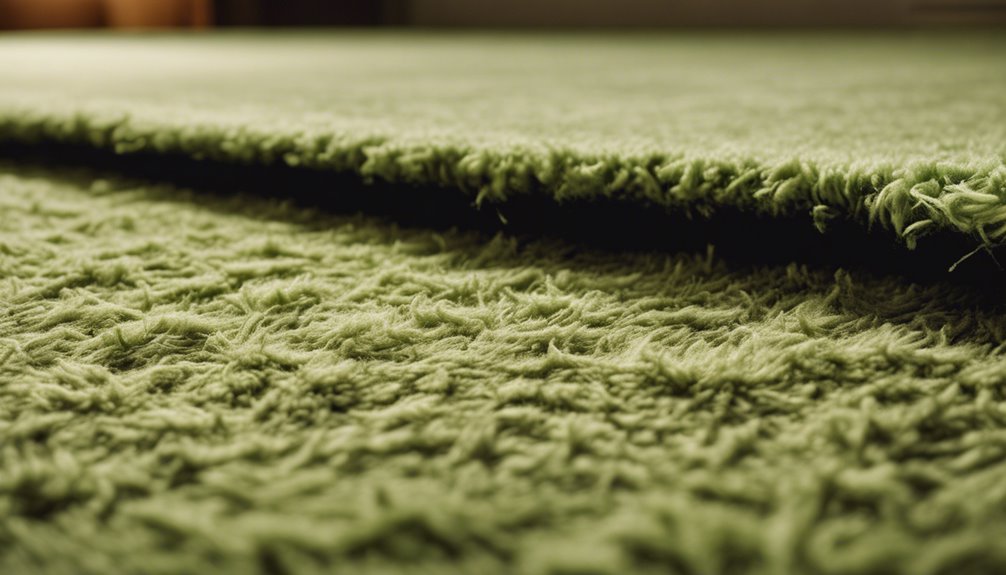
Carpets can considerably trap a variety of pollutants, creating potential health hazards in your home. They serve as a reservoir for allergens like dust mites, pet dander, and pollen, which become airborne when the carpet is disturbed. This can lead to allergies or respiratory issues, particularly for children who frequently play on the floor. Regular carpet maintenance, including vacuuming and deep cleaning, is essential to minimize these pollutants.
Moreover, carpets absorb volatile organic compounds (VOCs) from cleaning products, paints, and other household materials. These VOCs can remain trapped in the fibers, gradually releasing harmful substances into the air, contributing to poor indoor air quality. Carpet fibers capture pollutants from the air, further exacerbating the accumulation of allergens and contaminants.
In addition, moisture from spills or humidity can promote microbial growth, leading to unpleasant odors and more serious health concerns. Physical particles, such as dirt and fungus spores, also settle into carpets, especially in areas with limited air circulation.
Over time, older carpets and high-pile varieties tend to harbor higher levels of these pollutants. To combat these issues, implementing effective carpet maintenance practices is vital for ensuring a healthier indoor environment free from harmful pollutant sources.
Common Indoor Air Pollutants
Various common indoor air pollutants can greatly impact your health and comfort. Biological contaminants like dust mites, pet dander, and mold thrive in your carpets, releasing airborne allergens that can trigger allergies and respiratory issues.
Pollen, often trapped in carpet fibers, can also exacerbate these conditions. Additionally, bacteria and fungi can flourish in damp carpets, contributing to unpleasant odors and health concerns.
Chemical pollutants, such as volatile organic compounds (VOCs) from cleaning products and carpet fibers, can lead to headaches and irritation. Pesticides and formaldehyde, often found in household materials, release toxic fumes that jeopardize your well-being.
Particulate matter and gases, including carbon monoxide and nitrogen dioxide emitted from appliances, pose further risks. Secondhand smoke and wood smoke introduce harmful pollutants into your living spaces, threatening indoor air quality.
To mitigate these concerns, regular carpet maintenance is essential. Vacuuming frequently and opting for professional cleaning can help reduce the buildup of these indoor air pollutants, ensuring a healthier environment for you and your loved ones.
Prioritizing clean carpets not only enhances comfort but also considerably improves your indoor air quality.
Health Effects of Poor Air Quality
Polluted air can have immediate and long-lasting effects on your health, considerably impacting your quality of life. You might experience health symptoms such as irritation of your eyes, nose, and throat, along with headaches, dizziness, and fatigue when exposed to poor air quality.
Respiratory problems, including allergies and irritations, often arise, leading to insomnia and increased nausea. While short-term exposure symptoms can often be treated by eliminating pollution sources, the long-term consequences can be severe.
Chronic exposure may result in serious respiratory diseases like chronic obstructive pulmonary disease (COPD) and heart conditions, including ischaemic heart disease. Additionally, carcinogens present in household air can elevate your risk of lung cancer.
Children under five are particularly vulnerable, facing increased risks of lower respiratory infections. Specific health conditions can worsen, with asthma symptoms exacerbated by poor air quality.
New allergies may develop, and exposure to certain pollutants can trigger conditions like humidifier fever. Alarmingly, household air pollution contributes to approximately 3.2 million premature deaths annually, with significant impacts on global health, especially among women in low- and middle-income countries.
Prioritizing clean air is essential for your well-being.
Signs Your Carpet Is Dirty
When you notice visible dirt, unpleasant odors, or an increase in allergens, it's a clear sign that your carpet is dirty and may be affecting your indoor air quality.
Look for visible stains, such as spills or tracked-in dirt, which are indicators that your carpet needs immediate attention. If you see footprints or paw prints, it's time to assess your carpet maintenance routine.
Unpleasant smells can also signal that your carpet is harboring hidden issues. Lingering odors from pets or food can indicate the presence of bacteria and allergens, which could be released into the air, further compromising air quality.
Mold and mildew growth, often accompanied by musty odors, signal excessive moisture trapped in the carpet fibers.
Additionally, if your carpet feels stiff or rough underfoot, it may be due to accumulated dirt or soap residue.
Visible wear and tear, such as sagging or wrinkling, suggests that your carpet has seen better days.
Take these signs seriously; they not only affect the aesthetics of your space but also the health of those who inhabit it.
Regular carpet maintenance can help mitigate these issues and improve your indoor environment.
Regular Cleaning Practices
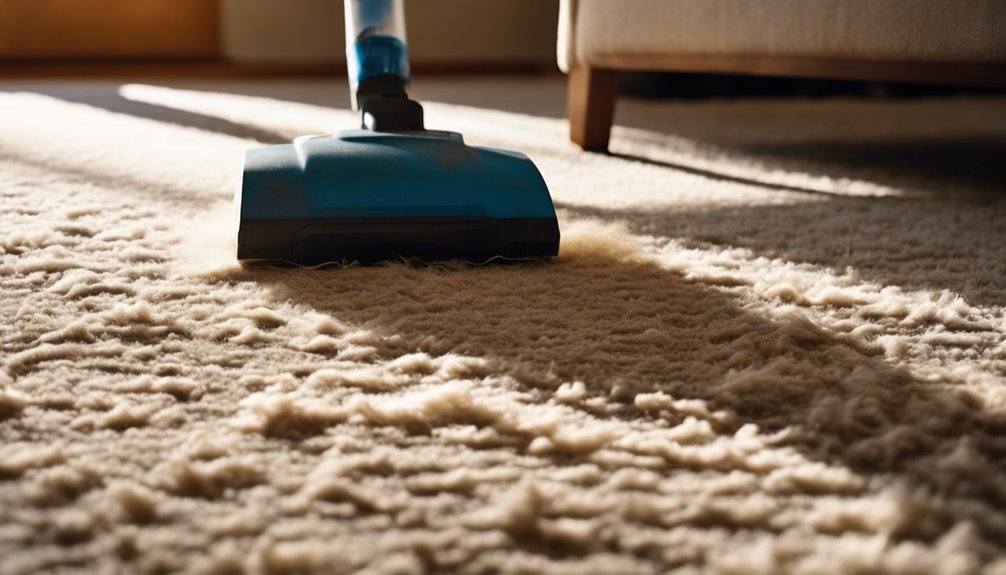
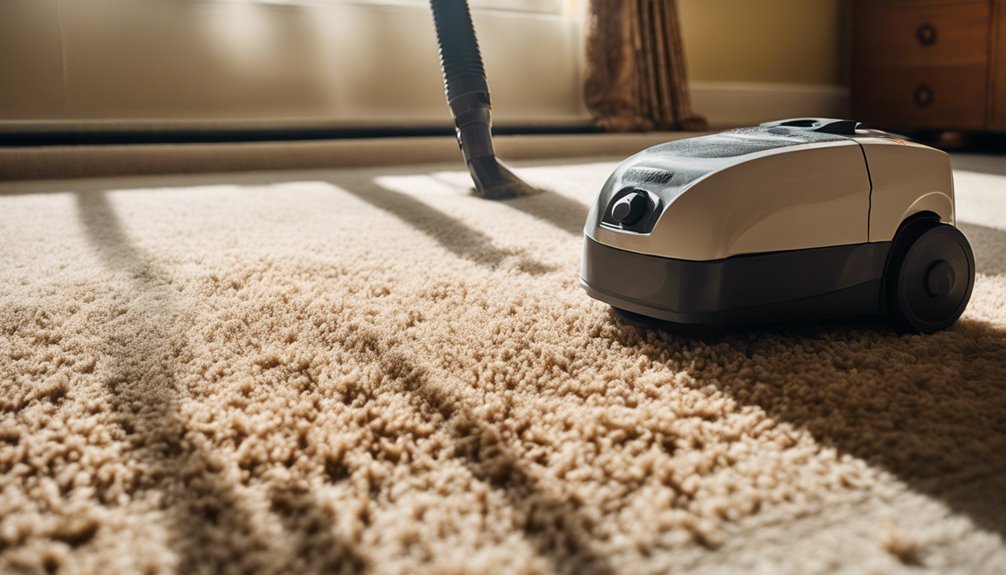
Maintaining clean carpets is vital for guaranteeing a healthy indoor environment and improving air quality. Regular vacuuming is important, especially in high-traffic areas. Aim to vacuum these spots at least once a week, using slow, overlapping strokes to guarantee thorough coverage.
Pay attention to areas with heavy foot traffic and underneath furniture, and use a vacuum cleaner with a HEPA filter to effectively trap allergens. Incorporate these vacuuming techniques into your weekly routine to minimize dirt buildup.
When spills occur, address them immediately to prevent stubborn stains. Blot the stain with a clean cloth, working from the outside in to avoid spreading. You can use homemade cleaning solutions, such as a mix of water, baking soda, and vinegar, for effective stain removal.
Additionally, consider applying carpet protectants to inhibit stain absorption.
Preventative maintenance is key. Place rugs and walk-off mats in high-traffic areas, and encourage shoe removal before entering your home. Controlling humidity levels and using furniture coasters will also help protect your carpets.
Establish a deep cleaning schedule every 8 to 12 months to maintain their longevity and cleanliness.
Professional Carpet Cleaning Services
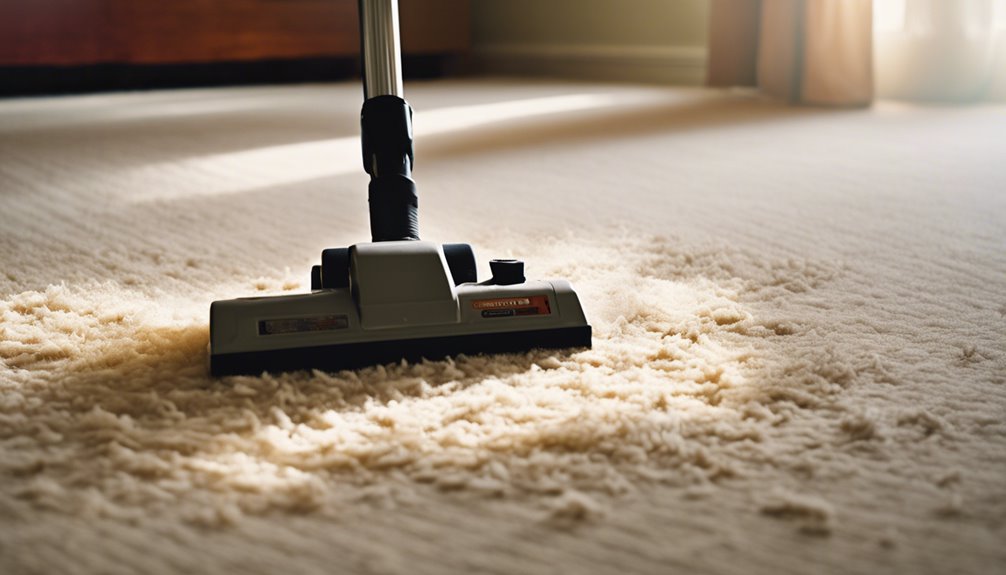
Regularly employing professional carpet cleaning services can greatly enhance the indoor air quality of your home. By utilizing advanced techniques, such as steam cleaning and hot water extraction, these professional services effectively remove allergens, bacteria, and stubborn odors that can degrade your living environment.
Consider the following benefits:
- Eliminates allergens: Professional cleaning removes dust mites and other contaminants, essential for allergy sufferers.
- Prevents mold growth: Keeping carpets clean helps control moisture, reducing the risk of mold and mildew.
- Enhances appearance: Regular cleaning extends carpet life and improves the overall aesthetic of your home.
Investing in professional carpet cleaning not only improves air quality but also promotes a healthier living space. Clean carpets allow for better airflow, greatly reducing the presence of harmful organic compounds.
Additionally, these services help eliminate persistent odors from pets or spills, guaranteeing your home remains inviting.
With routine professional cleaning, you'll foster a cleaner, fresher atmosphere and protect your carpet investment from costly damage.
Make professional carpet cleaning a priority to guarantee you and your loved ones breathe easier in a healthier indoor environment.
Tips for Maintaining Clean Carpets
Clean carpets are the foundation of a healthy indoor environment, but their upkeep requires consistent effort. To maintain your carpets effectively, vacuum every 2 to 3 days with a CRI-approved vacuum, particularly in high-traffic areas where you might need to vacuum daily. This practice prevents soil and dirt from embedding in carpet fibers. Incorporate a HEPA filter to eliminate dust, dirt, and allergens.
When spills occur, act quickly to clean spots to prevent damage and re-soiling. Use gentle cleaning supplies that won't harm the carpet or promote quick re-soiling. Keeping these supplies readily available helps you respond promptly.
To reduce debris, place mats or runners near entrances and consider implementing a no-shoe policy. Regularly move furniture to avoid permanent indentations, and use furniture coasters to protect your carpet.
For long-term carpet protection, change air filters in your HVAC system regularly, and improve ventilation to minimize moisture. You might also consider applying carpet fiber protectors to repel stains and extend the life of your carpets.
Finally, steam cleaning periodically will eliminate hidden bacteria and allergens, keeping your indoor air quality ideal.
Conclusion
If you're interested in learning more about how to maintain clean carpets and improve your indoor air quality, I invite you to visit Hydra Clean of Hattiesburg, MS at myhydraclean.com. You can also give us a call at (601) 336-2411 for expert advice and services tailored to your needs. Let's work together to create a healthier indoor environment for you and your family!