

Wouldn’t it be better to invest a little time in roof maintenance now than face costly repairs later? You might not realize it, but using the right tools and techniques can significantly extend your roof’s lifespan. Regular inspections and safe debris removal are key steps you can’t afford to skip. Eco-friendly solutions help maintain your roof without harming the environment. But what about those stubborn moss and algae that seem impossible to tackle? You’ll want to make informed choices to ensure proper roof drainage and avoid damage. Ready to discover more essential tips?
Choose the Right Cleaning Tools
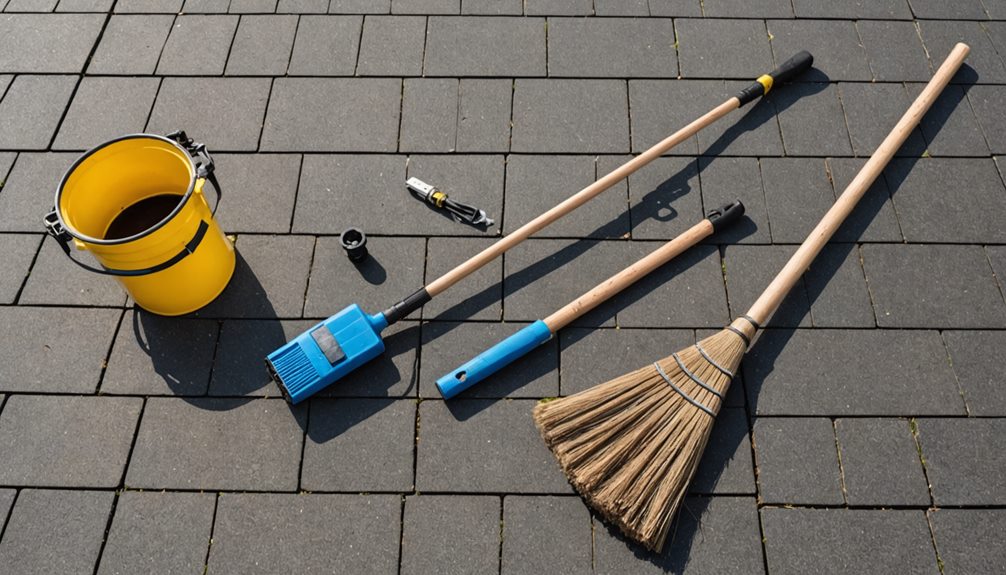
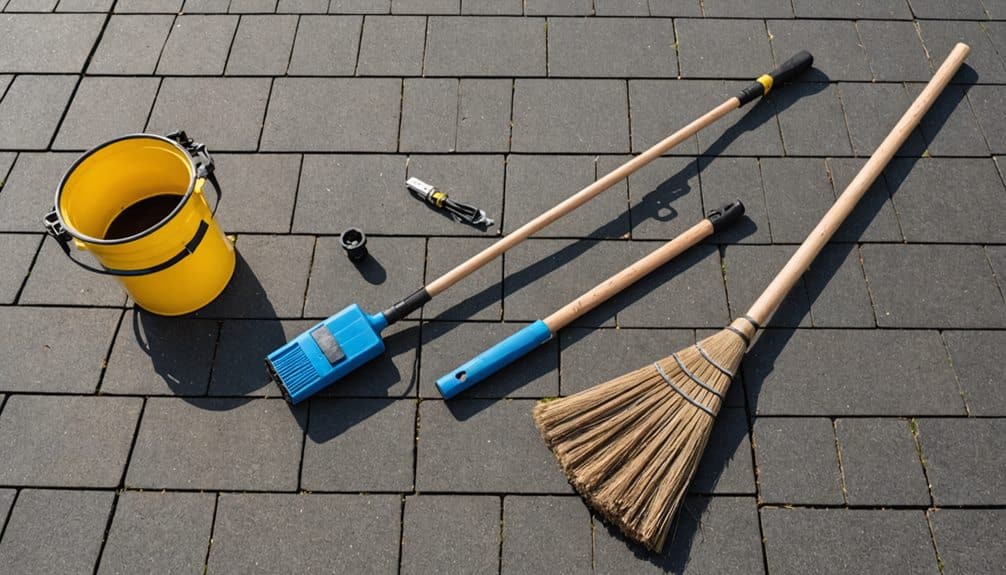
Selecting the right cleaning tools is crucial for ensuring both efficiency and safety during your roof cleaning process. To best serve others, start by considering how often you clean your roof. If you clean it regularly, opt for lighter tools to reduce fatigue and minimize the risk of accidental damage. Conversely, if you clean less frequently, you might need sturdier tools capable of handling a more substantial build-up of debris.
Carefully choose tool materials that guarantee longevity and safety. For example, non-corrosive materials like aluminum or fiberglass are excellent for poles and brushes. These materials aren’t only durable but also lightweight, allowing you to maintain control while working at heights.
Brushes with soft bristles are ideal for maintaining the integrity of roofing materials. Hard bristles can lead to damage, especially on shingles or tiles, which could result in costly repairs.
Safety should always be at the forefront of your mind when working on roofs. Invest in tools that offer ergonomic designs to prevent strain and potential accidents.
Schedule Regular Inspections
After equipping yourself with the right tools, focus on scheduling regular inspections to ensure your roof remains in peak condition.
By committing to seasonal inspections, you can guarantee early detection of potential issues, preventing minor problems from escalating into costly repairs.
Here’s how to conduct effective inspections:
- Visual Examination: Begin with a thorough visual assessment. Look for missing, cracked, or curling shingles. Pay close attention to areas around chimneys and vents where damage often occurs.
- Gutter and Downspout Check: Clear gutters and downspouts of any debris to prevent water from pooling on your roof. Inspect for signs of rust or damage that could lead to leaks.
- Interior Inspection: Don’t forget to check indoors. Climb into the attic and look for water stains or mold on the underside of the roof deck. This can indicate leaks or poor ventilation.
[…content continues…]