

Imagine entering a luxurious commercial space, only to discover unsightly stains tarnishing the elegance of the immaculate floor. As a business owner, you’re probably familiar with this common problem.
But are you aware of the most effective methods for eliminating these stubborn stains? Regardless of whether it’s oil, organic matter, or harsh chemicals causing the blemish, there’s a solution for it.
Stay with us as we explore these techniques, each one proven to restore your floor’s luster and make those persistent stains history.
Identifying Different Floor Stains
Distinguishing between various floor stains may seem intimidating initially. However, with the right knowledge, you’ll be identifying them like an expert in no time. Understanding stain origins is crucial in this process. For example, coffee stains differ from wine stains not only in color but also in composition. Coffee stains are tannin-based while wine ones are protein-based. These differences will dictate the cleaning method you use.
Next up is understanding stain impacts. The damage a stain can cause varies greatly depending on its type and your floor material. Acidic stains like fruit juice can etch into marble flooring causing permanent damage if not promptly addressed. Oil-based stains such as grease can penetrate into concrete floors’ pores making them difficult to remove completely.
You must also consider the age of the stain. Older stains have had more time to set and may require more aggressive treatment. But don’t worry, with the right approach, even the most stubborn stains won’t stand a chance. Remember, identifying the type of stain is your first step towards effective stain removal.
Basic Stain Removal Supplies
Now that you’re knowledgeable about identifying various floor stains, it’s time to arm yourself with the right tools for the job. Your basic stain removal kit should include a variety of tools and solutions, many of which are eco-friendly products. These are just as effective, if not more so than their chemical-laden counterparts, and they won’t harm the environment.
Here’s a quick rundown of what you’ll need:
- A stiff-bristled brush for scrubbing
- Eco-friendly stain removal solutions
- Microfiber cloths for blotting and drying
Proper storage of these supplies is crucial to ensure their longevity and efficiency. Here are a few supply storage tips:
- Keep brushes and cloths dry to prevent mold and bacteria growth.
- Store solutions in a cool, dark place to maintain their effectiveness.
- Organize your supplies in a dedicated cleaning caddy or box for easy access.
Having the right tools at hand and knowing how to care for them not only simplifies your stain removal process but also contributes to a more sustainable and efficient cleaning routine. So gather these supplies, and you’ll be ready to tackle even the toughest stains.
Techniques for Oil-Based Stains
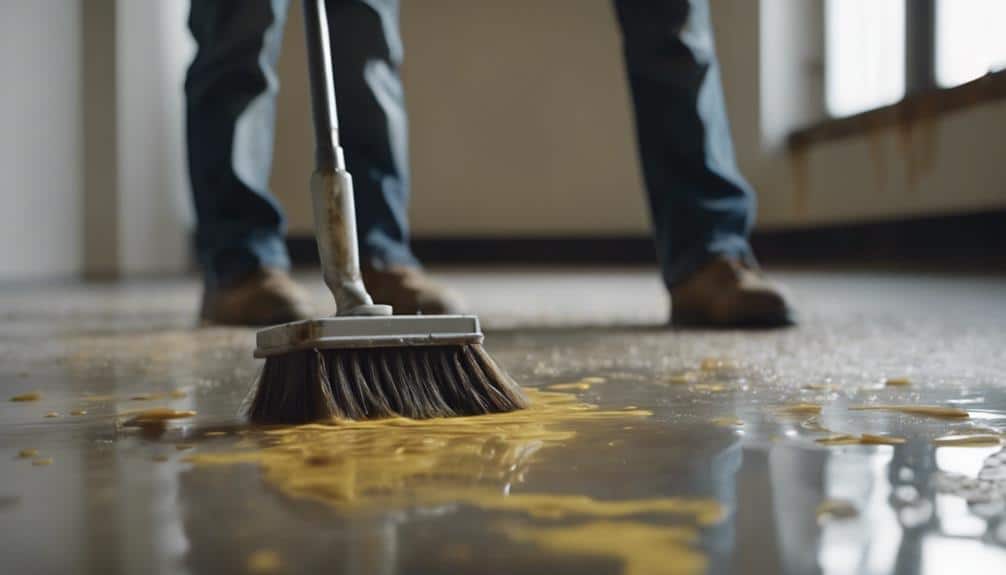
When dealing with an oil-based stain, understanding the right techniques can make all the difference in successful removal. It’s not just about knowing how to clean but also about taking preventive measures. For instance, placing mats at all entrances can significantly reduce the amount of oil that gets onto your floors.
Never underestimate the power of oil-absorbing materials. They’re your first line of defense. Use absorbent towels, rags, or commercial absorbents to blot up as much of the oil as possible. The trick isn’t to rub but to gently press and lift, preventing the oil from spreading further.
After blotting, apply a suitable cleaning solution. It’s crucial to choose one designed for oil-based stains. Apply the solution and let it sit for a few minutes. This allows the cleaner to penetrate the stain and break down the oil. Afterwards, scrub gently with a soft-bristled brush in a circular motion. Rinse with warm water and dry thoroughly.
Handling Organic Material Stains
Tackling stains from organic materials requires a different strategy, and understanding these methods can save your valuable items from permanent damage. Organic stains are typically caused by natural substances like food, grass, and bodily fluids. They’re stubborn and can be troublesome but with the right approach you can remove them.
Preventive measures are vital in combating organic stains. Swift action is often what separates a permanent mark from a temporary mishap. Here’s what you need to do:
- Clean spills immediately: Don’t allow time for the stain to settle in; act fast as soon as you see a spill. This prevents the stain from seeping into the fabric, making it easier to remove.
- Use the right cleaning agents: Not all cleaners are created equal. Some are better suited for organic stains than others. Look for enzyme-based cleaners—they’re excellent at breaking down organic material.
- Regular maintenance: Regular cleaning and care can prevent stains from setting in.
With these steps, you’ll be better prepared to tackle organic stains. Remember, it’s all about acting fast and using the right products. Prevention is always better than cure.
Dealing With Chemical Stains
While handling organic stains is a common task, you may also find yourself up against a different beast altogether: chemical stains. Unlike their organic counterparts, chemical stains often leave a residue that can corrode or discolor your flooring. Understanding the potential effects of chemical residue is the first step in dealing with these stubborn stains.
Acting fast is crucial here too; the longer the chemical sits, the more damage it can cause. Always wear protective gear including gloves and goggles to prevent any harm from chemicals. Start by blotting up the spill with a clean dry cloth avoiding rubbing which can spread the stain further.
Next, neutralize the stain using commercial cleaners designed to counteract specific chemicals; follow instructions carefully to avoid worsening of stain or damaging the floor.
Preventative measures are key in avoiding chemical stains. Use mats in areas prone to spills, such as kitchens or laboratories, and enforce strict handling protocols for chemical substances. Regularly clean and inspect your floors for early detection and treatment of stains. Armed with the right tools and knowledge, you’ll be better equipped to combat chemical stains, preserving the integrity and appearance of your floors.
Conclusion
You’ve tackled the toughest floor stains with confidence, armed with the right supplies and techniques. From oil-based to organic or chemical stains, you’ve learned how to handle them all. Remember that correctly identifying a stain is half the battle won. And patience? It’s a virtue when dealing with stubborn stains. Keep these tips handy and you’ll be ready for any floor stain that comes your way, maintaining your commercial space’s pristine appearance effortlessly.
Isn’t it great knowing you’re not alone in this cleaning journey? Our friends at Hydra Clean of Hattiesburg MS are always ready to lend a helping hand. You can learn more about their services and effective stain removal techniques by visiting myhydraclean.com or give them a call at (601) 336-2411; they’d be more than happy to assist you in maintaining cleanliness and beauty of your commercial space. Remember, a clean floor isn’t just an aesthetic choice; it’s a testament to your commitment towards providing a healthy comfortable environment. So go ahead reach out to Hydra Clean let them help keep your floors spotless.
When stains extend beyond routine janitorial care, professional commercial floor cleaning can treat the affected surface according to its material and condition.