

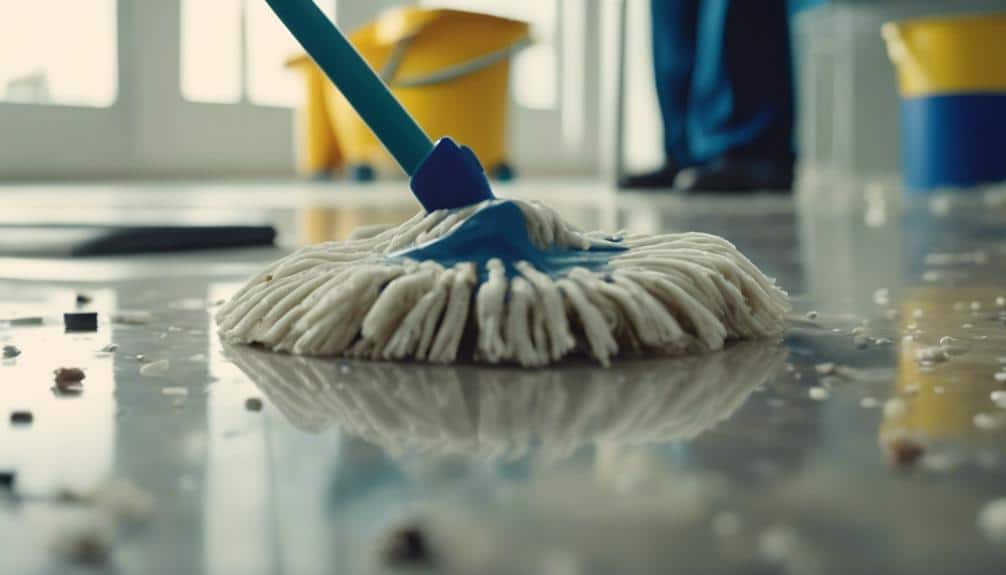
Did you know that businesses allocate a staggering 5-15% of their maintenance budget solely for floor care?
If you’re running a business, you’re constantly seeking ways to reduce expenses without sacrificing quality.
But have you ever thought about how your floor maintenance practices might be draining your budget?
A myriad of cost-saving strategies are waiting to be explored, and you’ll be amazed at how much you can save without compromising your establishment’s aesthetics or safety.
Shall we delve deeper?
Understanding Commercial Floor Maintenance Costs
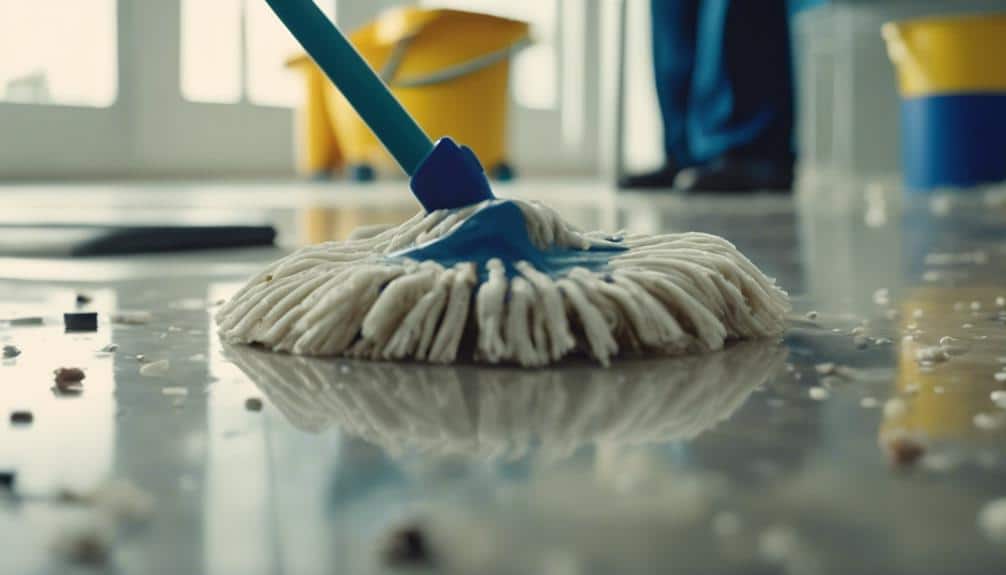
In the realm of commercial floor maintenance, it’s crucial to comprehend the associated costs. These can fluctuate significantly depending on the type of flooring, cleaning frequency, and required services. The type of flooring—be it hardwood, carpet, or tile—affects the cleaning methods and consequently the overall cost. High-traffic areas may necessitate more frequent cleaning, thereby increasing the expense.
Implementing budgeting techniques can help manage these costs effectively. It would be prudent to designate funds in your budget specifically for floor maintenance and adhere to it. Take into account factors such as necessary cleaning materials and labor costs.
Your maintenance schedule plays a vital role in cost optimization. Regularly scheduled cleanings can prevent dirt and grime accumulation, eliminating the need for expensive intensive cleaning sessions.
Bear in mind potential unexpected costs. Accidents occur, and sometimes you’ll need to budget for damage repairs or deep cleaning services.
Lastly, utilizing professional services can be a cost-effective strategy. Professionals often deliver superior results, reducing the frequency of cleanings and extending the lifespan of your flooring.
The Impact on Business Finances
While effectively managing floor maintenance costs is a wise move, it’s equally important to consider how these expenses can impact your overall business finances. You might be surprised to discover that these costs, although seemingly minor in the grand scheme of things, can have significant financial implications if not managed judiciously. This is where budget analysis comes into play.
By closely monitoring your floor maintenance expenditure, you can:
- Identify potential cost overruns: Frequent and unplanned floor maintenance can lead to unexpected costs. These can skew your budget analysis, making it challenging to allocate resources effectively.
- Mitigate financial risks: By controlling maintenance costs, you can prevent unnecessary financial stress and maintain healthier business finances.
- Improve profitability: Lower maintenance costs can result in higher profit margins. Money saved on floor upkeep can be reinvested into your business to foster growth.
Innovative Floor Care Strategies
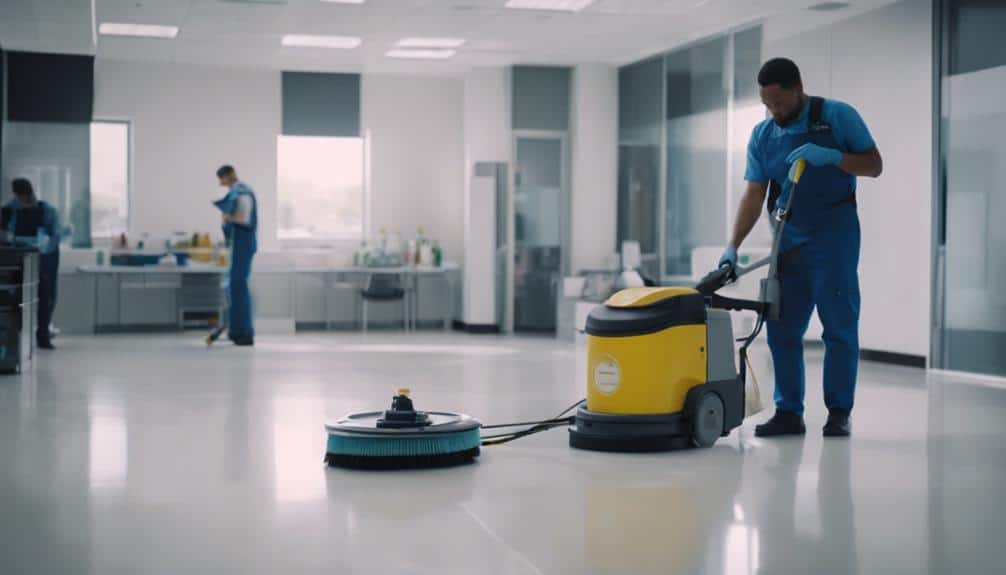
To maintain your commercial floors effectively and economically, it’s crucial to adopt innovative floor care strategies that significantly reduce costs and enhance longevity. One such strategy includes the use of eco-friendly methods. Cleaning products with natural ingredients not only minimize environmental harm, but they also reduce the risk of health hazards for your employees and visitors.
Another innovative floor care strategy involves technological advancements. The advent of robotic floor cleaners has revolutionized floor maintenance. These automated machines can clean large areas swiftly and efficiently, saving on labor costs. They’re also programmable to clean during off-hours, minimizing disruptions during business operations.
Additionally, consider investing in high-performance floor finishes. While these products often have a higher initial cost, their long lifespan makes them a cost-effective option in the long run. They resist scratches, stains, and wear, requiring fewer touch-ups and replacements over time.
Practical Cost-Effective Solutions
Incorporating practical, cost-effective solutions into your floor maintenance routine can significantly reduce expenses without sacrificing quality or performance. By shifting towards sustainable materials and more strategic budget allocation, you can enjoy long-term savings that benefit your bottom line.
- Use Sustainable Materials: Choose eco-friendly floor cleaning products. These sustainable materials are not only better for the environment but can also be more cost-effective in the long run as they often contain fewer harmful chemicals which can prolong the lifespan of your flooring.
- Optimize Budget Allocation: Be strategic with your budgeting. Allocate funds for preventative maintenance to avoid expensive repairs or replacements. Regular cleaning and maintenance can prevent damage and extend the life of your floors.
- Invest in Quality Equipment: Don’t compromise on equipment quality. While it might seem cost-effective initially, low-quality equipment often requires more frequent replacement or repair leading to higher costs over time.
Case Studies: Successful Floor Maintenance Savings

Let’s examine some successful case studies that illustrate how businesses have significantly saved on floor maintenance costs.
A large retail store in New York was struggling with high in-house floor maintenance costs. By choosing to outsource their maintenance, they managed to reduce their expenses by 30%. The outsourced company provided efficient services using advanced equipment and skilled personnel. These factors improved the longevity of the store’s flooring, resulting in additional unexpected savings.
In another instance, a manufacturing firm in Texas quantified savings by implementing a preventive maintenance program. They invested in high-quality, durable flooring and scheduled regular maintenance. This proactive approach prevented potential major repairs, decreasing their annual floor maintenance costs by 25%.
Finally, a hotel chain across the Midwest switched to eco-friendly cleaning products and methods for their floor maintenance. This change not only reduced their expenditure by 20%, but also enhanced their reputation as a green business, attracting more clientele.
These case studies demonstrate that with strategic planning, you can significantly cut down your floor maintenance expenses. Whether it’s outsourcing your maintenance or implementing preventive measures, potential savings are substantial. Remember, every penny saved on floor maintenance can contribute to your business’s bottom line.
Conclusion
As you can see, managing your floor maintenance can have a significant impact on your bottom line. By understanding the costs involved, assessing the financial implications of these costs, deploying innovative strategies, and implementing cost-effective solutions, you too can achieve significant savings. The successful businesses in our case studies are living proof. So why not take the leap, revolutionize your floor care, and watch your profits soar? After all, a penny saved is indeed a penny earned.
We invite you to learn more about this by visiting Hydra Clean of Hattiesburg MS. Their team of professionals is ready to provide you with detailed insights and effective solutions for your business. To learn more, visit their website at myhydraclean.com or give them a call at (601) 336-2411. They’d be delighted to assist you with your floor maintenance needs. Come on board and let’s enhance your commercial floor maintenance together!